Few of the market's large-cap software names have fallen as hard this year as Salesforce (CRM -0.84%). The stock recently set a fresh 52-week low and is down about 40% year to date, leaving it among the worst performers in enterprise software. What makes the slide unusual is that the underlying business keeps setting records.
The company reported results for its fiscal first quarter of 2027 (the period ended April 30, 2026) in late May, and the numbers were strong. So why does the stock keep falling?
The answer has little to do with the latest quarter and almost everything to do with a single fear: that artificial intelligence (AI) agents will erode the per-seat subscriptions that software companies like Salesforce have long sold. If a handful of agents can do the work of many employees, the worry goes, customers will eventually need fewer paid seats. In addition, there's an overarching fear that AI will increasingly handle what software companies do today.

Image source: Getty Images.
What the latest quarter actually showed
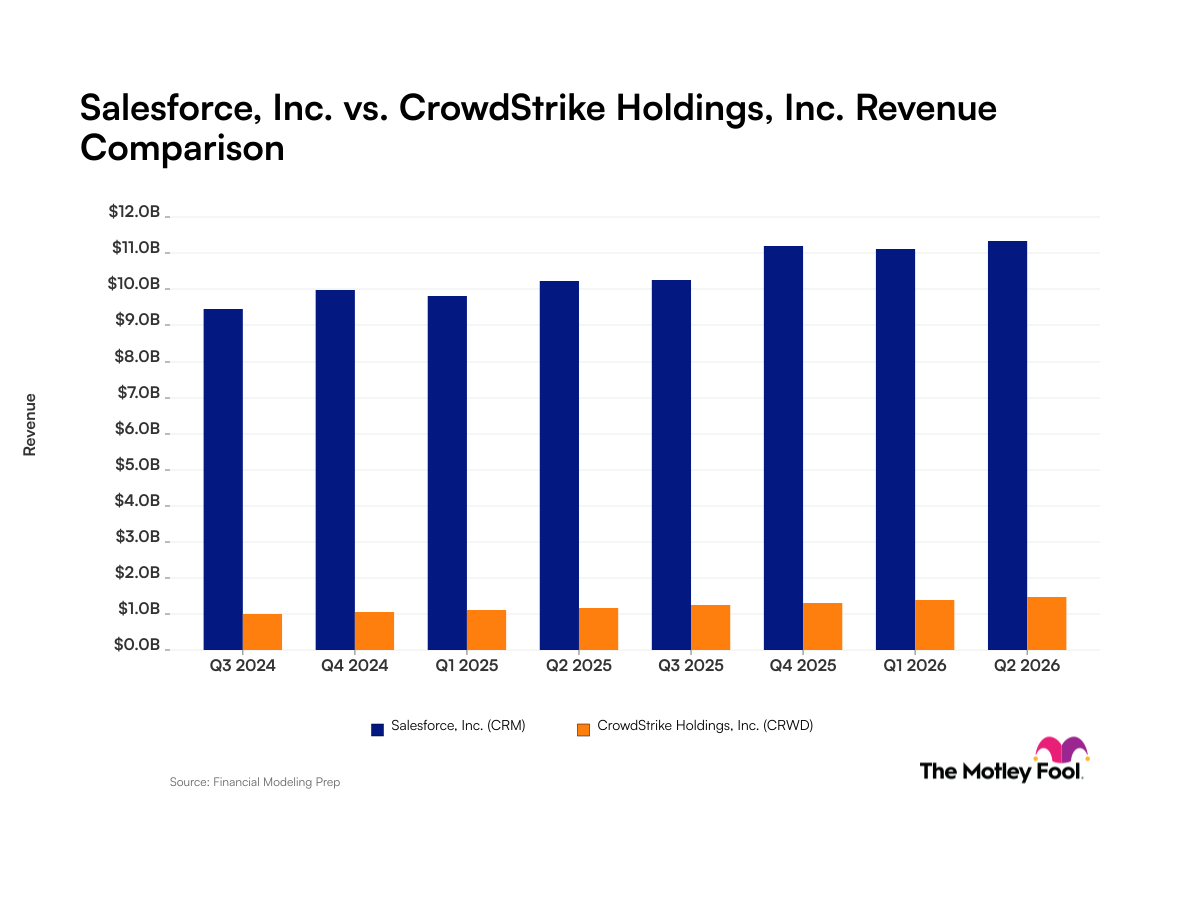
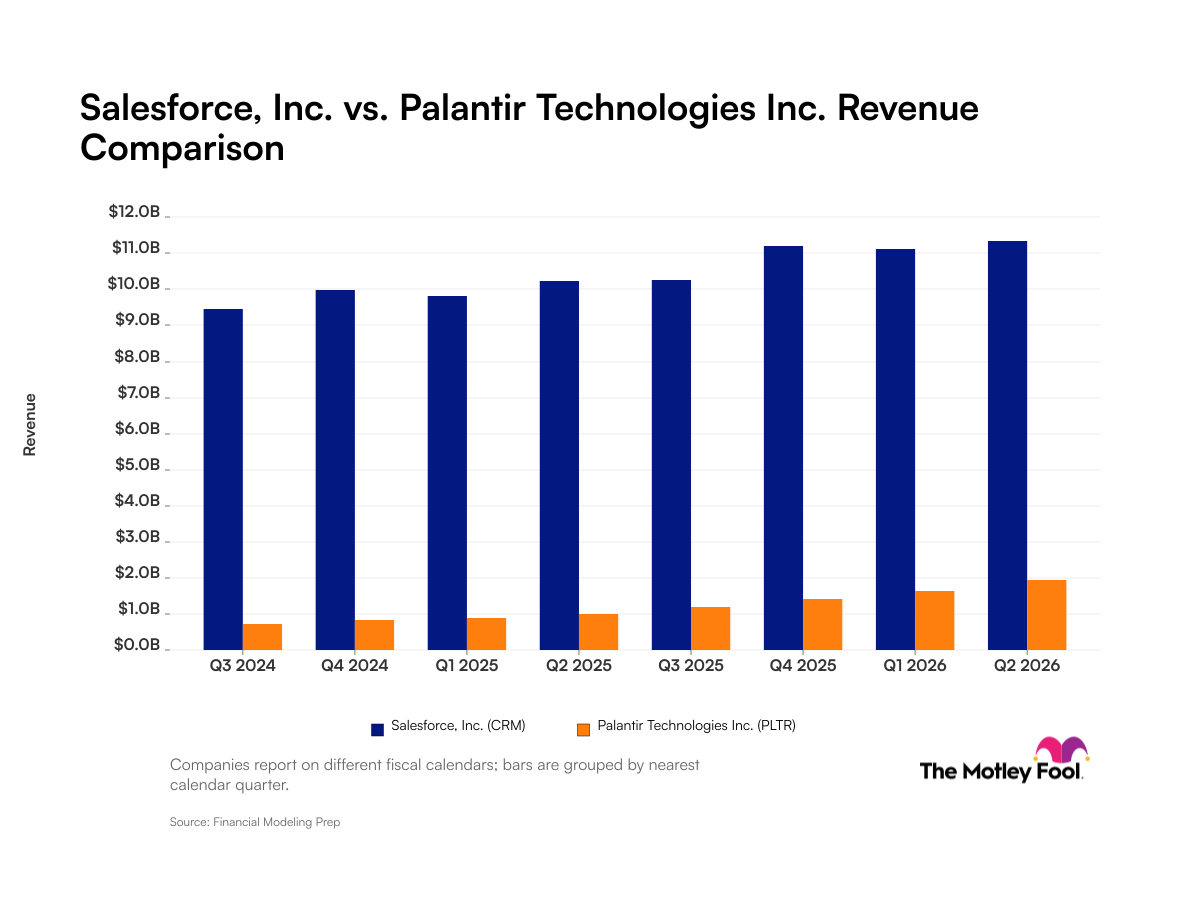
The fiscal first-quarter results suggest that fear may be overblown, at least for now. Salesforce's revenue rose 13% year over year to $11.1 billion, though about 4.4 percentage points of that growth came from its recent Informatica acquisition. Stripping that out, organic growth was closer to the high-single-digit pace the company has run at for a while.
More telling, however, was what happened beneath the top line. Salesforce's AI and data products generated $3.4 billion in annual recurring revenue (ARR), up about 200% from a year earlier, and its Agentforce agentic AI offering alone crossed $1 billion in ARR after more than tripling. And rather than shrinking, the seat count in the company's largest products grew.
"Our largest applications, sales and service, saw year-over-year seat growth with humans and agents both expanding on the platform," said Salesforce chief operating and finance officer Robin Washington in the company's fiscal first-quarter earnings call.
That dynamic, with customers paying for more seats rather than fewer even as they adopt automation, sits at the center of the bull case. Salesforce is also leaning hard into new ways to charge for AI, including usage-based pricing and a recent $3.6 billion deal to acquire Fin, an AI customer service platform.
The profit picture looks healthy, too. Salesforce's non-GAAP (adjusted) operating margin reached a record 34.8%, and the company generated $6.6 billion in free cash flow during the quarter. Salesforce also returned $27.5 billion to shareholders, the bulk of it through a $25 billion accelerated share repurchase that was the largest in its history. That buyback shrank the share count by about 10% from a year earlier.
Is the sell-off a buying opportunity?
Not everything in the quarter, however, was reassuring. Management pointed to ongoing weakness in the company's commerce and Tableau businesses. Salesforce has also cut staff repeatedly over the past year as it reorganizes around AI. Of course, this can be viewed as both a negative and a positive.
Additionally, investors will need patience. Management is guiding for organic revenue growth to reaccelerate in the back half of the fiscal year -- a recovery investors will have to wait to see.

NYSE: CRM
Key Data Points
The real problem for the stock recently may have been valuation. Only now is the stock starting to look reasonably priced in light of the risks of technological change that software companies face. After the sell-off, Salesforce trades at a forward price-to-earnings ratio of about 12, using the midpoint of management's full-year adjusted earnings outlook. For a profitable business still growing revenue at a double-digit rate and expanding its margins while buying back stock aggressively, that is a fairly attractive multiple.
So, is it finally time to buy? I'm staying cautious. The numbers increasingly suggest AI is acting as a catalyst for Salesforce rather than a threat. But the broader uncertainty over how AI will reshape software isn't going away soon, and that overhang could keep a lid on the valuation premium investors are willing to pay for software stocks for years, even ones executing as well as this one.
Overall, buying a small, undersized position here could make sense for investors comfortable with the AI disruption overhang that could plague the stock for years. From there, I'd only build the position into a meaningful stake if the stock falls significantly further. Approaching the stock this way gives investors the flexibility to profit if things go well, and to potentially keep buying a good business at an even better price.