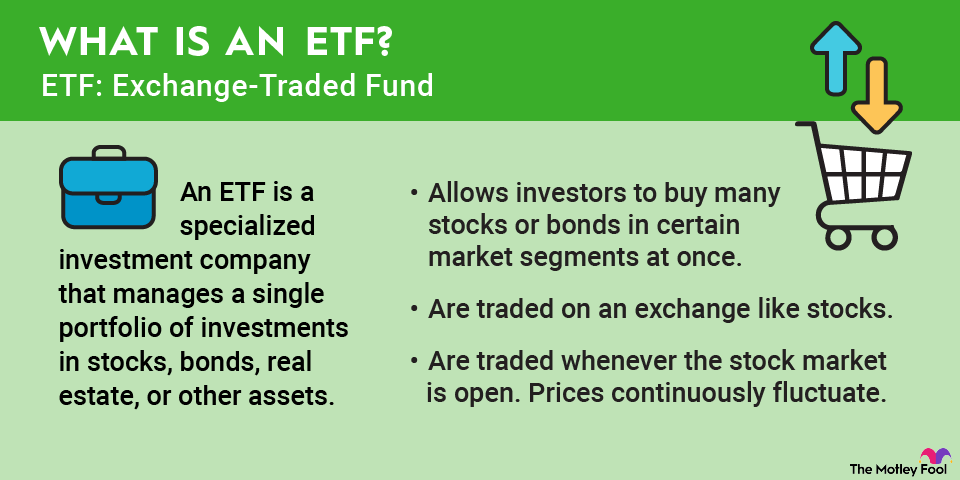
Most people equate investing in "the market" with the S&P 500 (^GSPC +0.88%). It's one of the best-known indexes in the world. The three biggest ETFs in the world are based on it. For a lot of people, it's pretty much the only thing they have in their portfolio.
But is it enough?
Using an S&P 500 fund, such as the Vanguard S&P 500 ETF (VOO +0.84%), is a logical and defensible choice to use as the core of your portfolio. It contains the largest, most successful, and most durable companies in the world.

Image source: Getty Images.
But it also includes just 500 U.S. large-cap stocks. Among the things that are left out if you only invest in the S&P 500:
- Small-cap stocks.
- International stocks.
- Bonds.
- Gold.
- Cryptocurrencies.
- Commodities.
That's a lot of diversification, risk mitigation, and return potential that's being left on the table. It's easy to focus solely on the S&P 500, which has been one of the best-performing asset classes for years. But performance across asset classes moves in cycles. Small-caps and international stocks, for example, have historical periods where they've outperformed U.S. large-caps for years. I don't think you want to ignore that altogether.

NYSEMKT: VOO
Key Data Points
Can a portfolio consisting of just one S&P 500 ETF be enough? It can. And it's certainly better than keeping your money in a bank account for years or not saving at all.
Could a more diversified portfolio be better? I think so. The long-term performance difference may not be huge, but its ability to smooth volatility, deliver returns from different sources, and potentially outperform the S&P 500 over time shouldn't be discounted.