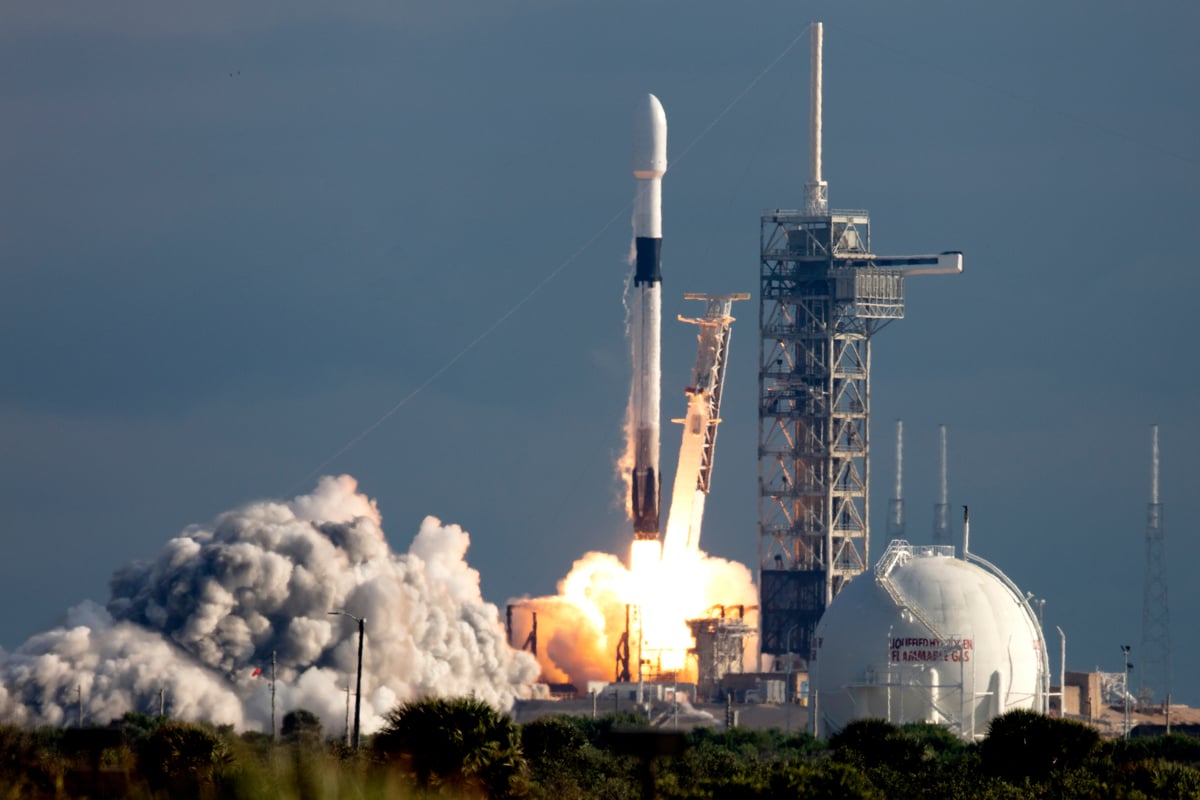
Space Exploration Technologies (SPCX +1.54%), better known as SpaceX, has three distinct parts of its business -- rocket launches, satellite internet, and the xAI artificial intelligence business. While the first two are certainly impressive, market-leading businesses, the AI division has produced the biggest headlines in recent months.
In fact, although xAI was the biggest drag on SpaceX's bottom line in 2025, it's starting to look like 2027 and beyond could be a very different story. Here's how SpaceX's new AI compute business has already more than doubled its revenue, where it could go from here, and why investors should pay attention.
Image source: Getty Images.
Three AI compute deals -- so far
Here's a quick rundown of where SpaceX's AI compute business stands today. And keep in mind that all of this is revenue that didn't exist prior to its IPO:
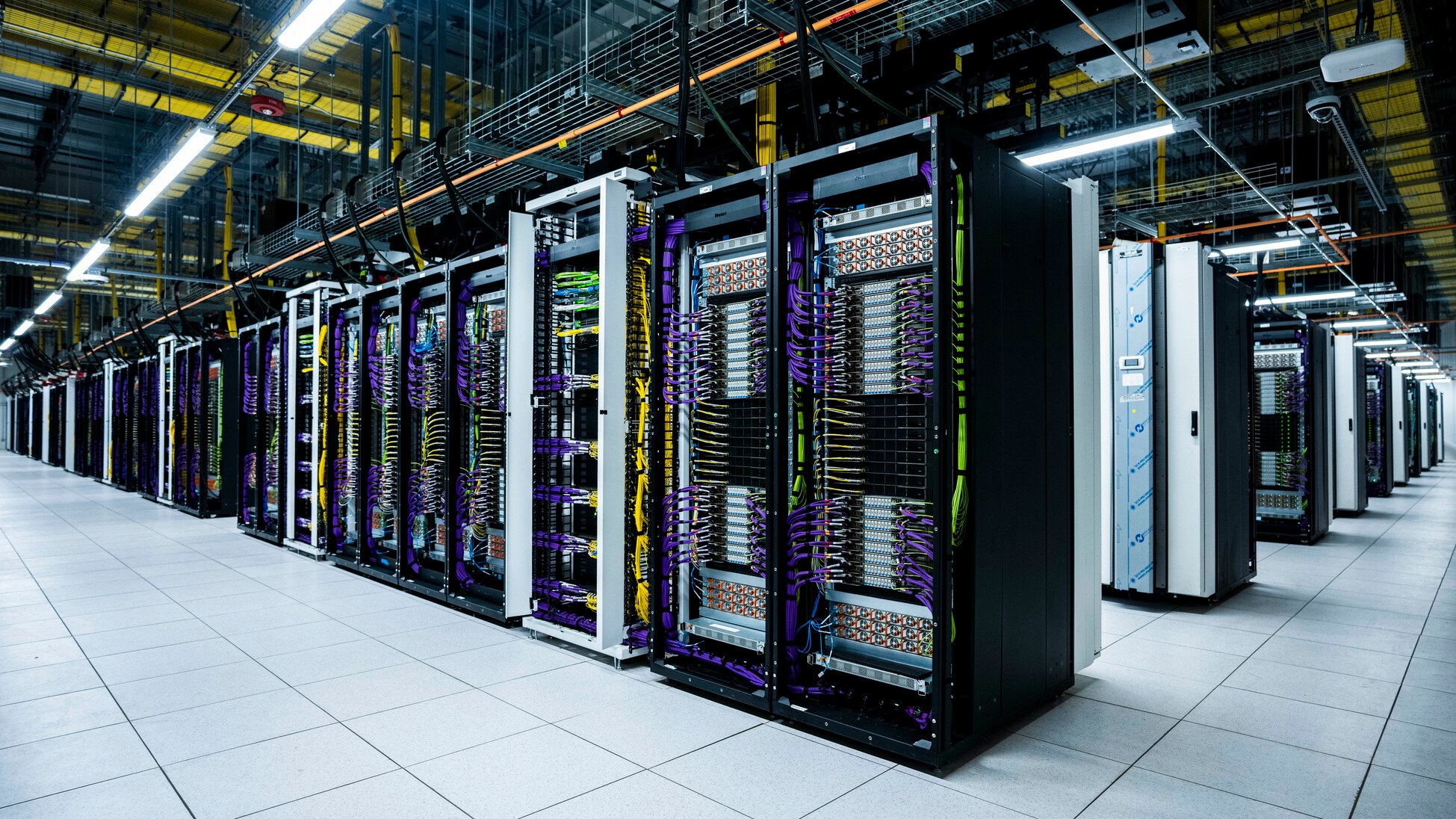
- First, Anthropic signed a deal to access more than 300 MW of compute capacity and more than 220,000 Nvidia GPUs at SpaceX's Colossus 1 data center. This agreement brings in $1.25 billion per month for SpaceX through May 2029. That's $18 billion per year from this deal alone.
- Next, Google signed a compute deal that begins in October and runs through June 2029, giving the hyperscaler access to about 110,000 Nvidia GPUs and is expected to generate $920 million in monthly revenue.
- Finally, the smallest of the three deals, but still a highly significant development, is a deal from fast-growing start-up Reflection AI to access Nvidia chips at SpaceX's Colossus 2 data center for $150 per month.
Combined, the three deals will provide about $2.32 billion in monthly revenue, or $27.8 billion annualized. Keep in mind that SpaceX's business -- including Starlink, the rocket launches, and xAI -- combined for $18.7 billion in revenue in 2025. Even though Starlink and the rocket business continue to scale rapidly in 2026, this has more than doubled SpaceX's revenue.

NASDAQ: SPCX
Key Data Points
Not only has this generated revenue, but it's also an example of a savvy way to turn a problem (xAI was using only about 11% of its compute capacity for its own purposes) into a win.
Who could be next?
SpaceX clearly stated in its S-1 that it "expects to enter into additional similar services contracts for compute capacity with third parties," and while this statement was made before the most recent deals, it indicates that this business could be a big part of the company's AI future.
There's no way to know who might be next, but there's no shortage of potential compute customers. Other AI providers, such as OpenAI, are an obvious example, as are hyperscalers like Microsoft (MSFT -2.67%).
Of course, companies like Microsoft, Google, and others can (and do) build their own data centers -- that's a big portion of the hundreds of billions of dollars in capital expenditures they've announced for 2026. But a capital-light approach (renting instead of owning) is likely starting to look more appealing, especially now that the AI build-out is scaling to the point where these companies are being forced to take on more debt and spend all of their free cash flow to keep up.
In addition to any of the other potential customers who will undoubtedly need more computing power in the future than they do today, it's also important to mention that there's certainly the possibility that the three existing customers could expand their deals over time. For example, Anthropic's business has grown tenfold in the past year, and if it continues to grow exponentially, the company's compute needs could get much larger.
Why is this so important?
Not only have SpaceX's three AI compute deals more than doubled its revenue, but they could also be a big step forward in showing investors a path to profitability. In fact, the AI compute business has the potential to become the highest margin part of SpaceX. Consider that other GPU cloud providers like CoreWeave (CRWV -2.13%) operate at gross margins near 70%, and in SpaceX's case, margins could be even higher as SpaceX's Colossus data centers were already built and were simply underutilized. Now, Starlink has excellent margins, but the AI compute business has massive potential for both top-line growth and producing billions in free cash flow.
To be clear, even with all of this in mind, SpaceX is still not a cheap stock. Even if the company's revenue run rate reaches $50 billion by the end of 2026, it will still be valued at about 40 times sales (based on the current stock price) and will lack any established track record of profitability. So, I'm not saying that SpaceX is a buy based on its AI compute business itself. There's a lot that will need to go well throughout its business to ultimately justify the current valuation.
Having said that, the progress in the AI compute business has been impressive to say the least. If SpaceX can continue to build it out, it could be a big win for the company and its investors.