For more than 130 years, the Dow Jones Industrial Average (^DJI +0.83%) has served as one of Wall Street's most-watched health barometers. It's expanded from an industrial-dominated 12-stock index to one that now houses 30 diverse, multinational businesses.
It's also an index built around change. Since May 1896, there have been 54 instances in which companies were added to or removed from the Dow. We're likely on track for another adjustment, with Nike (NKE -0.09%) primed to get the boot, and trillion-dollar conglomerate Berkshire Hathaway (BRKA +0.97%)(BRKB +0.89%) ideally positioned to replace it.

Image source: Getty Images.
Nike has failed to step up as a Dow component
S&P Dow Jones Indices considers several factors when adding or removing companies from the iconic Dow. Chief among them is a company's share price.
Unlike the S&P 500 and Nasdaq Composite, which are market-cap-weighted indexes, the Dow Jones Industrial Average is a share-price-weighted index. For example, even though Nvidia is the largest publicly traded company, it ranks 20th in influence among the 30 Dow stocks, thanks to its roughly $211 share price.
Nike closed out July 10 at $44.37 per share -- far and away the lowest share price in the Dow.

NYSE: NKE
Key Data Points
In addition to its minimal influence, Nike has vastly underperformed since joining the index in September 2013. Whereas Wall Street's timeless index has rallied 242% since Nike's addition, the footwear and apparel specialist has gained (drum roll)... only 29%.
Nike's direct-to-consumer strategy fizzled and damaged previously profitable wholesale relationships. While this damage is fixable, S&P Dow Jones Indices is unlikely to keep Nike in the Dow as it attempts a multiyear turnaround.
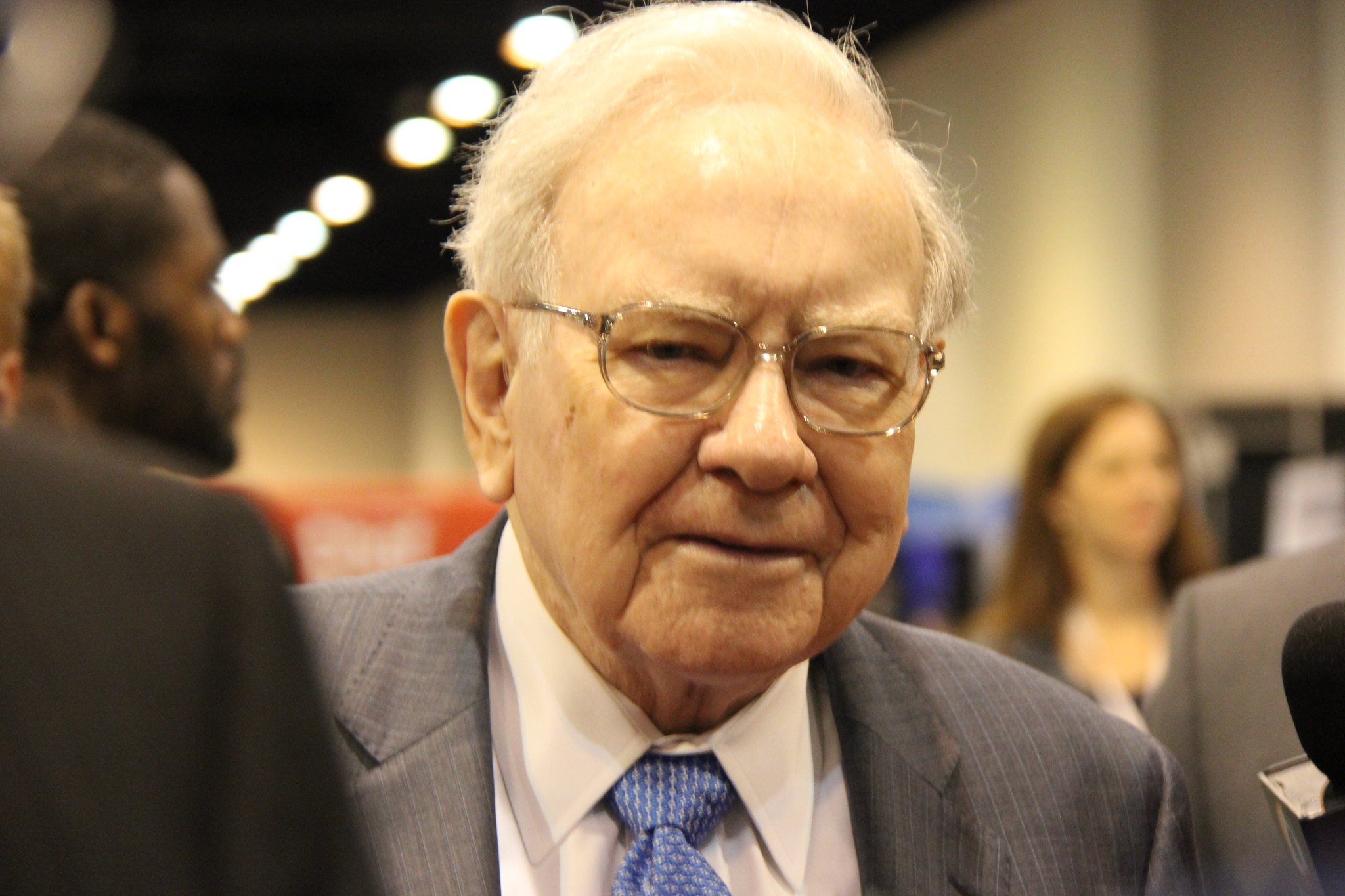
Warren Buffett transformed Berkshire Hathaway into a trillion-dollar company. Image source: The Motley Fool.
It may be time for Berkshire Hathaway to shine
Removing Nike from the Dow Jones Industrial Average doesn't mean a retailer necessarily has to replace it. But with six tech stocks already represented in the index, something consumer-facing would make sense.
Although Berkshire Hathaway is a financial company by nature (it's the parent of insurer GEICO) and has a nearly $349 billion investment portfolio, it also owns roughly five dozen businesses. These wholly owned assets give Berkshire exposure in retail, railroad, insurance, manufacturing, restaurants, and energy, among other industries and sectors.
Several years ago, adding Berkshire Hathaway to the Dow wouldn't have made sense. The company's lower-priced Class B shares (BRKB) were always a bit too pricey for an index that historically didn't have too many components with triple-digit price tags. Today, there are only three Dow components trading below $114 per share and just 10 below $211. Berkshire's Class B shares, which are trading at $494 as of July 10, would fit right in.

NYSE: BRKB
Key Data Points
The company that the now-retired Warren Buffett built into a trillion-dollar conglomerate also has a history of handily outperforming the S&P 500. Under Buffett's six-decade watch, Berkshire appreciated by approximately 6,100,000%!
The only hurdle I can see for Berkshire joining the Dow is its aforementioned $349 billion investment portfolio. Berkshire is already invested heavily in several Dow components, including Apple, American Express, and Alphabet. Adding it to the Dow would, essentially, concentrate the index even further in these names.
Despite these investments, it may be the logical replacement for Nike if/when S&P Dow Jones Indices gives it the boot.