CEO Mark Zuckerberg is focused on turning Meta Platforms (META -0.06%) into a leader in artificial intelligence (AI). An internal memo revealed plans to move Iris, its custom data center AI chip, into production in September, and to double the company's data center capacity to 14 gigawatts in 2027.
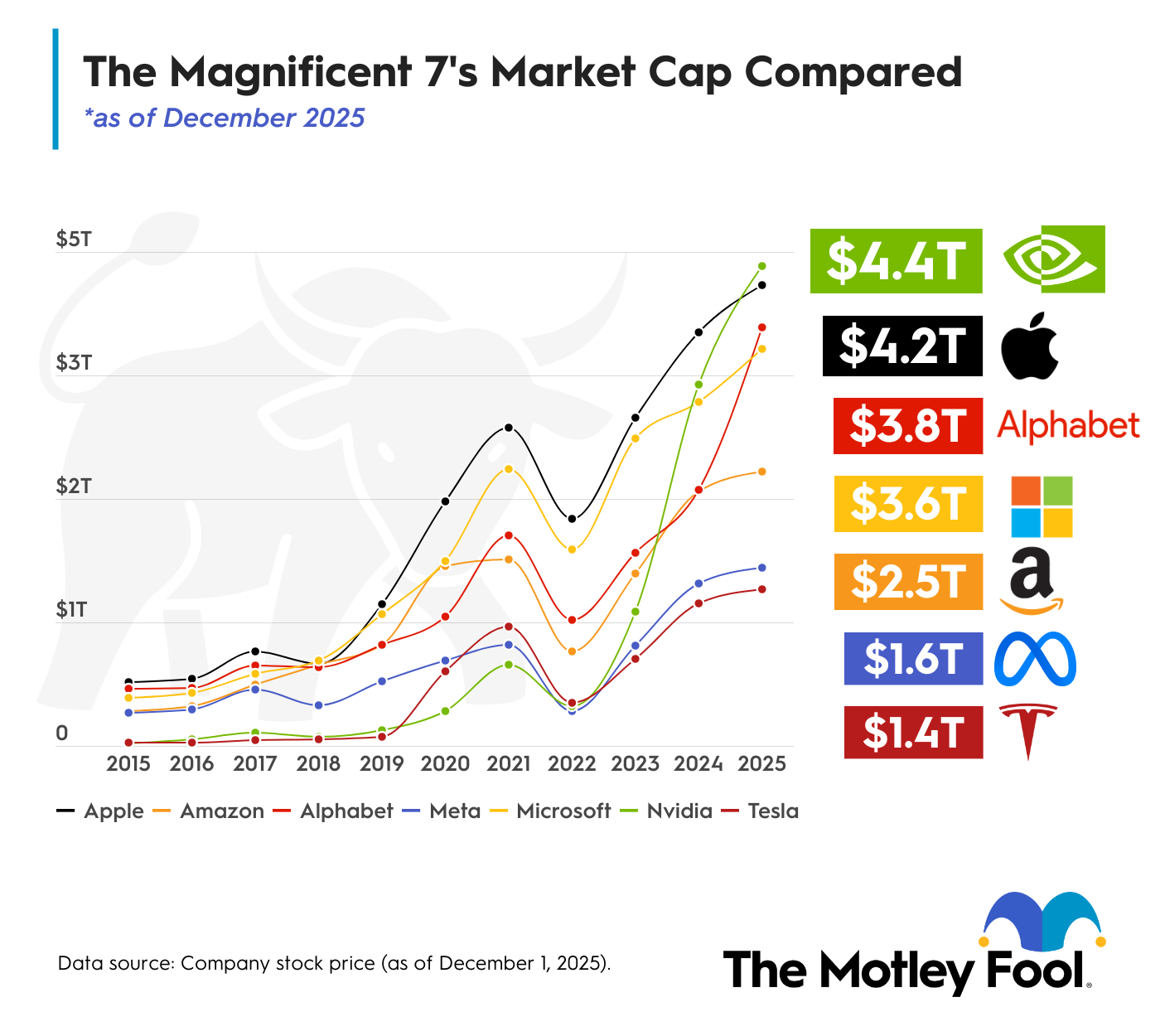
This is significant for investors because Meta's stock is not currently valued like an AI leader. It trades at a forward price-to-earnings multiple of 21, a discount compared with most of the other "Magnificent Seven" stocks, which largely trade at multiples of around 25 or higher. If Meta succeeds at turning its heavy capital spending into more profitable growth, the market could re-rate the stock to a level more in line with its peers.

Image source: The Motley Fool.
Zuckerberg sees a strategic advantage
Earlier this year, Meta CFO Susan Li acknowledged that data center capacity planned 12 to 36 months ago is no longer sufficient. New data center construction requires a multiyear lead time, even as the demand for AI processing power continues to grow. This is creating a bottleneck in the technology's growth.
For Meta, resolving that issue is particularly important. Its social media platforms have over 3.5 billion daily active users, but AI is now a central part of how it monetizes them. The company is leaning heavily on AI to fine-tune its advertising business, which generates the bulk of the company's revenue.
"One of the primary goals of our Meta Compute initiative is to lead the industry in efficiency of building compute, and we expect that will be a strategic advantage over time," Zuckerberg said during the company's first-quarter earnings call.
Meta partnered with Broadcom to design its custom Iris chip, which will be manufactured by Taiwan Semiconductor Manufacturing. This application-specific integrated circuit (ASIC) will ultimately help Meta to lower its AI computing costs and tailor its compute resources to its own use cases, including improving recommendation systems and advertising performance across its social media apps. AI has already had a massive impact on Meta's financials, helping drive revenue up 33% year over year in the first quarter.
What this means for the stock
The stock has underperformed year to date, reflecting Wall Street's skepticism about Meta's ability to deliver a satisfactory return on investment from its heavy capital spending. The company has said it plans to spend up to $145 billion on capital expenditures this year. Those outlays will put pressure on its near-term earnings. The Motley Fool's research shows that the top four hyperscalers -- Meta, Microsoft, Amazon, and Alphabet -- plan to spend between $600 billion and $700 billion on capex in 2026.

NASDAQ: META
Key Data Points
Still, Meta has already seen significant improvement in its ad performance with AI. Investors should expect further investment in custom chips and additional compute capacity to yield even greater returns over time.
These investments are not just about boosting ad performance. It's also laying the groundwork for new products, including AI agents for personal and business use.
Meta has the highest gross margin of any Magnificent Seven company. Its $124 billion in trailing cash flow from operations is a strategic advantage, helping fund its AI initiatives. This reflects the profitability of its ad business and explains why the stock should be re-rated to a higher valuation.