Just a few months ago, investors couldn't get enough of Palantir Technologies (PLTR -3.69%). The company -- known for "big data" analytics -- was delivering record earnings, demand for its artificial intelligence (AI) software was surging, and the stock seemed unstoppable.
Fast-forward to today, and the mood has changed. Although the business continues to execute at a high level, Palantir's stock has fallen roughly a third from its peak. That naturally raises an important question.
Has this correction finally created a buying opportunity, or is the stock still too expensive?

Image source: Getty Images.
The business hasn't been the problem
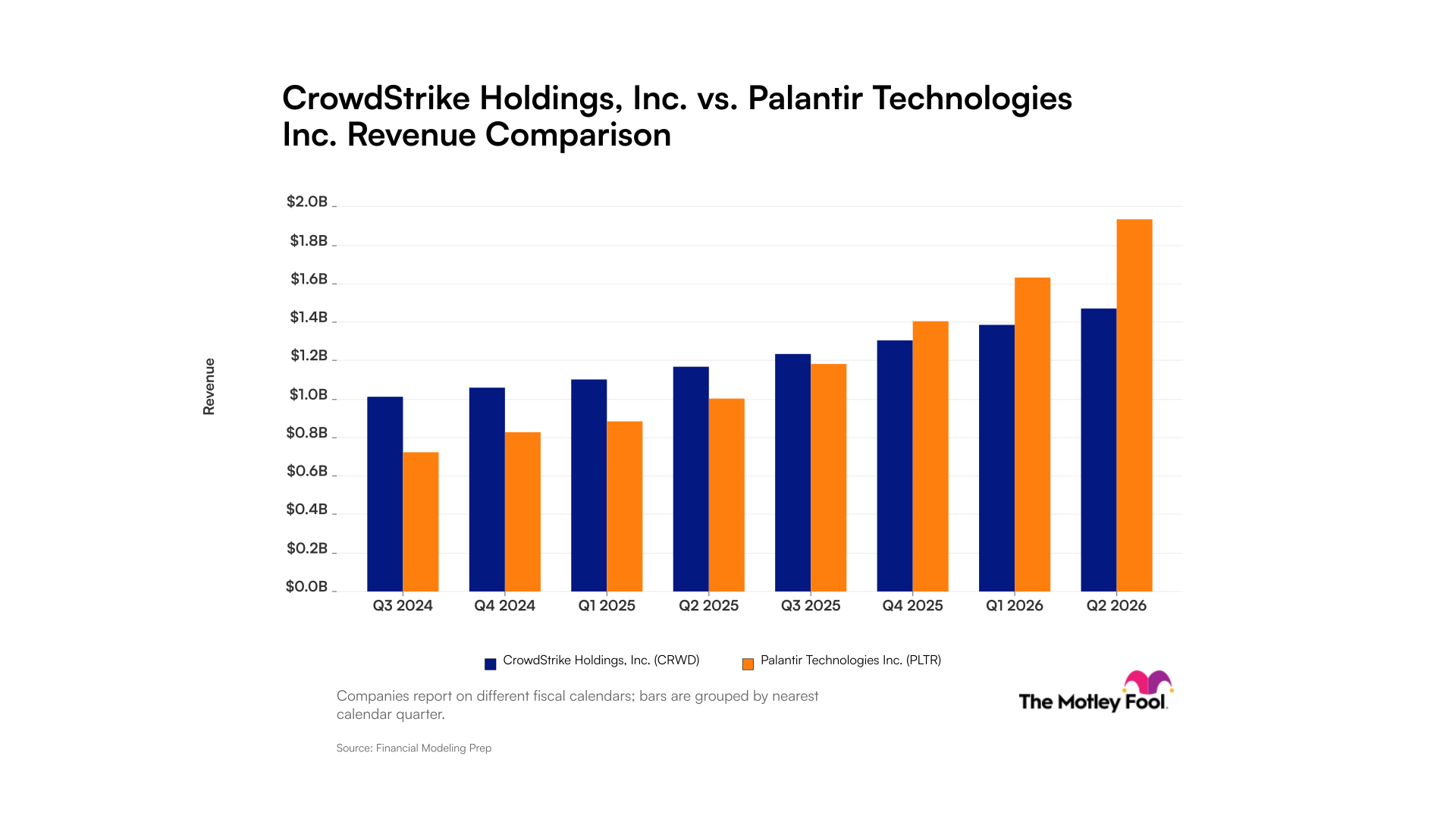
Most investors who focus only on Palantir's operating results will probably struggle to explain why the stock corrected so sharply. The company recently reported another outstanding quarter. Revenue for the period grew 85% year over year to $1.6 billion, while U.S. commercial revenue grew more than 130%, highlighting strong demand from businesses adopting its Artificial Intelligence Platform (AIP).
The quality of that growth is just as impressive. Unlike many fast-growing AI companies, Palantir is generating meaningful profits and strong free cash flow. Management has also continued to raise its revenue guidance, suggesting that demand remains healthy. In other words, the business is performing well. If anything, Palantir's business is stronger today than it was when the stock was making new highs.
Then why did the stock fall?
Here's where many investors get confused. They assume a falling stock price means a weakening business. Sometimes that's true. But sometimes the business keeps improving while the stock falls. That's largely what happened with Palantir.
During the early AI boom, investors were willing to pay an extraordinary premium for companies they believed would dominate the next generation of enterprise software. Palantir was one of those companies. Eventually, however, Wall Street stopped asking one question: "Is Palantir a great company?" Instead, it started asking another: "How much is a great company worth?"
That shift in focus changed everything. Once expectations become exceptionally high, even excellent earnings may not be enough to push the stock higher. Investors simply become less willing to pay an unlimited premium for future growth.

NASDAQ: PLTR
Key Data Points
Has the correction made Palantir cheap?
The recent pullback has undoubtedly made Palantir more attractive than it was at its peak. Investors today are paying less for the same business. That's a positive.
But that doesn't automatically make the stock cheap. Even after the correction, Palantir still trades at a huge premium multiple -- its price-to-earnings (P/E) ratio stood at 167 as of this writing -- which is significantly higher than many of the market's other AI leaders. For instance, Nvidia trades at a P/E of around 37.
But here's the thing: A high P/E ratio doesn't necessarily mean Palantir is overvalued. It simply means investors expect Palantir to expand at hypergrowth rates over the next several years. They're paying today for profits they believe the company will generate tomorrow.
Having said that, it does mean the margin for error remains thin. If Palantir continues executing at an exceptional level, today's valuation could look reasonable. But if growth slows, investors may look back and regret paying up for the stock today.
What does it mean for investors?
Palantir remains one of the most compelling enterprise AI companies in the market today. Its business continues to execute well. Commercial adoption is accelerating. And management has demonstrated that it can grow rapidly while generating meaningful profits.
The recent correction has certainly improved the investment case. But "more attractive" doesn't necessarily mean "cheap." For long-term investors, the real question isn't whether Palantir can grow. It's whether the company can grow fast enough to justify the premium investors are still willing to pay.
If you believe it can, then buying the stock today makes sense. If not, it's best to stay on the sidelines.