There is a puzzle in Amazon (AMZN -5.00%) shares right now. The stock sits around $244.41, down more than 11% from its 52-week high in May 2026. It has entered what is commonly called correction territory, and yet the business just posted some of its strongest numbers in years. When a stock falls while the company thrives, it usually pays to figure out which one the market has wrong.
Amazon's business is firing on all cylinders
Start with what is going right, because it is a lot. Amazon Web Services, the cloud division that drives most of the company's profit, grew 28% last quarter, its fastest pace in roughly 15 quarters, and its operating margin hit a record. The advertising business kept booming, and Amazon's custom AI chip operation, led by its Trainium processors, has scaled to a $20 billion annual revenue run rate. CEO Andy Jassy has said that overall profitability recently reached the highest level in the company's history. By almost any operational measure, Amazon is executing beautifully.
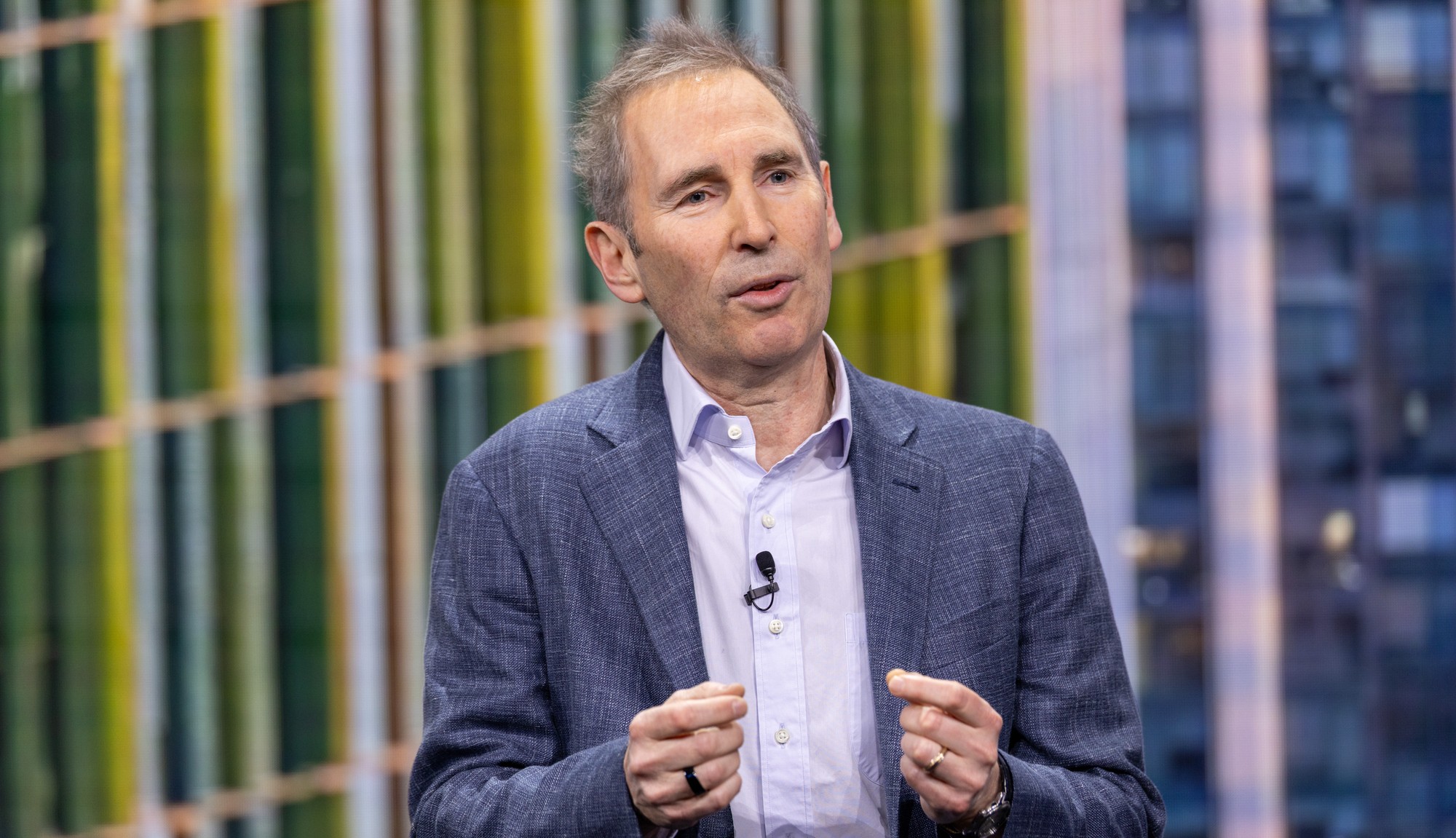
Amazon CEO Andy Jassy. Image source: Amazon.com Inc.
So why is Amazon's stock down 11%?
The sell-off is not about the business faltering. It is about how Amazon is paying for its future. The company plans to spend roughly $200 billion this year, most of it on AI data centers and infrastructure, and increasingly that money is coming from borrowing rather than profit. That worries investors on two fronts: It pressures near-term free cash flow, and it raises the stakes on a payoff that is still years away. Add lingering concerns about a stretched consumer weighing on the retail side, and you get a stock that has been marked down on spending fears rather than deteriorating fundamentals.
In other words, the market is nervous about the bill, not the product.

NASDAQ: AMZN
Key Data Points
This is the kind of disconnect that can create opportunity. Jassy has been blunt that Amazon is not making its enormous AI investment "on a hunch," and the evidence backs him up: AWS is reaccelerating, and the chip business is already generating real revenue. If that spending pays off the way management expects, today's pullback will look like a gift.
That said, the risk is genuine. Two hundred billion dollars is a staggering amount of capex; the returns land mostly in 2027 and beyond, and a heavier debt load leaves less room for error if AI demand cools. My honest read is that Amazon's fundamentals are stronger than its stock price suggests, which makes the dip worth a look, but I would buy gradually rather than all at once, given how much of the story still rests on spending that has yet to fully prove itself.