Greg Abel took over as Berkshire Hathaway's (BRKA +1.08%) (BRKB +1.21%) CEO at the start of the year. Despite taking the reins from legendary investor Warren Buffett, he has shown he's willing to go his own way with capital allocation decisions.
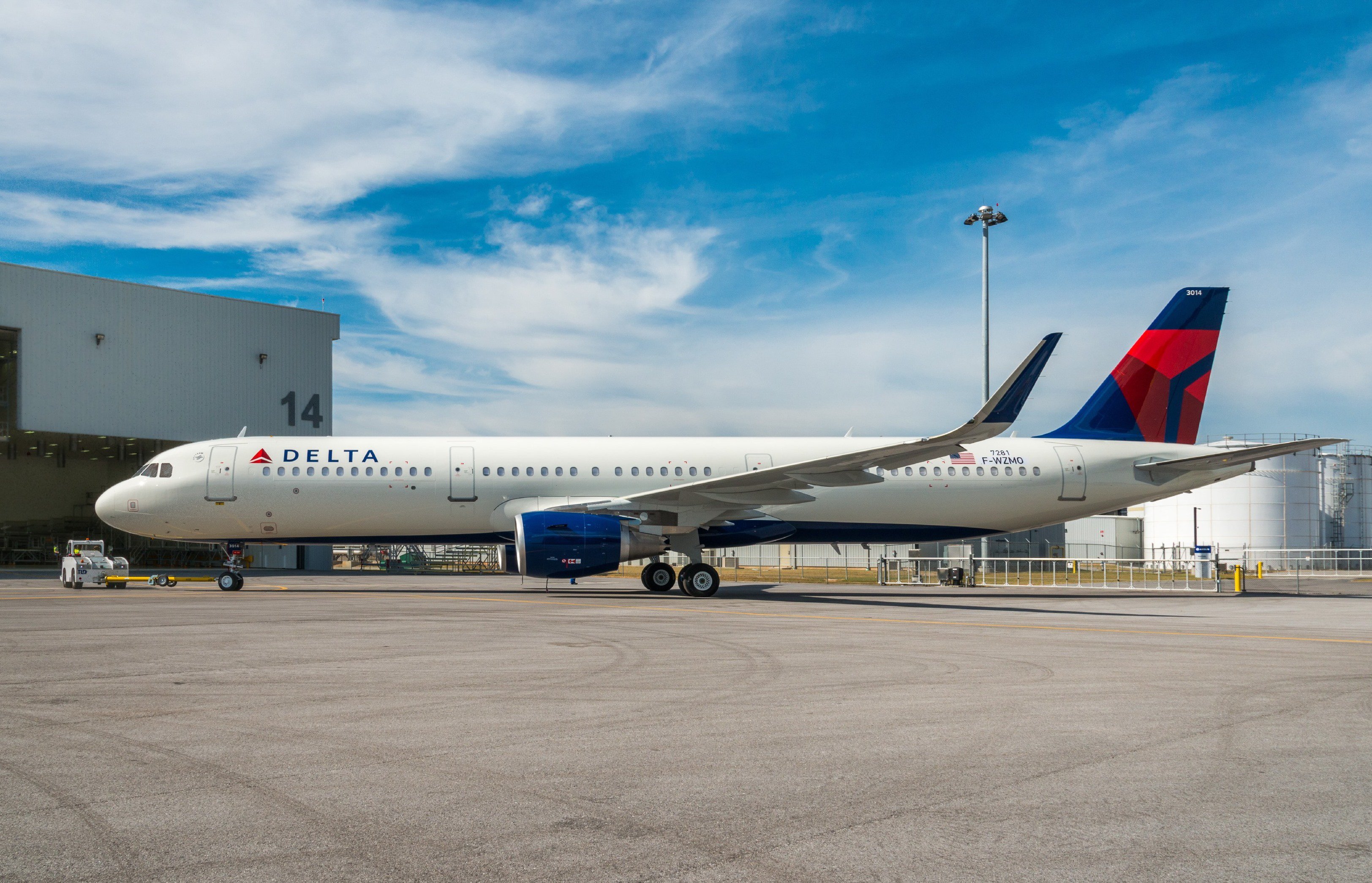
Abel has made many changes to Berkshire's investment portfolio in the first quarter. This includes selling its entire stake in Amazon (AMZN -1.87%) while initiating a position in Delta Airlines (DAL -3.47%).
You should never blindly follow any investor, but it's noticeable when a company with a long and successful investing track record makes changes, even if someone else is in charge. That makes this an opportune time to examine both companies more closely.
Image source: Getty Images.
Taking off or crash landing?
Most people know Delta Airlines and may have even flown on one of their planes at some point. That's because it's a major airline.
Still, the industry faces intense competition. In fact, Buffett has a checkered history with investing in airline stocks, most recently selling his stakes in 2020 following the onset of the pandemic. He'd previously stated that airlines haven't had a durable competitive advantage for a very long time. The sector is also sensitive to cost pressures, including fuel. With volatile oil prices, that could hurt Delta Airlines' bottom line.
Airlines have done well at times, only to face severe challenges. This results in a string of bankruptcies for a variety of reasons, such as an economic downturn that pressures results, over-expansion, and excessive debt. Last year, Spirit Airlines filed for bankruptcy and disappeared from the landscape.
With the collapse of budget airline Spirit, Delta Airlines stands to be one of the beneficiaries from the disappearance of a lower-priced competitor. Still, higher costs, particularly for fuel, have weighed on profitability. Second-quarter adjusted revenue grew 14% year over year to $17.7 billion. However, profitability dropped 24.3% to $1.6 billion.
Still, the market seems to like Delta's results. The shares have done well recently, gaining 51% over the last year through July 21. That easily outpaced the S&P 500 airline industry's 38.2%.
DAL Delta Air Lines
NYSE · As of 4:00 PM ET 10/16/26

Berkshire Hathaway certainly believes this strong stock performance can continue. It purchased more than 39.8 million shares during the first three months of the year.
Should you follow suit and buy Delta Airline's shares? Given the industry's cyclical nature, cost pressures, and capacity constraints, I'd follow Buffett's previous guidance and avoid the overall sector, including Delta.
Where does Amazon go from here?
Amazon has handsomely rewarded patient investors over the years. Over the past 10 years, the stock gained 565.1%, trouncing the S&P 500 index's 310.1% total return. Of course, investors want to know about future returns.
While people think of Amazon as an online seller, it's become much more. In fact, most of the company's profit comes from its cloud computing segment, Amazon Web Services (AWS).
With organizations clamoring for data, the rapid development of generative artificial intelligence, and AWS' market-leading share (28% as of March 31, according to Synergy Research Group), the business appears well positioned to benefit. The business's revenue and profits have been growing rapidly. It posted first-quarter top-line growth of more than 28% year over year to $37.6 billion, and operating income increased 22% to $14.2 billion.
Still, investors were taken aback earlier this year by management's spending plan, including $200 billion in capital expenditures for this year. Still, artificial intelligence represents a large growth area, and it's confident Amazon will see a meaningful return on its investment.
However, Amazon's shares trade at a better valuation. The price-to-earnings (P/E) ratio has dropped from 36 to 29 over the last year. That's lower than the five-year median of 51. Amazon's current valuation is in line with the S&P 500's P/E multiple.
AMZN Amazon
NASDAQ · As of 4:00 PM ET 10/16/26
Berkshire Hathaway owned about 2.3 million shares before getting rid of all of them in the first quarter. However, given Amazon's potential high growth and valuations, I'd buy Amazon shares.