After a couple of years of beating the market, SoFi Technologies (SOFI +1.51%) has lost its momentum. The fintech specialist's shares have declined 39% since January. What's more, there are still potential risks ahead that could send the stock even lower. Should investors buy SoFi's shares at current levels, or is it best to stay far away from the company right now?
Image source: The Motley Fool.
What's going on with SoFi?
SoFi encountered several headwinds this year. Here are three of them. First, the fintech leader was the target of a short-seller report that made alarming allegations. The author of the report, Muddy Waters, an activist short-selling firm, claimed, among many other things, that SoFi inflated its profitability through questionable accounting practices, including overstated loan values.
Second, SoFi's financial results and guidance haven't been as strong as the market anticipated. Third, SoFi appears to be overvalued, even after the stock's decline this year. The company's shares are trading at 28.1x forward earnings, versus an average of 15.2x for financial stocks. Given these headwinds, can SoFi recover?

NASDAQ: SOFI
Key Data Points
The path forward
Although SoFi's financial results haven't been quite up to market standards this year, they aren't terrible, not by any means. In the first quarter, the company's total revenue increased 43% year over year to $1.1 billion, while its earnings per share rose 100% to $0.12. Many investors expected more, especially given the company's valuation. But the company's forward price-to-earnings has declined significantly and is now about as low as it has been at any point over the past couple of years, and well below its average for this period.
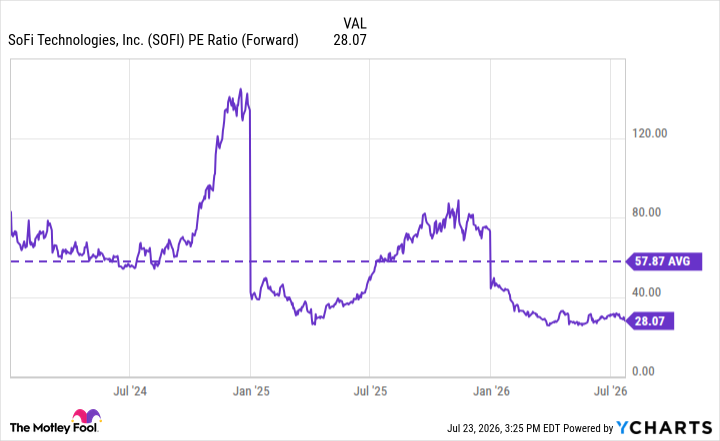
SOFI PE Ratio (Forward) data by YCharts
True, it is still above the industry average, but SoFi is growing revenue and earnings much faster than many of its peers, suggesting it is worth a premium. It's also worth noting that the company's ecosystem continues to expand. In the first quarter, SoFi had 14.7 million members, up 35% year over year. Product growth is also strong, rising 39% year over year to 22.2 million in the period.
But notice that this means the company has only 1.5 products per member, granting it significant room to grow its revenue by cross-selling additional services to its existing user base. SoFi could also see growth accelerate as it launches new products and services, while the company is arguably slowly building a moat through switching costs that will only deepen as its members sign up for more products. With that said, what should investors make of the short-seller report?
SoFi's management strongly denied Muddy Waters' claims. That doesn't mean they are false, but Muddy Waters, like all short-sellers, also has something to gain from SoFi's falling stock price. It's worth keeping an eye on that saga, but for now, my view is that it shouldn't weigh too much on the stock. There are other reasons SoFi remains somewhat risky to invest in, including its heavy reliance on personal loans. The stock will likely be volatile moving forward, whichever way it moves. For investors comfortable with heightened risk, it's worth initiating a small position in the company today.