SpaceX (SPCX -2.16%) will report quarterly results for the first time as a public company on Aug. 4, after the market closes. For most newly public companies, a first report is a formality with a webcast attached. Not here.
The rocket and satellite company went public in June at $135 per share, saw the stock climb as high as $225.64, and has since watched it fall to about $118 as of this writing -- roughly 48% below the high, and under the IPO price itself. And under the company's own lockup rules, the report starts a clock: two trading days after results are released, up to 20% of eligible insider and employee shares become free to trade for the first time.
So the Aug. 4 numbers aren't just a debut. They're the evidence that will greet the market's first real wave of potential sellers. Here's what has to show up in them for the stock to stabilize -- three things, in order of importance.
Image source: The Motley Fool.
1. Growth that holds its pace
The revenue story is the reason the bulls are still here. SpaceX generated $19.3 billion in trailing-12-month revenue through March, after 2025 revenue grew 33% -- remarkable growth for an industrial company of this size.
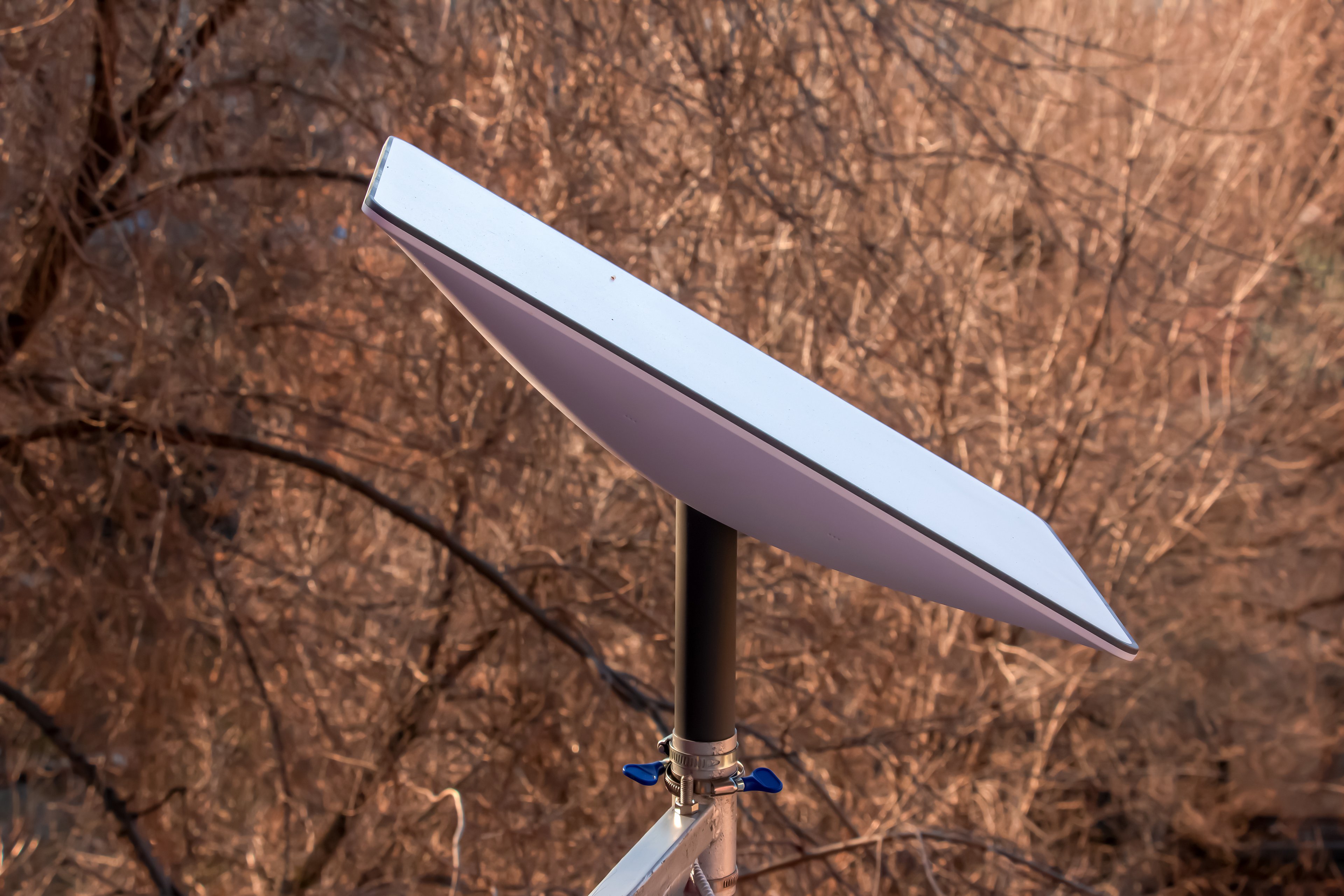
Starlink does the heavy lifting. The connectivity segment produced $11.4 billion of revenue in 2025, about 61% of the 2025 total, and grew roughly 50% year over year, with segment operating income up 120%. The space segment contributed about $4.1 billion, and the AI (artificial intelligence) segment built on the absorbed xAI business added $3.2 billion. Starlink also ended March with 10.3 million subscribers, up from 8.9 million at the end of 2025.
A first report that shows Starlink still compounding at anything near that rate keeps the growth story intact. A visible slowdown there, and the 33% headline number starts to look like history rather than trajectory.
2. Losses that look like investment, not decay
SpaceX loses money. The company posted a $2.6 billion operating loss in 2025 and a $1.9 billion operating loss in the first quarter of 2026 alone.
But the composition matters more than the headline. SpaceX poured about $3 billion into Starship research and development in 2025, and another $930 million in the first quarter of 2026. For a company valued in the trillions, the direction of those losses matters more than their size. And beneath the losses sits real cash generation: adjusted earnings before interest, taxes, depreciation, and amortization (EBITDA) came in at a positive $6.6 billion in 2025 and $1.1 billion in the first quarter.
That's the shape of a company funding an enormous development program from a profitable core, not a business that can't cover its own costs. What the report has to show is that this shape is holding: losses growing no faster than the investments explain, and the Starlink profit engine still running underneath.
3. A reason for the unlocked shares to wait
The third requirement is less about the quarter than about the audience. Two trading days after the report, the first 20% tranche of eligible shares comes out of lockup, with further blocks scheduled to follow through the end of the year.
Every one of those newly free shareholders will be deciding whether to hold or to sell a stock that sits below its IPO price. Management's job on Aug. 4 is to give them a reason to wait -- a first-ever forward outlook, disclosure on where Starship spending peaks, or detail on how the AI segment makes money. Silence on those fronts, with that much new supply arriving, could be expensive.

NASDAQ: SPCX
Key Data Points
What I'd do before Aug. 4
I'm doing nothing before the numbers. At about $1.5 trillion in market value, SpaceX trades near 80 times its trailing sales -- a valuation that leaves no room for a disappointing debut, even 48% below the high.
But I'm not interested in betting against a business growing 33% with a profitable satellite franchise inside it, either.