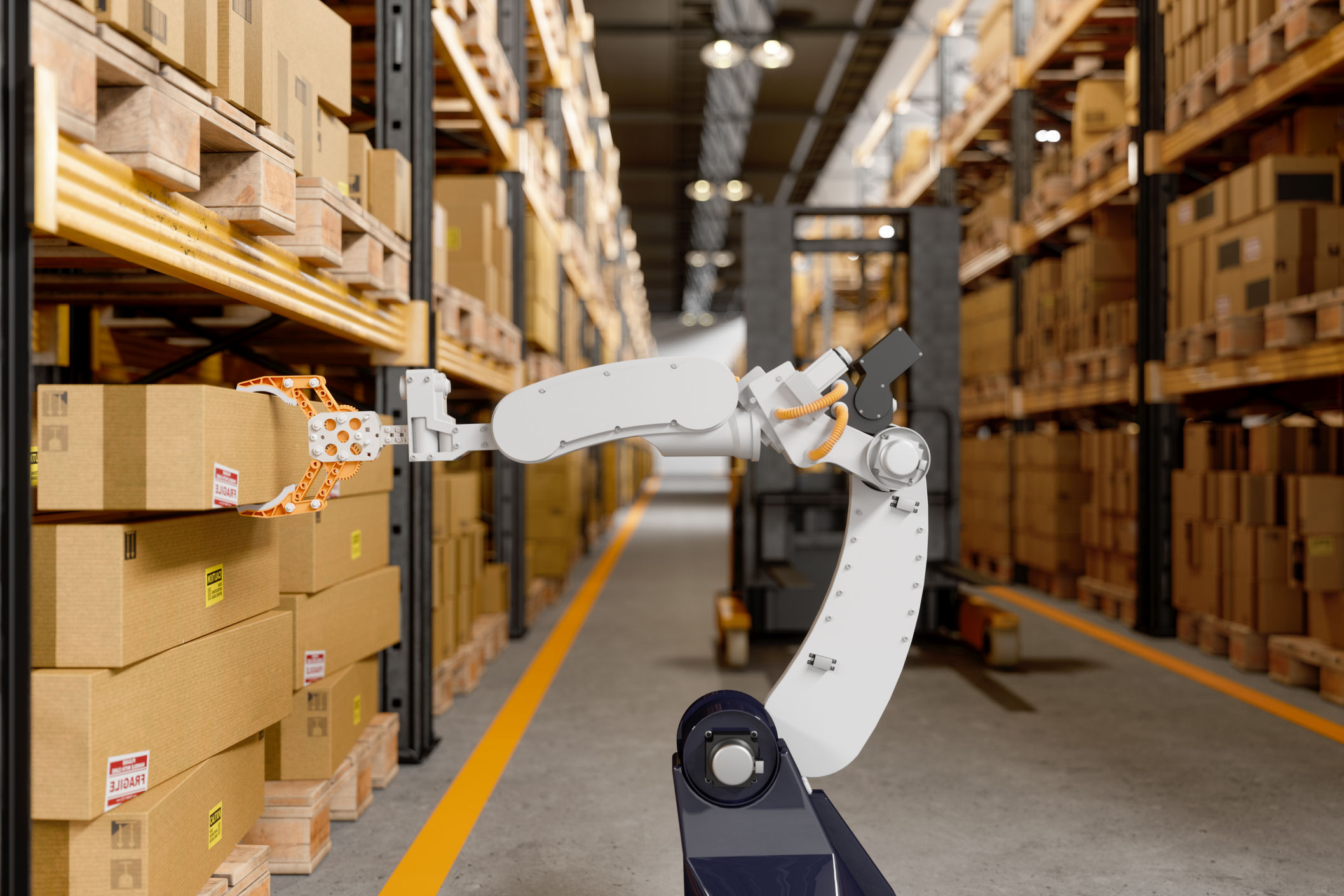
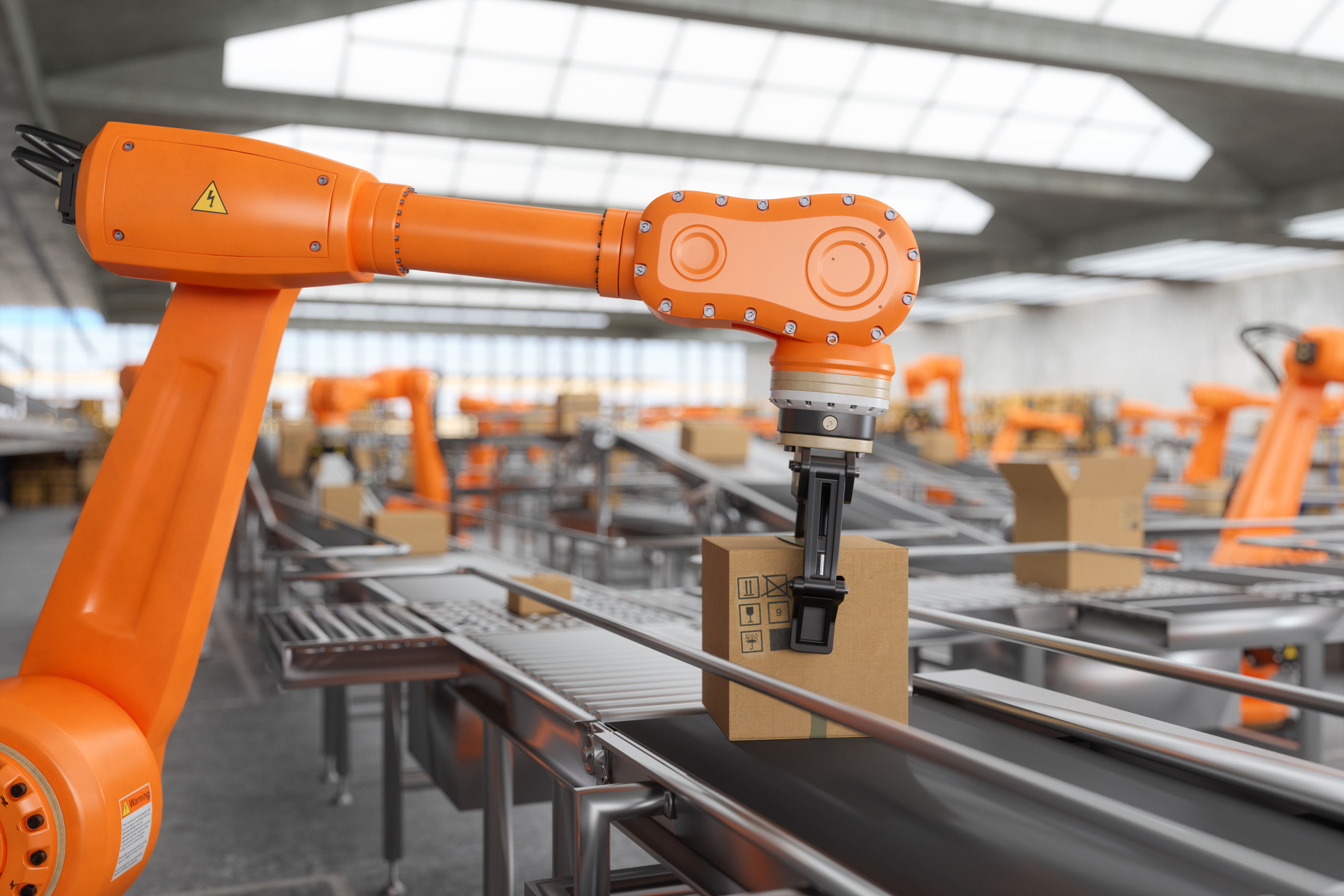
Amazon has been an early adopter of warehouse automation, deploying over 1 million robots across its operations network since 2012. Its fulfillment center in Shreveport, Louisiana, uses eight different robotics systems for package fulfillment and delivery, and robots are used across Amazon's other warehouses to also sort, lift, and carry packages.
One way to invest in warehouse robotics is just to buy Amazon stock. Those robots can help boost efficiency, which can lead to increased profitability; Amazon's advanced facilities can cut processing times by 25%.
There is, however, another company in the warehouse robotics field trading at a fraction of Amazon's cost, around $40 as of this writing: Symbotic (SYM -2.68%).

Image source: Getty Images.
Cooling down after heating up
Symbotic had a huge run in 2025 as it expanded its client base and reported solid revenue growth in a growing field that's catching investors' attention; shares climbed 150% in 2025. In 2026, however, it's been a different story, with shares dropping more than 30%.
Part of that drop is just that expectations were high after the stock price run-up in 2025. For instance, Symbotic reported revenue climbed 23% to $676 million in its fiscal 2026 second-quarter earnings report. The robotics company also swung from a net loss of $10 million to net income of $9 million in the second quarter of 2026. That said, it missed the mark for analysts on earnings per share (EPS), reporting EPS of $0.01 against expectations of $0.12.
With that context in mind, there are still plenty of reasons to like Symbotic's long-term potential.
SYM Symbotic
NASDAQ · As of 4:00 PM ET 10/23/26

A new acquisition
On July 2, Symbotic announced that it completed the acquisition of ARMS Innovation. ARMS provides real-time intelligence for automated warehouse environments, further enhancing Symbotic's offerings. The company said:
By integrating ARMS's advanced software capabilities, the Symbotic System will expand beyond industry-leading automation into a comprehensive, real-time operational solution that unifies and optimizes every element of warehouse performance -- across both automated systems and human workflows.
Essentially, a robot can be programmed to perform a task, but its ability to function can go awry if something out of the ordinary happens. Integrating ARMS into warehouse automation, however, enables real-time disruption identification and predictive maintenance. The software can also identify who is working on-site, assign workers to where they are needed most, and even order parts.
A strategic backstop
A worry some investors have with Symbotic is its reliance on Walmart, as 85% of its fiscal 2025 revenue came from the retail giant. In addition, a large portion of the company's $22.5 billion backlog at the end of 2025 was from Walmart.
That's a significant customer concentration risk, which is often counted as a knock against Symbotic. That relationship, however, has some nuance, as Walmart serves more as a protective backstop for Symbotic with upside potential than as a concentration risk.
For starters, as of March 31, Walmart owns an 11.7% stake in the robot company, which means it should be rooting for its financial success as much as anyone. Second, Walmart sold its advanced systems and robotics business to Symbotic in 2025 for $200 million while also paying Symbotic $520 million for automation systems it wants to add to 400 of its accelerated pickup and delivery centers.
All of that combined has both companies tied together for the foreseeable future.
Is Symbotic worth the investment?
Warehouse automation is not a trend that is going away. The global automation warehouse market is expected to grow from $27.4 billion in 2026 to $59.5 billion by 2030, according to Grand View Research. That gives Symbotic a lot of opportunity ahead, but it may still struggle to get out of its slump in 2026.
Symbotic will report earnings on Aug. 5, and with expectations so high, anything short of a stellar report could send the stock price lower. But in the long term, for investors who can handle the risk and want an investment in the growing robotics market in their portfolio, Symbotic could fit as a small, speculative position.