Bloom Energy (BE +5.49%) delivered one of the week's most striking earnings reports. On Tuesday, the fuel cell maker posted record second-quarter results and raised its full-year revenue guidance to $3.9 billion to $4.2 billion -- a range whose midpoint is double the company's 2025 revenue.
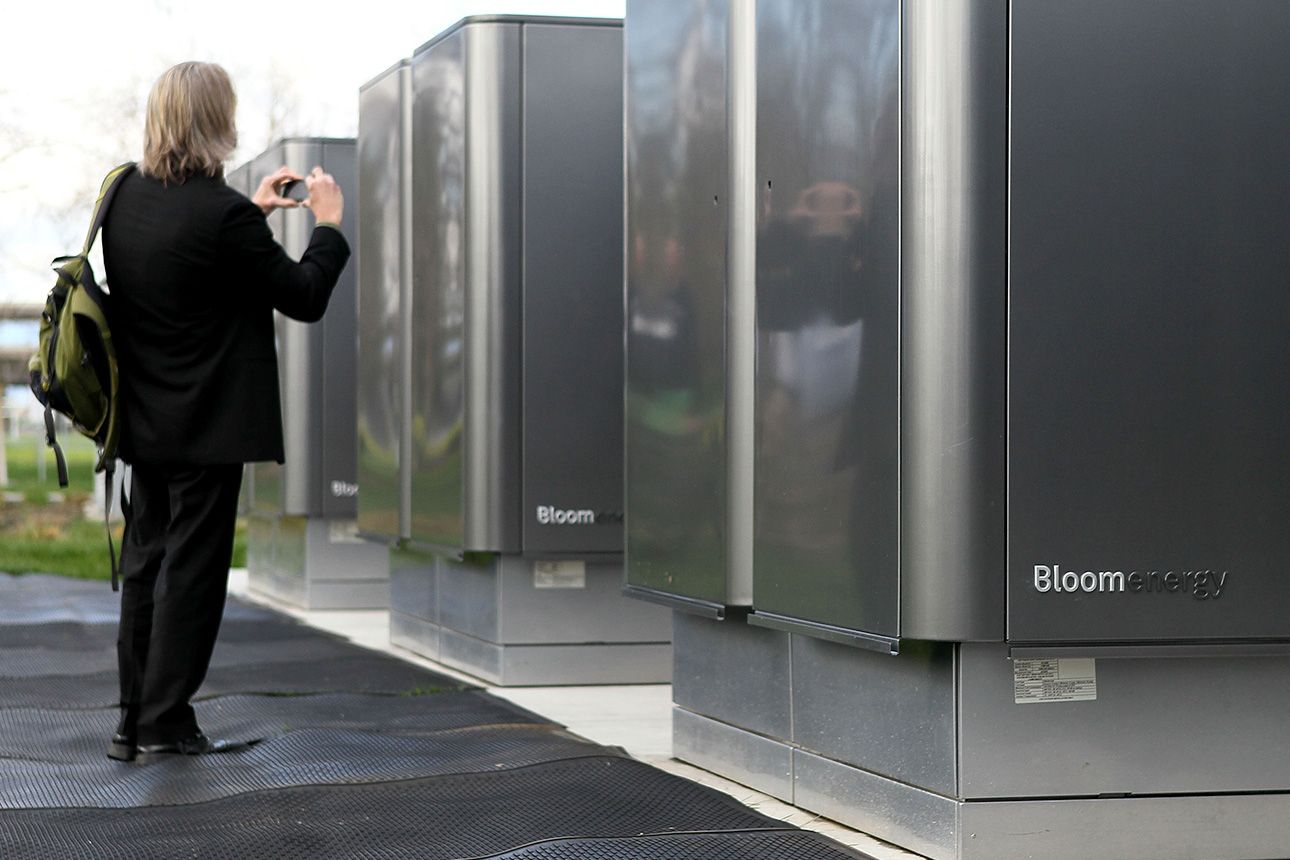
Bloom builds solid-oxide fuel cell systems that generate electricity on-site, which lets a data center start drawing power without waiting years for a grid connection. That product has put the company in the middle of the AI (artificial intelligence) build-out, and the numbers now reflect it.
So here's my prediction: Bloom doubles its revenue again (from about $4 billion this year to about $8 billion) by the end of 2029. That sounds aggressive after a stock run as hot as this one. But the arithmetic says otherwise. Let's walk through it.
Image source: Getty Images.
The math behind the doubling
Bloom's revenue in the second quarter of 2026 rose 166% year over year to about $1.07 billion, with product revenue more than tripling from the year-ago period to $935.4 million. And the company swung to operating income of $182.2 million from a small loss a year earlier, while non-GAAP (adjusted) earnings per share jumped to $0.78 from $0.10. Operating cash flow came in at $226.4 million.
The annual trend is just as important as the quarter. Bloom's revenue rose 37% in 2025 to $2.02 billion, and the new 2026 guidance implies growth of about 100% at the midpoint. In other words, growth is accelerating -- sharply.
"Today, all the major US hyperscalers and over a dozen US neoclouds, AI labs, and colocation data center operators have validated and approved our power solutions for their AI factories. Bloom is now a standard for AI onsite power," said CEO KR Sridhar in the company's second-quarter earnings release.
Now the forward math. Doubling from roughly $4.05 billion (the midpoint of guidance) to $8.1 billion by the end of 2029 works out to annualized growth of about 26% over three years. That's the entire requirement. A company currently doubling its revenue could see its growth rate fall by roughly three-quarters and still hit the mark.
For a demand backdrop, consider that data centers keep getting built faster than the electric grid can serve them. Bloom's pitch (power that arrives with the building, not years after it) is aimed at exactly that gap.
What could break the math
The constraint worth watching isn't demand. It's capacity.
Bloom is in the middle of doubling the annual production capacity of its Fremont, California, factory from 1 gigawatt to 2 gigawatts, with completion expected by the end of 2026. In its latest annual report, the company said each added gigawatt of capacity takes about $100 million to $150 million of capital spending and six to nine months to install -- modest sums next to its $2.67 billion in cash. But hitting $8 billion of annual revenue by 2029 would likely require selling essentially everything that expanded factory can produce, quarter after quarter, plus growth in the service business layered on top. If the expansion slips, or if Bloom needs still more capacity and can't add it fast enough, the doubling gets pushed out. Management says capacity won't be the constraint. That promise is exactly what this prediction leans on.
BE Bloom Energy
NYSE · As of 4:00 PM ET 10/26/26

There are demand risks, too, even if they're secondary. Data center projects are large and lumpy, so a few delayed deployments can dent any single year's revenue. The customer base is concentrated among big infrastructure buyers. And if AI data center construction slows broadly, Bloom's orders would likely cool with it.
One more caution, this one for the stock rather than the business. At about $164 per share as of this writing, Bloom trades at about 61 times the middle of its own new adjusted earnings per share guidance for the year. My prediction is about revenue, not a claim that shares are cheap at that price. A company can double its sales and still deliver disappointing returns if the starting valuation already assumed it.
Still, the prediction stands. The demand is validated by the customer groups management just described, the guidance already carries the first doubling, and the second one requires only about 26% annualized growth from a company compounding much faster than that today. Watch the Fremont expansion. If Bloom exits 2026 with 2 gigawatts of annual Fremont capacity on schedule and adjusted gross margin holds near management's roughly 34% target, $8 billion of revenue by the end of 2029 looks less like a stretch than the headline number suggests.