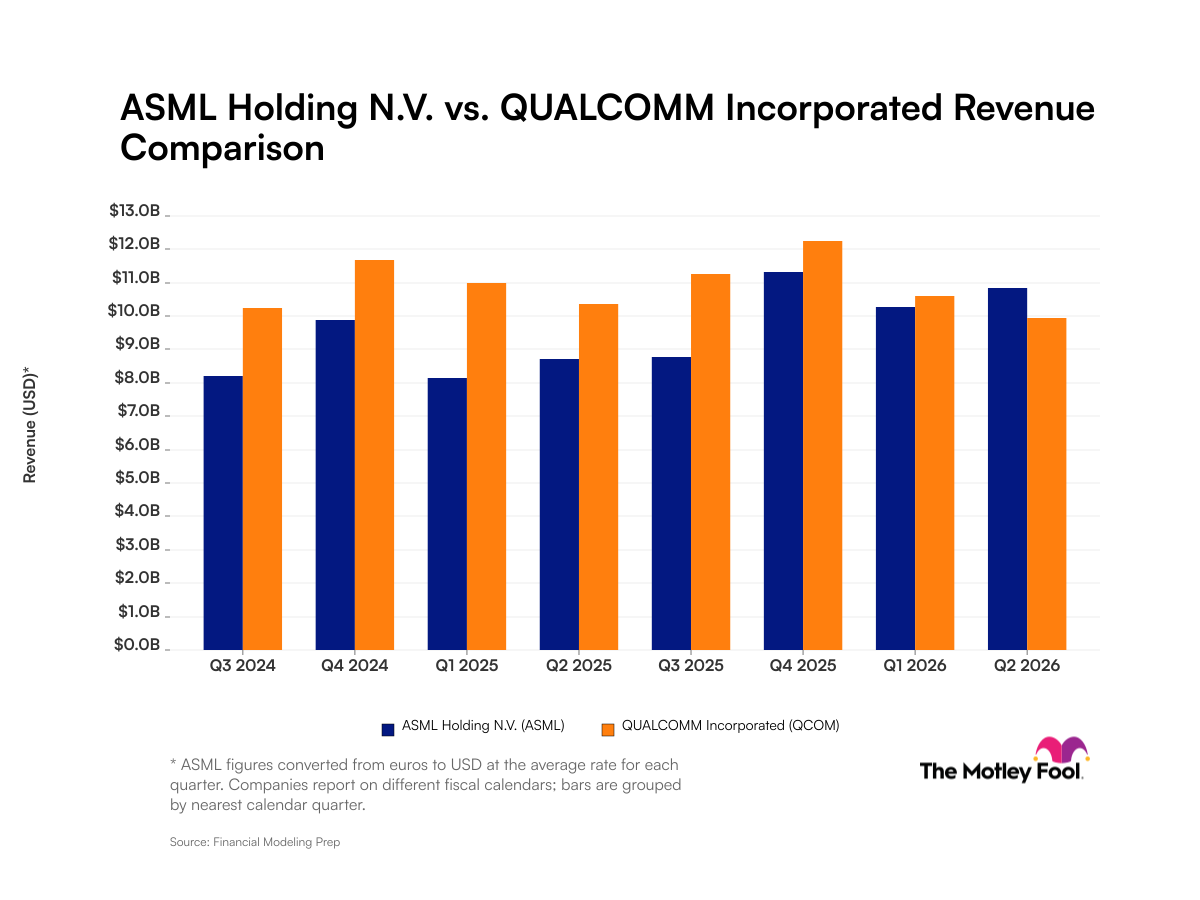
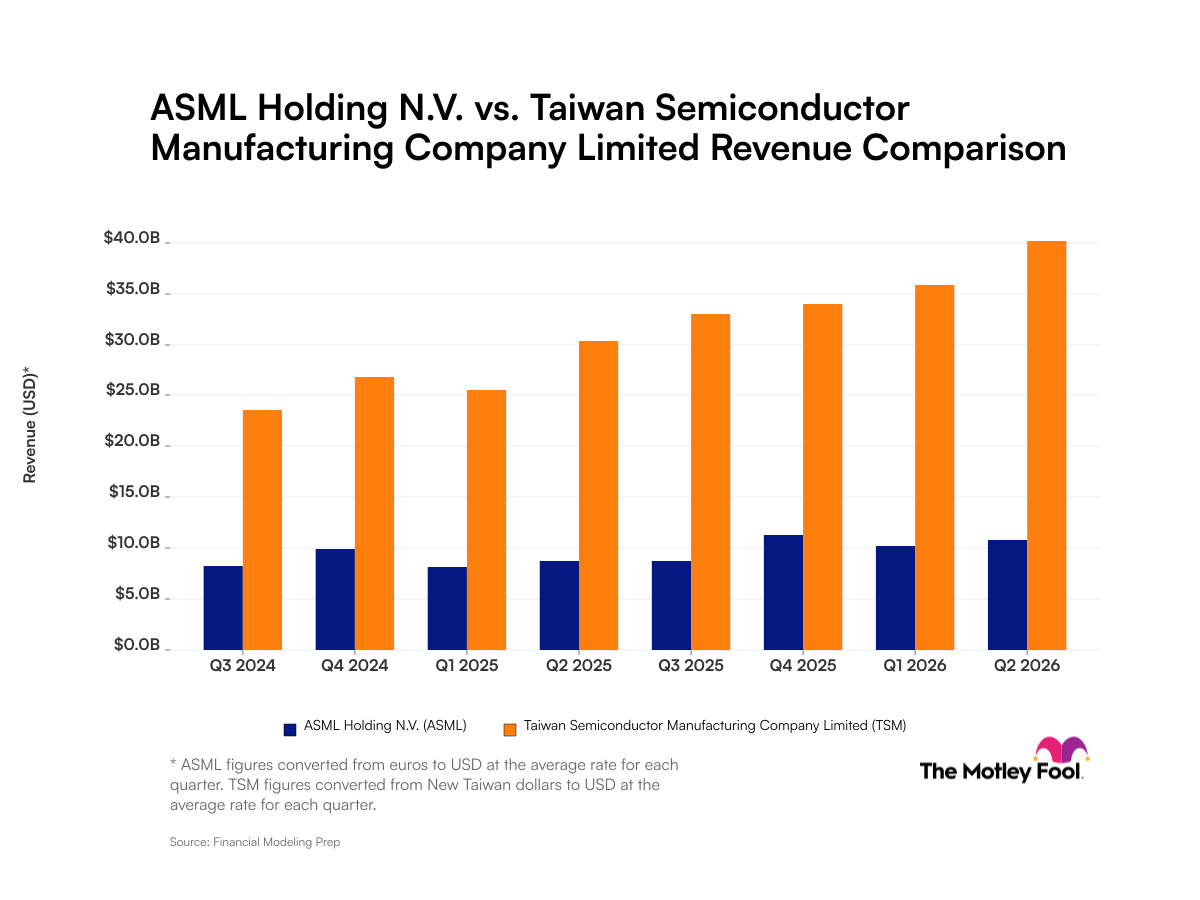
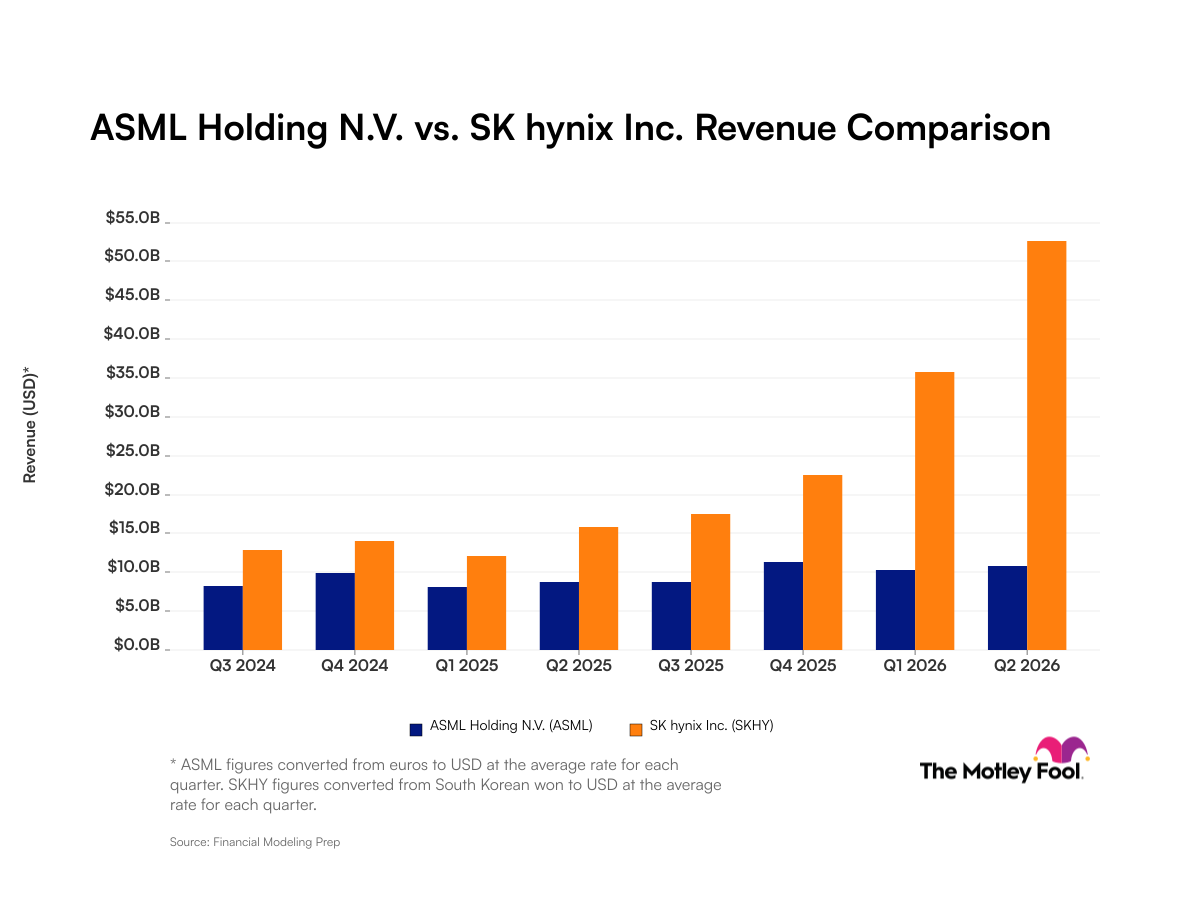
ASML Holding (ASML -0.40%) makes lithography systems that are vital to the semiconductor production process. Since it plays a key role in the AI build-out and has no direct competitors for its most advanced equipment, it's up some 60% year to date.
That success has pushed ASML's share price above $1,700, so even just picking up a few shares gets expensive. Companies often conduct a stock split in this situation to make their shares more affordable. ASML isn't on the list of upcoming stock splits at the time of this writing, so let's evaluate if that's likely to happen by year's end.
Image source: The Motley Fool.
The case for a stock split
A forward stock split would divide ASML's shares, making them smaller and more affordable. This wouldn't affect the value of anyone's holdings, unlike share buybacks or the issuance of new shares. If you have 10 shares, and ASML carries out a 10-for-1 split, you'd end up with 100 shares, but the split itself wouldn't change the value of your holdings.
The main benefit of a stock split for ASML is that it could draw more interest from retail investors. It can also make options trading more practical. For example, if an investor wants to sell covered calls, they'd need 100 shares, which is much cheaper after a stock split.
There's also a recent precedent for this kind of move. KLA, a semiconductor equipment company, was trading at about $2,400 when it completed a 10-for-1 stock split on June 12. Booking Holdings isn't in the same industry as ASML, but the travel and tech company is another big name that split its stock this year. Trading at over $4,000, it carried out a 25-for-1 stock split in April.
Why ASML might hold off
Semiconductor stocks have been choppy lately. The PHLX Semiconductor index declined 15% in July, and although ASML held up a bit better, it still lost 12%. Now that ASML's momentum has slowed down, a stock split may not be on management's list. This company also isn't known for stock splits. Its most recent forward split was over 25 years ago, in April 2000. Since then, it has only carried out two minor reverse splits in 2007 and 2012.

NASDAQ: ASML
Key Data Points
The likelihood of ASML splitting its stock in 2026 largely depends on what happens with its share price during the last five months of 2026. I'm doubtful that ASML will make significant gains over that period, in part because it already trades at 37 times forward earnings. That's much more than Taiwan Semiconductor Manufacturing, another semiconductor company with a near monopoly -- it trades at 24 times forward earnings.
ASML remains well-positioned for growth if companies continue to invest heavily in AI infrastructure. However, growth will probably be more moderate going forward, given that investors have already been paying a premium for it. That's why I think a stock split is far more likely in 2027 or 2028 than in the back half of this year.