Investors understand that the shares they hold are stakes in that underlying company's success or failure. Nevertheless, investors also understand that the company's success or failure -- or potential -- isn't always reflected in that stock's price. The trick is just knowing when and to what degree that disconnect exists.
That's something Amazon (AMZN +3.29%) founder Jeff Bezos was forced to accept early on. Although he took his e-commerce giant public in 1997 -- in the midst of dot-com mania -- the dot-com crash of 2000 crushed this young stock. All told, AMZN stock fell from a peak of $113 to a low near $6 during this turbulent period, shaking investors' confidence in the fledgling company.
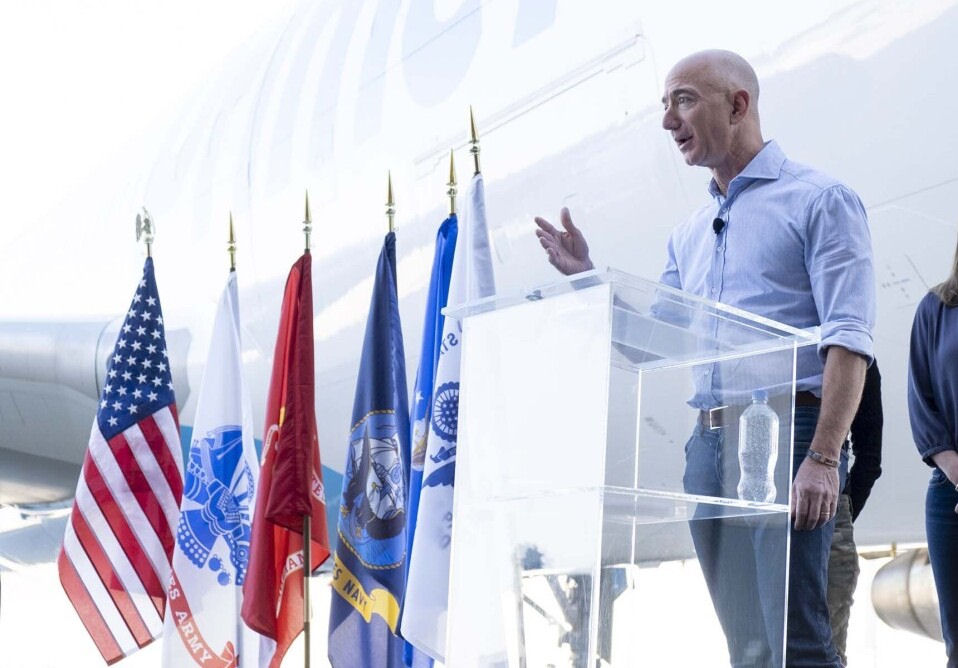
Jeff Bezos. Image source: Amazon.com Inc.
Some CEOs would have given up by getting out. Others would have sought to prop up the stock's price at any cost, even at the expense of their company's long-term future. Not Bezos, though. As he explained in a Q&A session last year, at the time, "the number of customers [still] went up, every month. Our gross profits went up every month... Our losses as a percentage of sales went down every month. Every single business metric -- new customers, customer repeat purchases, everything that we were monitoring through that entire period -- kept getting better."
In other words, there was a good reason to keep going.
He then adds, "That's one observation about bubbles in general. The fundamentals of the business can be disconnected... the stock price is [only] an output that you actually have very little control over."
Qualitative as much as quantitative
Bezos' brief comments arguably oversimplify everything happening at the time. He's even said in the past that lucky timing and unexpected developments can play a big role in a young company's success or failure. (Amazon's lucky timing was the proliferation of the internet that was just getting started in earnest.)
Nevertheless, there's no denying that Bezos' persona also largely propelled Amazon into the massive success it would eventually become. In his words, "entrepreneurs need to be optimistic almost to the point of delusion." That, and a willingness to wait far longer than most founders -- and for that matter, most early investors -- are usually willing to wait for success. Although launched in 1994, Amazon wouldn't start producing sustained profits until 2004.
For patient shareholders, though, it was certainly worth the wait.

NASDAQ: AMZN
Key Data Points
For future reference
So what's the actionable takeaway for investors? There are actually two. One of them is embracing Benjamin Graham's well-circulated advice: "In the short run, the market is a voting machine but in the long run, it is a weighing machine." Bezos acknowledges he was simply looking to "build a heavy company" that would eventually weigh the scales down in such a way that reflects the business's full and fair value, even if it took years to do so.
The other takeaway is much more nuanced. That's the need to spot actual opportunities with true staying power, and then identify the companies best positioned to capitalize on them. Amazon had what names like Groupon, GoPro, and Blue Apron never really had. That's a sustainable business model with a wide moat that serves a universal market with lots of repeat business.
Figuring out which names have these characteristics, of course, means looking past all the noisy hype.