Sweetgreen (SG +0.63%) delivered another disappointing earnings report Thursday after hours, and while there were some signs of progress in its turnaround efforts, it clearly wasn't enough as the stock was trading down double digits Friday morning before recouping some of those losses.
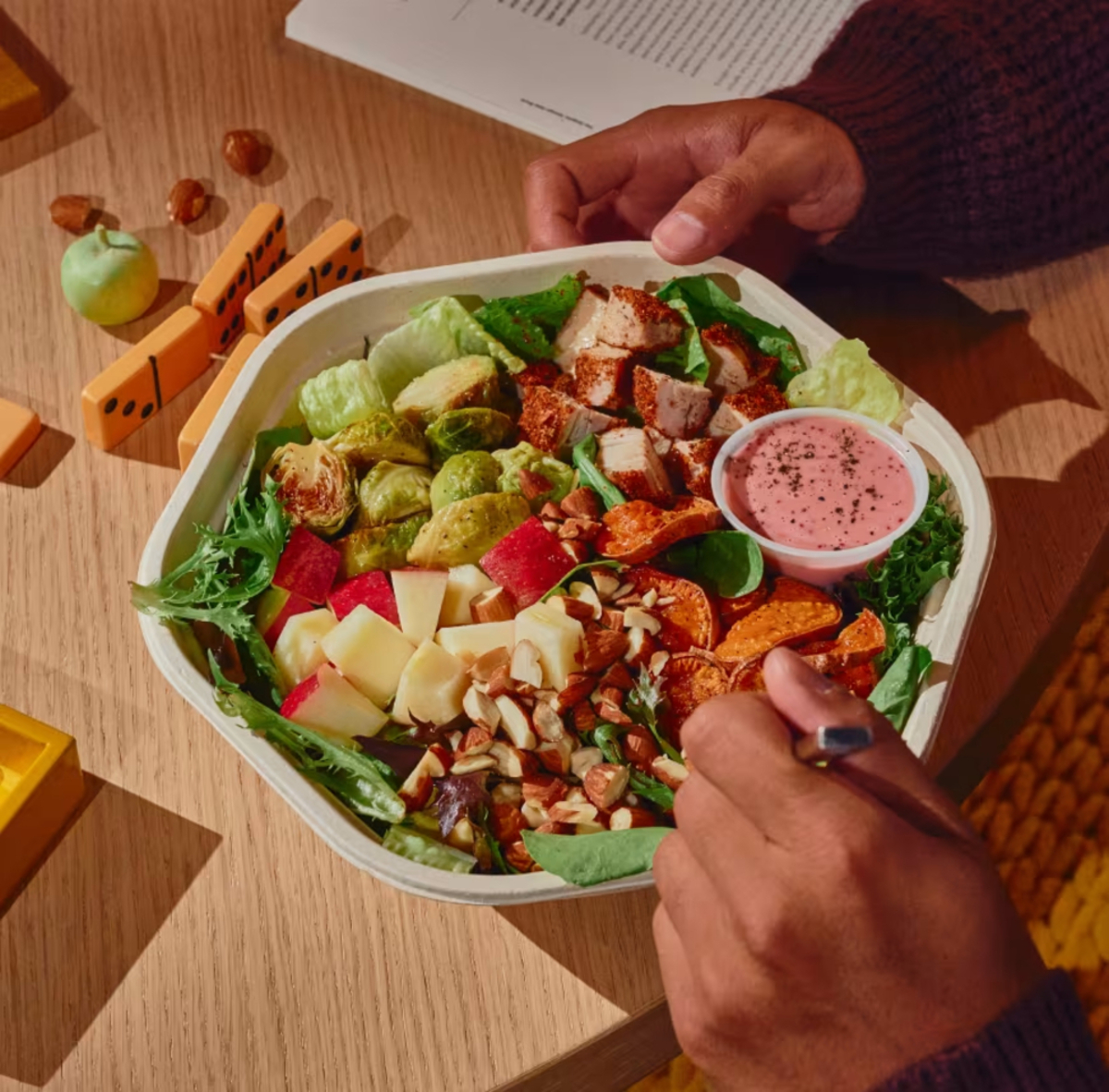
Image source: Sweetgreen.
Trends are improving, but the numbers are still declining
The clearest picture from the report is that Sweetgreen's results are moving in the right direction, but not fast enough, and sales and profits are still declining.
Its same-store sales decline improved from 12.8% in the first quarter to 6.2% in the second quarter, but that's still a substantial slide. The nationwide roll-out of wraps in the second quarter drove some momentum for the company. Same-store traffic was down just 2% in the quarter, with a 4% decline in sales and mix due to promotions and comparatively lower prices for wraps than bowls.
The company also showed positive momentum in the quarter as same-store traffic was flat in June after falling by 3% in April and May. Management said that comps were positive for the first 10 days of July before the cyclospora outbreak. Based on those results, Sweetgreen seemed to be on its way to a strong second half. However, the turnaround hit a wall due to the cyclospora outbreak that started in mid-July. Even though Sweetgreen's products weren't directly affected by the outbreak, and the company doesn't even use iceberg lettuce, consumer fears led to a downturn in fresh salad consumption, which cut July comparable sales by an estimated 600 basis points.
As a result of the outbreak, management slashed its same-store sales guidance for the full year from a decline of 2%-4% to down 7%-8%, and it cut adjusted earnings before interest, taxes, depreciation, and amortization (EBITDA) guidance to a loss of $23 million-$27 million from a profit of $1 million-$6 million.
Management said, "The pace and timing of recovery remain uncertain" due to the outbreak.

NYSE: SG
Key Data Points
There's still light at the end of the tunnel
Management acknowledged that its results need to be better, but it pointed to a number of operational improvements that should deliver results in the coming quarters.
Throughput is improving as the company said that some restaurants are able to turn out 250 entrees in an hour, compared to just 50 in others, and it said that wrap adoption continues to grow in the markets where it first introduced it, New York and Seattle.
The company also introduced a modified create-your-own pricing structure in order to eliminate the sticker shock from customers building their own bowls, which should help solve the company's value perception challenges.
Overall, Sweetgreen still seems to have an appealing opportunity for recovery because its food has always been popular. Even after a year-and-a-half of declining sales, its average sales per restaurant is still $2.5 million, above the industry average in the fast food industry, and management believes it can get back to previous levels at $3 million, which would put it in line with Chipotle, the fast-casual leader.
The company's challenges have traditionally centered around value perception and throughput. Consumers like its food, but find it too expensive or say its lines are too long. Its experience with ripple fries are a good example of this. The company introduced the popular product last year, but it slowed down kitchen speeds too much, so it got rid of it after five months.
However, management is now clearly focused on tackling its pricing and throughput, and if its initiatives pay off, comparable sales should turn around. Management noted that it's trailed its peer group in price increases by 13 percentage points since 2019, so it's bringing prices more in line with peers, and it didn't raise prices in the last year.
Additionally, the positive comps in the first 10 days of July show the business was on the right track before the cyclospora outbreak.
Given that the business looks stronger than the stock slide or the report makes it look. With the cyclospora outbreak still continuing, investors will need to have patience, but the business seems like it's on the right track to recovery.