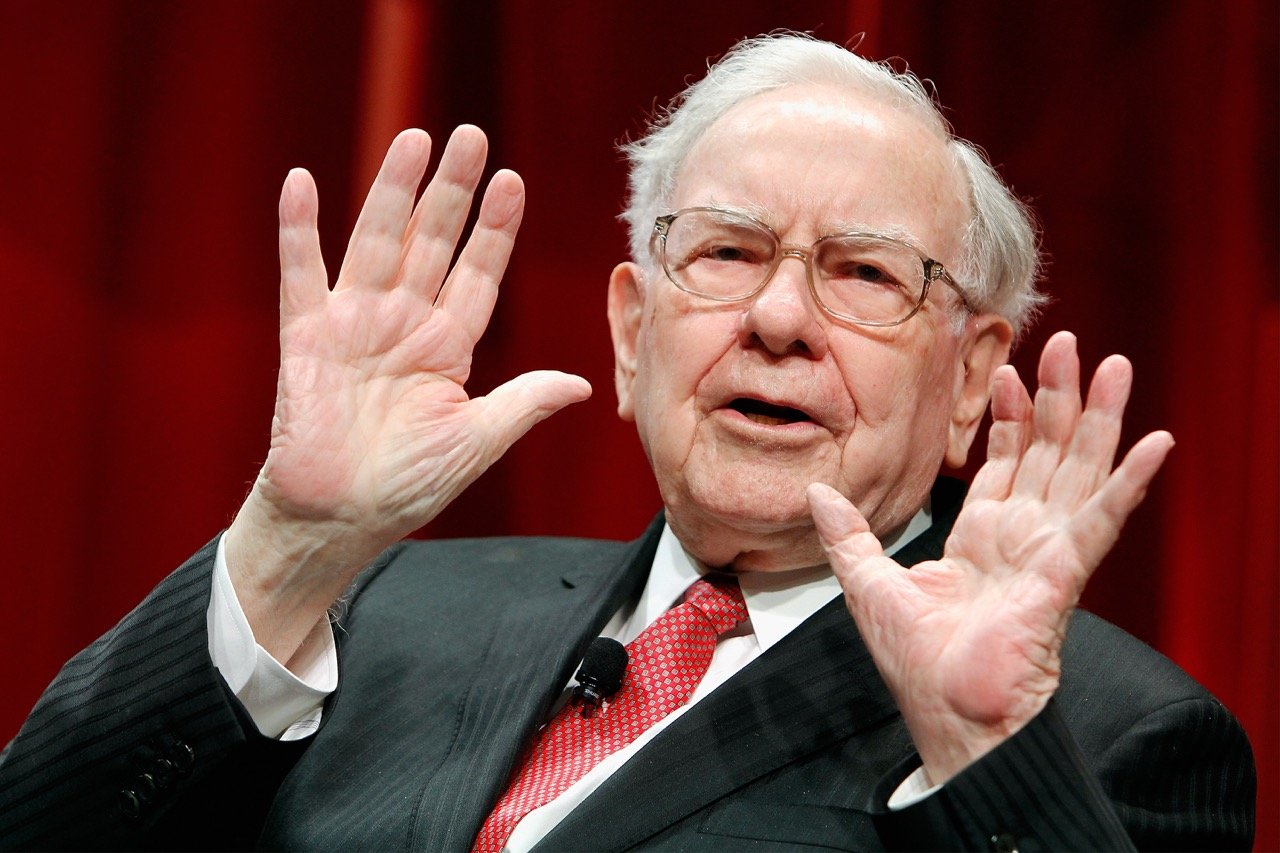
You know him as one of the world's best stock-pickers. That's not how he recommends most people build wealth, however. Rather than taking on the risk of managing a portfolio of individual stocks, Warren Buffett believes most investors are better served by buying and holding a simple index fund; his suggestion is the Vanguard S&P 500 ETF (VOO +0.56%), which is designed to mirror the S&P 500 (^GSPC +0.58%).
And he's 100% right.
What he said, and why he said it
Buffett's made the suggestion more than once. He couldn't have been any clearer about his feelings, however, than he was at Berkshire Hathaway's (BRKA +0.22%) (BRKB -0.15%) 2021 shareholder meeting, when he plainly said "for most people, I think that the best thing to do is buy an S&P 500 index fund," (although it was in 2013's letter to Berkshire shareholders that he specifically recommended Vanguard's S&P 500 fund).
So why does he preach what he doesn't practice? A couple of reasons.
One of them is the purpose of Berkshire Hathaway itself. Berkshire Hathaway isn't Mr. Buffett's personal retirement nest egg. It's first and foremost an insurance company that needs reliable dividend income that only individual stocks can provide. In this vein, Berkshire owns a number of privately held businesses that also generate reliable cash flow.
Image source: The Motley Fool.
The chief reason Buffett suggests investors buy and hold an index fund like the Vanguard S&P 500 ETF or the SPDR S&P 500 ETF Trust (SPY +0.53%), however, is that he knows a somewhat frustrating little secret about picking stocks. That is, in their effort to outperform the overall market, most investors will take actions that ultimately cause them to underperform it.
There's little statistical data specifically about ordinary retail investors to prove or disprove this claim. It's still a well-supported argument, however, from surprising different source. That's the professional stock-pickers who manage mutual funds. Standard & Poor's ongoing performance monitoring indicates that over the past year, nearly 79% of large-cap funds available to U.S. investors underperformed the S&P 500.
It gets worse the farther out you look. Over the past five years, 89% of these funds have lagged the broad market. Over the past 15 years, 90% of these funds trailed the S&P 500.
Connect the dots. If the pros struggle to do it even with their wealth of data and tools intended to help them achieve market-beating results, it's a reasonably safe bet that ordinary individual investors will also face the same struggle.
Just know the risks, and why they're risks
None of this is to flatly suggest you should never own any individual stocks. Your intuition about a particular pick may well end up being right. A portfolio with a mix of stocks and index funds works well for many people.
Just understand why even most professional fund managers (including hedge fund managers) generally underperform. That is, they're often stepping into stocks after they've become obvious winners, and therefore overpriced. As Buffett also reminds us, "you can't buy what is popular and do well."