When Warren Buffett retired as CEO of Berkshire Hathaway (BRKA -0.09%) (BRKB +0.06%) at the end of 2025, he handed incoming CEO Greg Abel a massive war chest of about $369 billion. That cash hoard has come down, but not much, still sitting at about $360 billion in cash and short-term Treasuries at the end of the second quarter.
Berkshire also held about $323 billion in equity securities in Q2 and was a net buyer of roughly $12 billion in stocks during the first half of 2026. Additionally, the company has made three deals, including the $9.7 billion OxyChem acquisition, the $8.5 billion Taylor Morrison acquisition, and a $10 billion private placement with Alphabet.
Abel has been allocating capital selectively. His patience for the right opportunities shows why he was the right man to lead Berkshire.
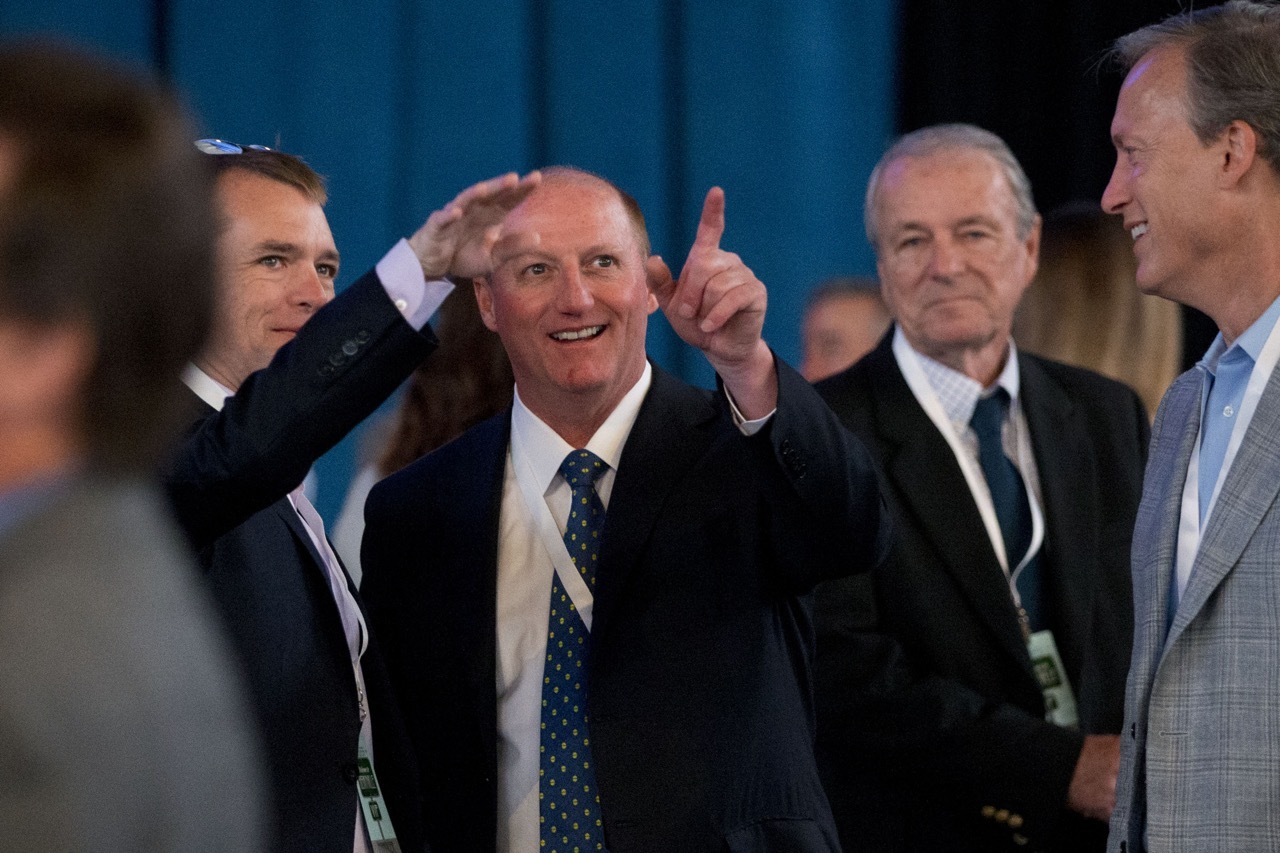
Image source: The Motley Fool.
Dry powder for the right opportunities
In his first shareholder letter earlier this year, Abel called Berkshire's massive cash position "dry powder," adding, "We will always aim for ownership of productive businesses over U.S. Treasuries."
Recent moves show he's willing to act when the setup is right. The private placement with Alphabet helps fund the tech giant's artificial intelligence infrastructure build-out, which could fuel future growth in its cloud business. This comes on top of the 54 million shares Berkshire already held in Google's parent company in the first quarter.
Along with the OxyChem and Taylor Morrison deals, Abel is already signaling that Berkshire will stick to Buffett's playbook: putting cash to work in durable businesses when valuations make sense. In the meantime, Berkshire's cash hoard is earning real money in today's higher-rate environment. Discount accretion on U.S. Treasuries topped $6 billion in the first half of 2026, or about $12 billion annualized, reflecting the interest income recognized on Berkshire's T-bills.

NYSE: BRKB
Key Data Points
High valuations make Abel's hunt more difficult
The challenge is that valuations across the stock market remain at historically elevated levels. The S&P 500's trailing price-to-earnings ratio is currently 29.8 times -- well above the historical mean of 16.2 times. Even over the past 25 years, the index has typically fluctuated between about 20 and 25 times earnings.
Berkshire is a big business with a $1.1 trillion market cap. That scale raises the bar: Abel doesn't just need durable businesses at fair prices -- he needs opportunities large enough to meaningfully move Berkshire's results.
In that context, Abel is continuing Buffett's disciplined, patient approach to investing, which shows why he was the right man to lead Berkshire. The right opportunities will show up eventually. And if a bear market returns, Berkshire will be sitting on an extremely valuable asset: a war chest of cash ready to deploy into quality businesses at cheaper valuations. That's also a strong reason to consider holding Berkshire stock for the long term.