Many investors and analysts expect interest rates to inevitably come down. When interest rates fall, companies may be incentivized to spend more because borrowing costs are lower. Stocks can also end up soaring higher. Rate increases, meanwhile, can have the opposite effect.
Although the stock market is doing well, it's debatable whether the overall health of the economy is good, as many people are struggling due to inflation. And unfortunately, JPMorgan CEO Jamie Dimon believes that it may remain high due to artificial intelligence (AI).

Image source: Getty Images.
Why AI spending could keep rates higher for longer
Dimon believes that spending on AI is so strong that it could prevent inflation from coming down. And if it's not getting down to the Fed's 2% goal, that creates a greater incentive for Fed chair Kevin Warsh to hike interest rates, or at least keep them where they are now. Dimon told CNBC, "Inflation is both what people expect, but it's also capital demand, and it seems to me there's a lot of demand for capital."
Tech companies are spending billions on AI data centers in order to position themselves for the next wave of growth opportunities in the sector. Not only does it add risk and raise investors' concerns about the payoff from these investments, but it can also keep rates high due to higher capital demand.
If rates don't come down, that could spell trouble for the economy and the stock market
While interest rates have come down over the past couple of years, they're still nowhere near the levels they were at in 2022, before they started rising quickly to fight inflation. They might not reach those levels anytime soon, but the market may have been expecting more cuts.
If rates instead increase, or even stay where they are now, that may not give the economy or the stock market the boost many investors expected. And if investor expectations change and the prospect of rate decreases fades, there may be greater caution in the market, resulting in a pullback in stocks. The S&P 500 (^GSPC +0.73%), which has been flying high in recent years, may thus be due for a significant decline.
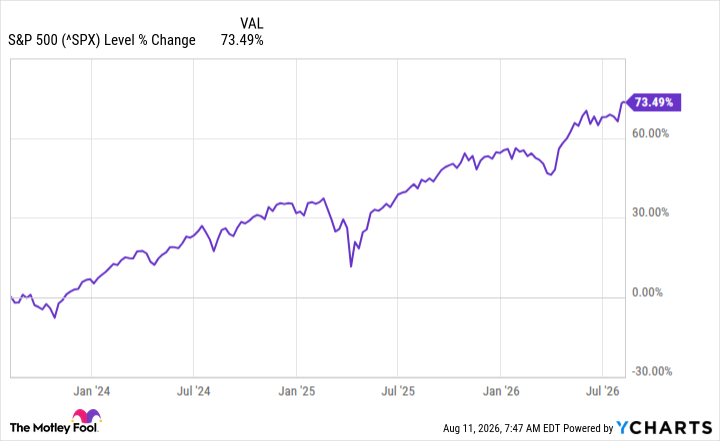
Between the potential for interest rates to remain high and possibly even increase, and the S&P 500 being on track to generate above-average returns for a fourth consecutive year, there's ample reason for investors to consider looking for safer investments these days and to diversify, as there is rising risk for a correction or even full-blown crash in the near future.
By allocating more money to defensive stocks and value-oriented investments, investors can reduce risk while remaining invested in the market. And it may be prudent to do that sooner rather than later.