Nvidia (NVDA -0.59%) supplies the world's most sought-after graphics processing units (GPUs) for data centers, which are the primary chips used in artificial intelligence (AI) training and inference workloads. Sales have been so strong that the company's market capitalization has ballooned from $360 billion to $5.4 trillion since the AI boom started gathering steam in early 2023.
Nvidia is scheduled to release its operating results for its fiscal 2027 second quarter (ended July 31), on Aug. 26, and all signs point to another blowout report. Its stock looks inexpensive right now, so here's why I predict it will soar in the aftermath.
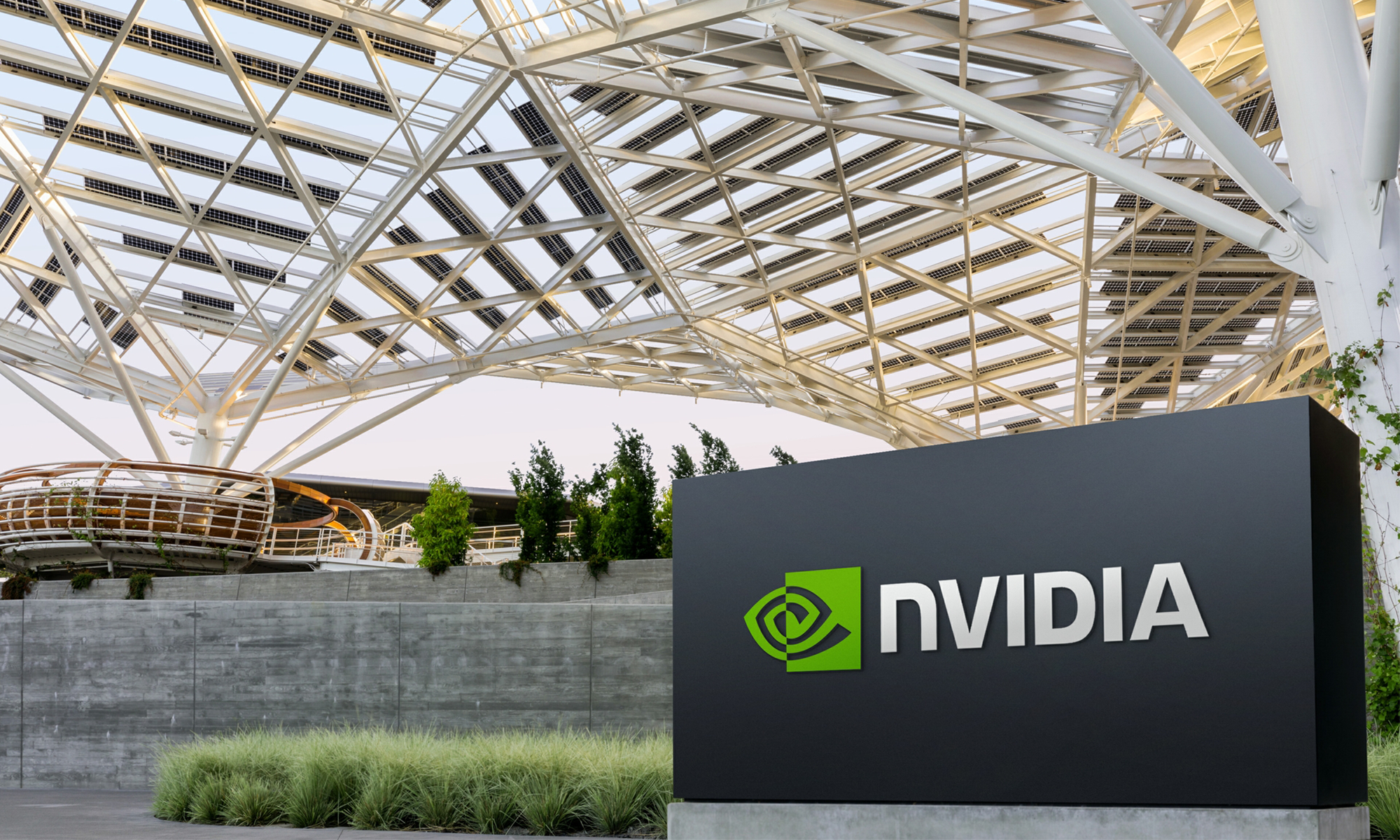
Image source: Nvidia.
Nvidia will update investors on its most powerful chips ever
Nvidia's Blackwell Ultra GB300 data center GPUs are currently the best chips on the market for processing AI workloads. In fact, they can deliver up to 50 times more performance in certain configurations than the company's H100 GPU, which launched in 2022, so a lot of progress has been made in the last four years.
But during the second half of this year, Nvidia will start shipping commercial quantities of its new Vera Rubin systems, which include the Rubin GPU, Vera central processing unit (CPU), and a series of upgraded networking components. They are slated to be so powerful that developers can train AI models with 75% fewer GPUs than the Blackwell platform, resulting in a 90% reduction in inference token costs.
Inference tokens are the text, images, and computer code generated by an AI model in response to a user's prompt. They are expensive to produce because they require substantial computing power and electricity, to the point that some large companies, including Walmart and Uber Technologies, have begun capping usage for their employees to prevent budget blowouts.
But if Rubin GPUs can reduce inference costs by 90%, that would encourage greater adoption while also improving data center operators' profit margins. That's why, according to Nvidia CEO Jensen Huang, every frontier model company in the AI industry plans to adopt Vera Rubin systems at launch, which wasn't the case with Blackwell. Investors can expect a progress update on Aug. 26.
NVDA Nvidia
NASDAQ · As of 4:00 PM ET 10/23/26

Wall Street is expecting very strong second-quarter results
Nvidia generated $81.6 billion in total revenue during its fiscal 2027 first quarter (ended May 28), an 85% increase from the year-ago period. The data center segment alone accounted for $75.2 billion of that revenue, and it grew at an even faster pace of 92%.
According to the company's own guidance, the upcoming second-quarter report on Aug. 26 could show $91 billion in total revenue (plus or minus 2%), which would be a 95% increase from the year-ago period. The data center business is likely to have accounted for the overwhelming majority of that total once again.
Wall Street is aligned with Nvidia's forecast because the average analyst expects $91.8 billion in second-quarter revenue. The Street also anticipates generally accepted accounting principles (GAAP) earnings of $2.06 per share, which would be almost double the year-ago result. The global shortage of GPUs is allowing Nvidia to dictate prices, which is significantly boosting its profit margins.
Wall Street will also be watching Nvidia's forward guidance very closely, because it will be a clear indication of potential future GPU demand. Analysts believe the company will forecast around $103.1 billion in total revenue for the fiscal 2027 third quarter, so anything higher would be very bullish for Nvidia stock.
Nvidia stock is cheap by historical standards
Based on Nvidia's trailing 12-month GAAP earnings of $6.53 per share, its stock is trading at a price-to-earnings (P/E) ratio of 34.3. That is a 44% discount to its 10-year average of 61.6.
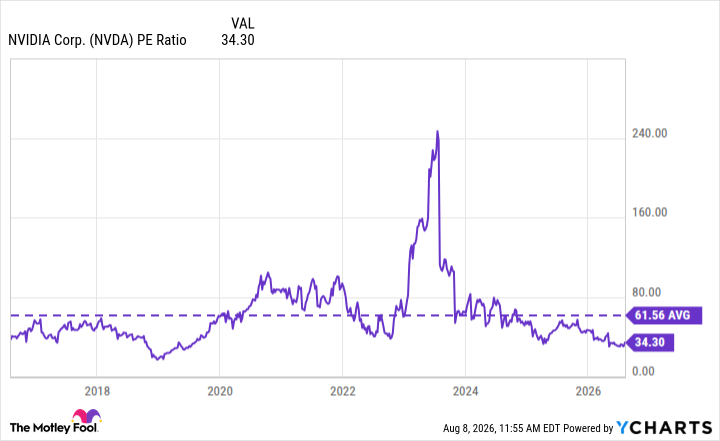
Data by YCharts.
But it gets better, because Wall Street thinks Nvidia could grow its annual earnings to $9.45 per share during fiscal 2027, placing its stock at a forward P/E ratio of 23.7. In other words, the stock would have to soar by 160% over the next six months or so just to match its 10-year average P/E ratio of 61.6, assuming the Street's earnings forecast proves to be accurate.
Valuation is a big reason why I think Nvidia stock has room to soar after Aug. 26. If the company's second-quarter earnings report meets or exceeds Wall Street's expectations, it could squash some of the recent jitters in the AI infrastructure space and give investors the confidence to put some money to work.