Intel (INTC -3.45%) stock fell by about 4% on Monday after the chipmaker announced plans to sell $15 billion worth of shares to fund capital expenditures and boost its working capital.
"Customers continue to signal a strong and sustainable demand environment, driven by unprecedented investment in AI compute. Progress in emerging areas including physical AI, purpose-built silicon, advanced packaging and external wafers represent significant growth opportunities for Intel," its press release announcing the the move stated.
That continued the steep decline Intel stock has been on since the company released its second-quarter results on July 23. As of Aug. 10, it was trading at less than $98 per share, down 31% from its recent peak on June 22.

Image source: Getty Images.
Ramping up capex
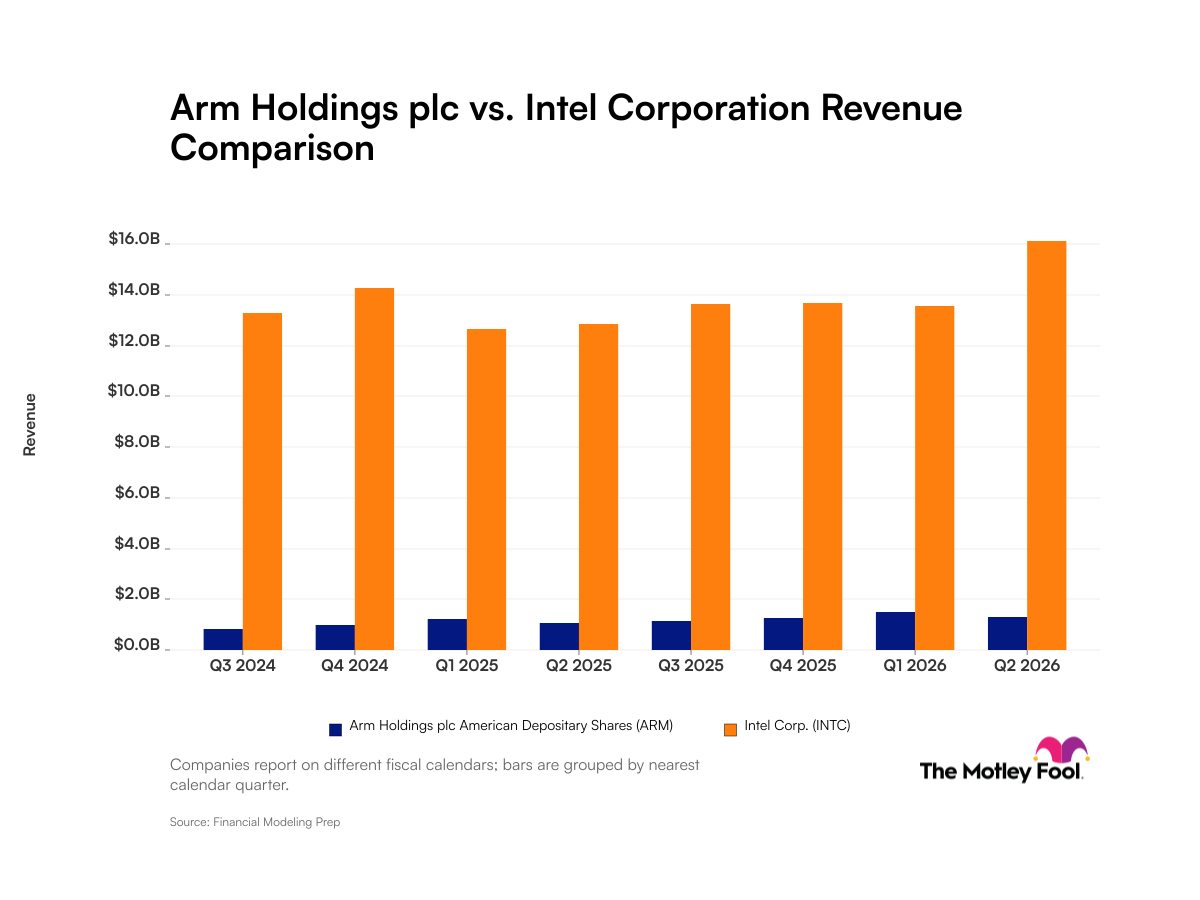
The slide that began in late June continued despite a strong Q2 report that beat Wall Street estimates. Revenue rose 25% to $16.1 billion, while adjusted earnings climbed to $0.42 per share from a net loss of $0.10 per share in the prior-year period. Gross margin increased by 12.1 percentage points to 40.8%.
However, management offered a mixed third-quarter outlook. Projections for revenue and gross margin ticked higher to levels exceeding analysts' estimates. However, adjusted earnings were projected to drop to $0.38 per share, which may have contributed to the stock's subsequent sell-off.
It speaks to the market's concerns about Intel's spending. On the Q2 earnings call, CFO Dave Zinsner said the company was raising its plan for 2026 capital expenditures to more than $20 billion. Previously, it forecast capex in the $17 billion to $18 billion range.
The semiconductor company also forecast that its 2027 capital expenditures would be significantly above 2026 levels, based on rising customer demand.

NASDAQ: INTC
Key Data Points
Intel stock is still up 388% over the past year
The Aug. 10 sell-off came in direct response to the news that the company was selling $15 billion worth of new shares. That dilutes the value of its previously existing shares. It also plays into the narrative that Intel could be overspending on AI infrastructure.
One major reason why Intel is raising money with this equity sale is because it can afford to. The stock has been on an incredible run this year, up 164% year to date and 388% over the past 12 months. And perhaps in light of the earnings outlook, the dilution of shares, and higher capex spending, some investors have decided to cash out and take profits after that performance.
Intel stock is now trading at an expensive 88 times earnings and 80 times forward earnings. But investors can see that its infrastructure build-out is expected to deliver long-term growth because its five-year price/earnings-to-growth (PEG) ratio drops to 0.5 -- a figure that puts it in value territory.
The company recently inked a foundry deal with Fortinet, and there are reports that it has signed a deal to manufacture more than 3 million Tensor Processing Units for Alphabet in 2028.
Intel is also making chips for the U.S. government, which took an ownership stake in the company a year ago in exchange for CHIPS Act funds that had previously been offered to it as grants.
Where will Intel be in 3 years?
Intel stock has risen 185% over the past three years, an annualized rate of 41%. But most of that rise has come over the past year.
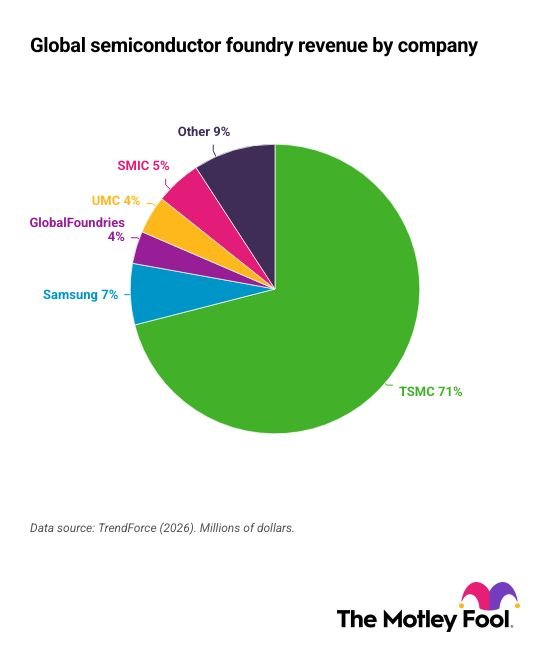
Could it match that over the next three years? Wall Street analysts are predicting an average of 21% growth with a median price target of $118 per share. It will be tough for it to match the 41% annual return over the next three years because of its high valuation right now and the competitive nature of the chip foundry business, where Taiwan Semiconductor is the dominant player and boasts huge competitive advantages.
The chip design business is equally competitive, with Nvidia dominating in graphics processing units and Advanced Micro Devices winning market share in central processing units.
Iʻd be hesitant to buy into Intel stock now. It's just too expensive, and the company's capex is too high unless more contract wins are announced. I would not be surprised to see the stock moving lower in the nearer term, so there will probably be lower entry points ahead.
If you did invest $1,000 in it now and Intel matched its longer-term, 10-year average annualized total returns of about 14% over the next three years, that position would grow to about $1,481. If it delivered a 20% annualized return, that holding would jump in value to $1,728.