Satya Nadella's record $96.5 million pay package is really a mirror of how tightly his financial fate is now tied to Microsoft's (MSFT +0.66%) artificial intelligence (AI) future, and I think that matters a lot for anyone holding the stock. In fiscal 2025, Microsoft's board disclosed that Nadella's total compensation rose about 22%, from 79.1 million to roughly 96.5 million, the highest since he became CEO in 2014.
Microsoft had just posted a powerful year, with revenue up about 15%, operating income up 17%, and cloud revenue up 23% to nearly $169 billion, while Azure revenue grew 34% and surpassed $75 billion. The proxy statement and board commentary explicitly cited "exceptional progress in artificial intelligence" and said that Nadella's leadership had positioned Microsoft as a clear AI leader amid a generational technology shift.
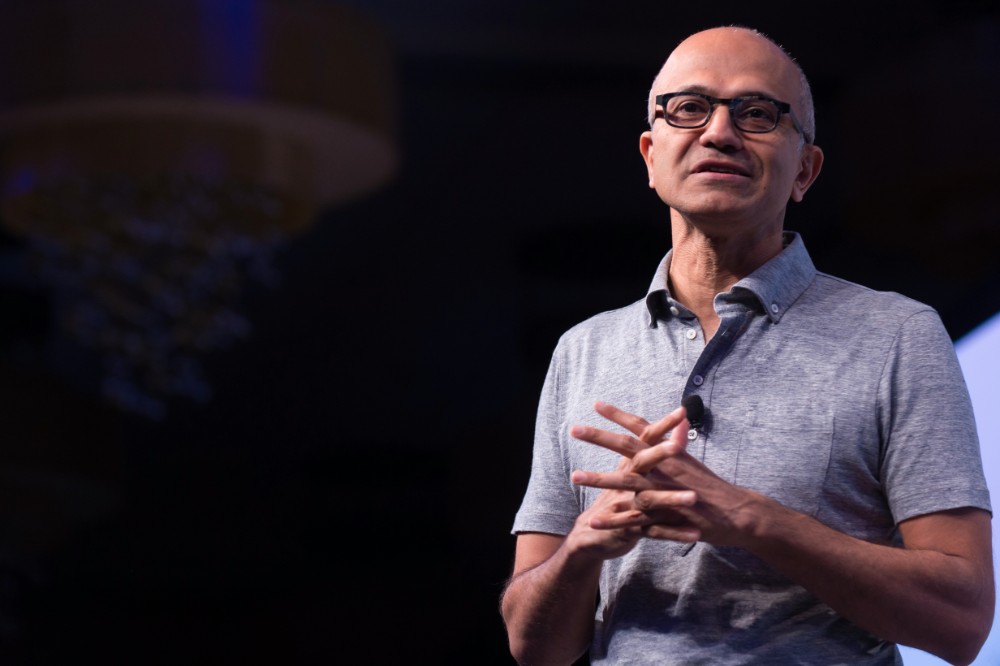
Satya Nadella, CEO of Microsoft. Image source: Microsoft Corporation.
When you look at the structure of that pay, the alignment jumps out. The base salary is only $2.5 million. Around $9.5 million is a cash bonus. The rest, roughly $84 million, is stock awards that move directly with Microsoft's share price. The proxy explains that over 95% of his annual target compensation is performance-based, and at least 70% is equity. His performance stock awards are tied to long-term metrics, including total shareholder return relative to the S&P 500, Microsoft incentive plan revenue, Azure and other cloud services revenue, and Microsoft Cloud revenue. In other (more simple) words, Nadella gets paid when the business grows, margins hold up, the stock outperforms, and the cloud-plus-AI engine keeps compounding.
MSFT Microsoft
NASDAQ · As of 4:00 PM ET 10/23/26

What does this mean for investors?
For investors like us, this is exactly what you want to see. There is obviously a gut reaction to a $96.5 million headline number, especially when the CEO-to-median-employee pay ratio is nearly 480-to-1, as of 2025. But the question is not whether the figure feels large. It is whether the incentives push the leader toward decisions that create durable value instead of short-term optics. Microsoft has deliberately avoided time-based stock grants for Nadella and uses overlapping performance periods, TSR modifiers, and multiyear vesting to keep him focused on long horizons rather than quarter-to-quarter spikes.
To me, the signal in this package is clear. Microsoft's board thinks artificial intelligence and cloud are the core of the story for the next decade, and it has structured Nadella's personal economics so that he wins only if shareholders win, too. You can debate the exact dollar amount, but if you own the stock, having a CEO whose pay lives and dies with the same AI-driven metrics that support your thesis is a lot better than the alternative.