Greg Abel already demonstrated that he's making his mark on holding company Berkshire Hathaway (BRKA -0.08%)(BRKB -0.28%) in the 2026 first quarter, his first as chief executive officer. Warren Buffett's protege and handpicked successor trimmed the company's equity portfolio from 45 to 29 positions, following through on his commitment to invest in a smaller group of high-conviction stocks. Otherwise, his new positions in Macy's and Delta Air Lines were much in line with the company's typical criteria for investments, and the continued investments in Alphabet were still Buffett's play.
However, in the second quarter, he's already shown the decisiveness that Buffett has praised in the past. Whereas Berkshire Hathaway beefed up its cash stockpile to reach a high of nearly $400 billion by the end of the first quarter, and it was the company's 14th consecutive quarter of being a net seller of stocks, Abel made a break in the second quarter. Berkshire bought $23.5 billion worth of equities in the quarter and sold only $3.7 billion, making it a net buyer of $19.8 billion.
Should retail investors follow?
Bouoyed by a fantastic market
The S&P 500 has gained 73% during the past three years that Berkshire has been building its record cash stockpile, but that doesn't mean the company has been missing out. After all, it has an equity portfolio worth $355 billion as of this writing. Its own stock has underperformed, up only about 50% during the past three years.

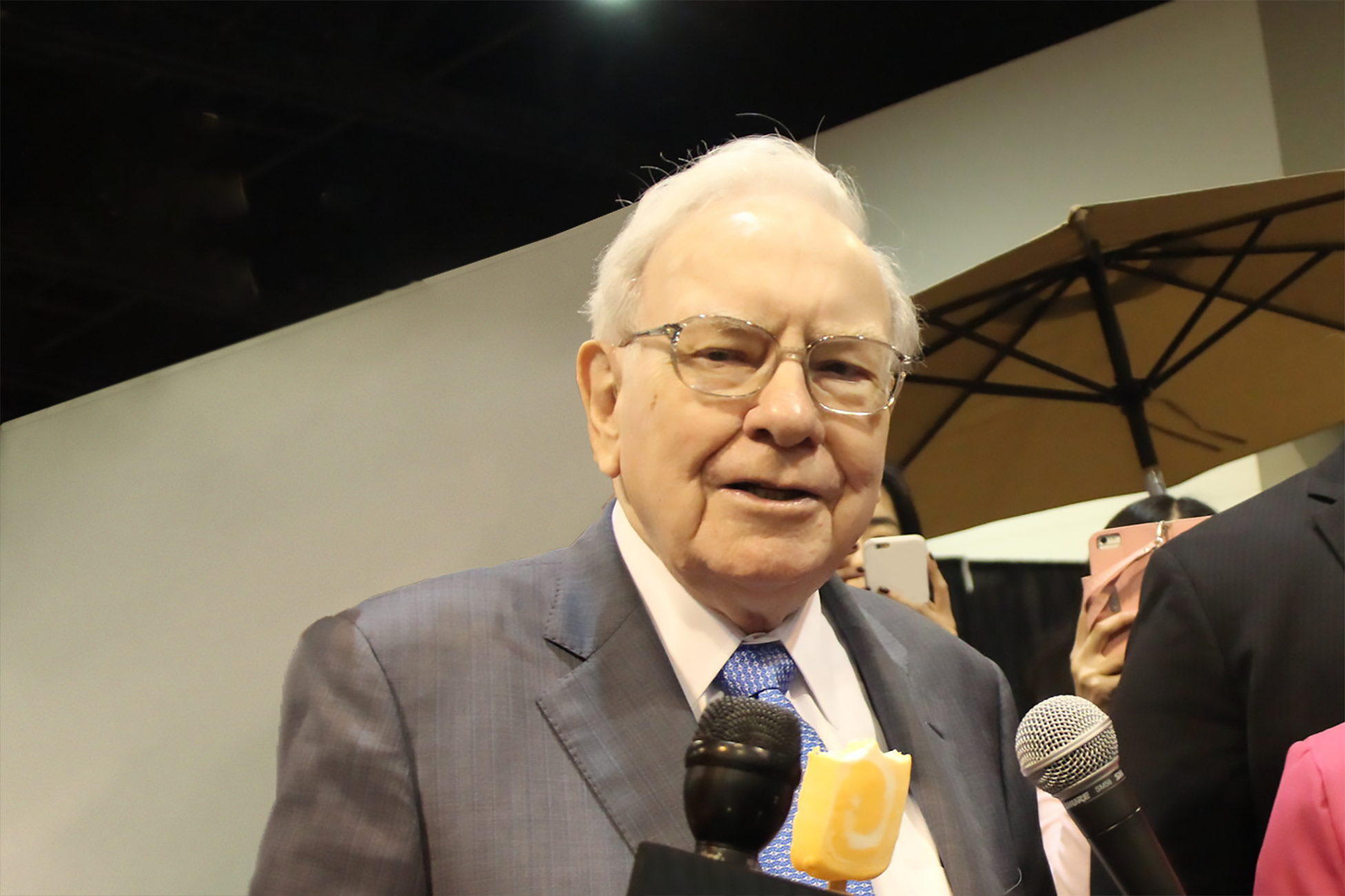
Image source: Getty Images.
In the second quarter, Berkshire Hathaway reported robust performance, with a 16.3% increase in operating earnings, Buffett's preferred bottom-line metric. Net income more than doubled, from $12.4 billion to $25.7 billion, but Buffett has cautioned in the past that this number includes unrealized gains and losses, and therefore it's not as reliable as operating earnings. That's in line with the broader market's gains in the quarter. Operating earnings come from the entire Berkshire Hathaway enterprise, including the nearly 200 businesses it owns either entirely or partially, not just its equities. Investing income was healthy, though, with $12.7 billion in gains.
Investors already know about a $10 billion investment in Alphabet in June, accounting for about half of the buying activity in the quarter. The remainder of the trades will be disclosed in the company's 13F filing with the Securities and Exchange Commission sometime in the next few days.
Is this a signal to buy?
Berkshire ended the quarter with $365.5 billion in cash and equivalents, a slight decrease from the first-quarter record of $398 billion. However, it's still well above historical norms, and investors shouldn't necessarily interpret the shift from net seller to net buyer as a signal to begin a market shopping spree.
Buffett has made many comments about stepping back when the market is enjoying a searing bull run, which it looks like it's doing right now. Just recently, he likened the current market to a casino and said certain investors are gambling when asked whether he thought the market was expensive. "That doesn't mean that investing is terrible," He said. "It does mean that prices for an awful lot of things will look very silly."

NYSE: BRKB
Key Data Points
That seems to be Abel's mantra, too. He's buying, and he even found enough opportunities to turn into a net buyer in the second quarter. However, he's being choosy about his investments, finding only three U.S. equities to buy in the first quarter; the market will find out how many he bought in the second quarter shortly.
Retail investors should keep the same values in mind. Stay in the markets, and you can find bargains and inconsistencies that make a stock worth buying in any kind of environment. However, stay away from richly valued stocks and a gambling mindset that can feel euphoric today but undermines investing success.