Meta Platforms (META -4.79%) has had a challenging past 12 months. The company is dealing with legal and regulatory issues, and its financial results have been mixed, with significant artificial intelligence (AI)-related spending harming margins, profits, and free cash flow. The tech leader is down about 27% from its most recent high. Will Meta Platforms continue sinking, or has the company bottomed out and is gearing up for a rebound? Perhaps looking at past significant stock market declines can give us a clue.

Image source: The Motley Fool.
Looking at Meta's past sell-offs
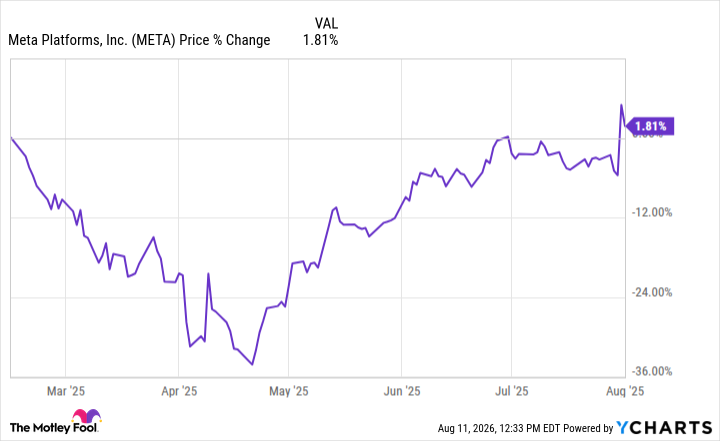
Let's start with last year. Between mid-February and early April of 2025, Meta's stock declined by about 31%, partly due to macroeconomic concerns. It did not take the stock too long to recover. Meta had climbed back to brand-new highs by August 2025. So, buying the stock after it had lost significant value would have been a great idea.
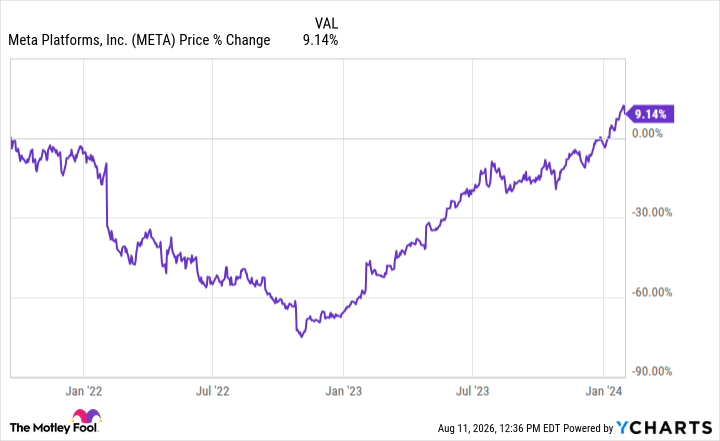
We can also look at a sustained sell-off from late 2021 to late 2022, during which Meta Platforms' shares declined by about 75%. At the time, Meta was facing multiple headwinds, including declining users and massive spending on its metaverse ambitions. However, this time too, Meta Platforms eventually recovered, although it took some time.
Lastly, we can point to the company dropping alongside the rest of the market during the COVID-19 market crash in early 2020. Meta didn't stay down for too long, though.
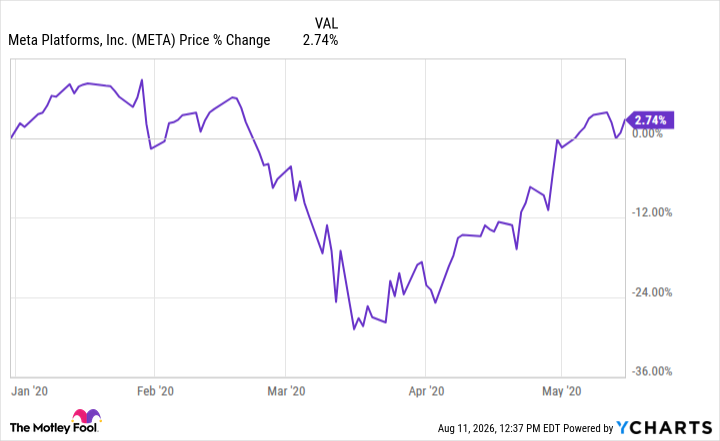
What do these episodes tell us? In every case, Meta's shares dropped more than 27%. And in every case, they eventually bounced back and performed well thereafter.
Can we trust these precedents?
Naturally, we can't just rely on the past to predict how the stock may move next. Let's consider arguments from both sides. The bears will point out that Meta Platforms' earnings and free cash flow declined in the second quarter due to large AI investments that aren't yet paying off as much as hoped. Further, Meta Platforms just faced another legal setback, with a judge ruling that thousands of lawsuits the company faces over its alleged addictive social media design, and the impact that it has had on children, can move forward.
This could be a significant long-term risk for the company. And it could put downward pressure on the stock. However, the bulls will point out that Meta's AI efforts have already had a positive impact on the business. They have improved engagement on the platform while also streamlining the ad launch process for companies. And this could only be the beginning. Meta Platforms is reportedly considering launching a cloud computing business where it will rent out excess AI computing capacity to other corporations.

NASDAQ: META
Key Data Points
Meanwhile, the stock appears reasonably valued. Meta Platforms is trading at about 19.9x forward earnings, versus the average of 21.4x for information technology stocks. At current levels, the stock may deliver strong returns once (if) AI spending pays off and boosts revenue and earnings growth. Which side is right? I lean toward the bull side.
Meta's legal troubles are unquestionably a significant risk, but similar issues have had very limited impact on other tech giants' businesses in recent years. And for that matter, it's not Meta's first run-in with the authorities, and previous ones haven't left the business in shambles, or anything close to that. Of course, that's no guarantee that the same thing will happen this time, but these precedents still matter.
I also think Meta Platforms' financial results will improve substantially as AI continues to impact the business. If the company decides to rent out excess computing capacity, that could be a game changer as AI infrastructure spending continues to grow at a good clip. And even if it doesn't, Meta Platforms' step back from aggressive metaverse spending has shown how quickly the company can pivot its strategy, cut costs, and find other lucrative opportunities by further monetizing its large user base.
For all these reasons, Meta Platforms may eventually bounce back and deliver excellent returns, just as it has in the past. Buying the stock on the dip looks like a great idea.