Since Kevin Warsh succeeded Jerome Powell as Fed Chairman in mid-May, the S&P 500 has gained a modest 4.2%, with its most pronounced move coming over just the last week or so. Against this backdrop, it's fair to say the market has been relatively muted since Warsh took over as Fed Chairman -- rightly so.
Wall Street is accustomed to dissecting every syllable from Federal Reserve leadership, but Chairman Warsh has brought a new intensity to this habit. As the central bank's new leader, Warsh has deliberately played coy, removing lengthy commentary and forward guidance that once filled the financial news programs.
Investors have no choice but to examine Warsh's sparse language, leaving them searching for clues about interest rates, inflation, and the Fed's priorities. Amid all the careful listening, one of Warsh's declarations stands out as the phrase that truly matters. Let's dig into what the Fed Chairman has to say about the direction of monetary policy.
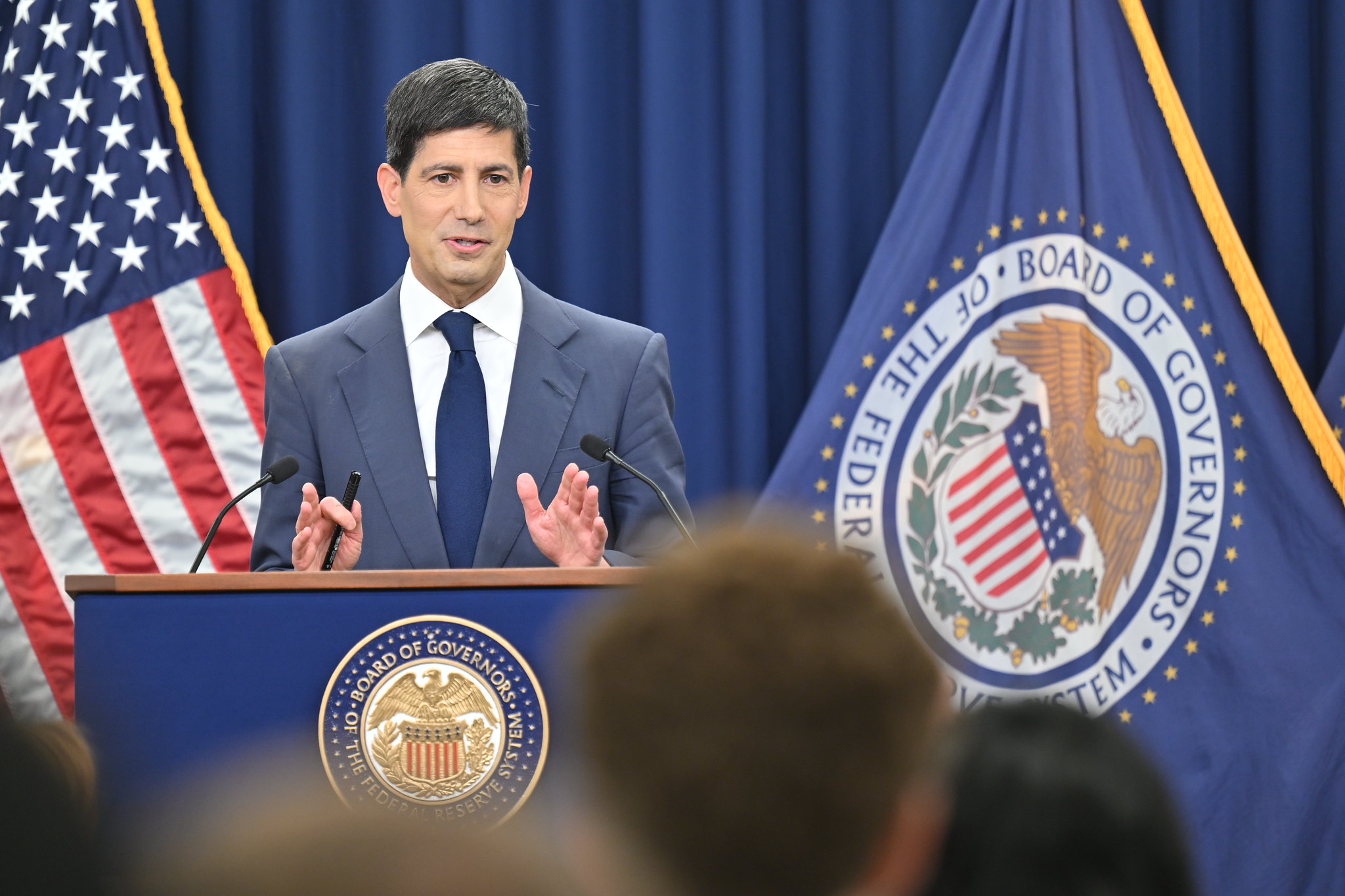
Image source: Federal Reserve.
Warsh has been quiet at the podium
In June, Warsh completed his first Federal Open Market Committee (FOMC) meeting as Fed Chairman. During this meeting, Warsh oversaw the shortest policy statement in nearly two decades, at just 130 words. His speech ended with a blunt promise that the committee aims to deliver price stability.
During subsequent speeches and interviews, Warsh has repeatedly declined to offer detailed forecasts or hypothetical paths for interest rates. Removing excess Fed speak from mainstream outlets inherently leaves investors with fewer breadcrumbs to follow, and therefore a greater need to index on each word Warsh says.
Here's the phrase investors should pay attention to
I think Warsh's most pivotal quote came on July 29 during a press conference following his second major policy meeting. After the committee voted to hold rates, Warsh addressed speculation that the Fed might be willing to tolerate inflation running above its perceived goal.
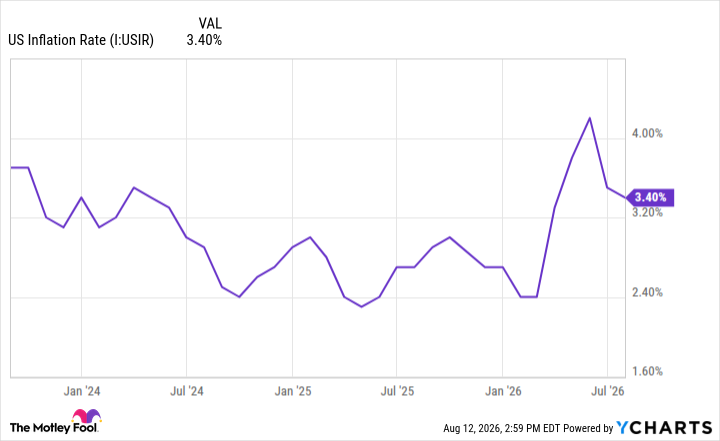
U.S. Inflation Rate data by YCharts.
Warsh didn't mince his words. He stated, "There is no soft inflation target, there is no soft implicit target -- not on this Committee's watch. There is only a target, and it is 2%." I don't find these words surprising at all. During his confirmation hearings, Warsh's initial public remarks included, "[I]nflation is a choice."
Warsh's statements appear to reject the notion of flexibility or temporary acceptance of higher prices. Taken together, these statements signal that the Fed intends to treat the 2% inflation goal as non-negotiable. In turn, this raises the likelihood of tighter, more restrictive policy if pricing pressures remain elevated.
Smart investors won't ignore these signals
Warsh has described internal deliberations at the Fed as a "good family fight," suggesting intense debate is happening behind closed doors but insisting the final public message remains unified and measured. Reading through the veneer tells markets that the Fed committee is actively wrestling with economic data, yet is not going to preview any outcome in advance of scheduled meetings.
Combined with Warsh's firm language, this implies that any decision around the future of interest rates will rest on a broader commitment to price stability, rather than on short-term growth concerns. Bond yields are already reflecting a shift: Longer-term rates are climbing as investors price in a lower tolerance for persistent inflation. Stocks, meanwhile, have become particularly sensitive to macro data because the Fed is no longer affirming any explicit path with verbal assurance.
Warsh's style does more than reduce external noise. I think he is quietly trying to make a sharper distinction between the central bank's actions and interpretation from the public. The scarcity of Warsh's words inherently makes anything he says heavier than it otherwise would be.
His insistence that there is no soft inflation target is the anchor investors should pay the closest attention to here. It signals to Wall Street that the Fed's credibility basically hinges on delivering exactly 2% inflation, as opposed to managing expectations through soundbites.
How the committee ultimately follows through in upcoming meetings will better determine whether this single phrase becomes the foundation of a more disciplined era of monetary policy or the source of greater volatility.