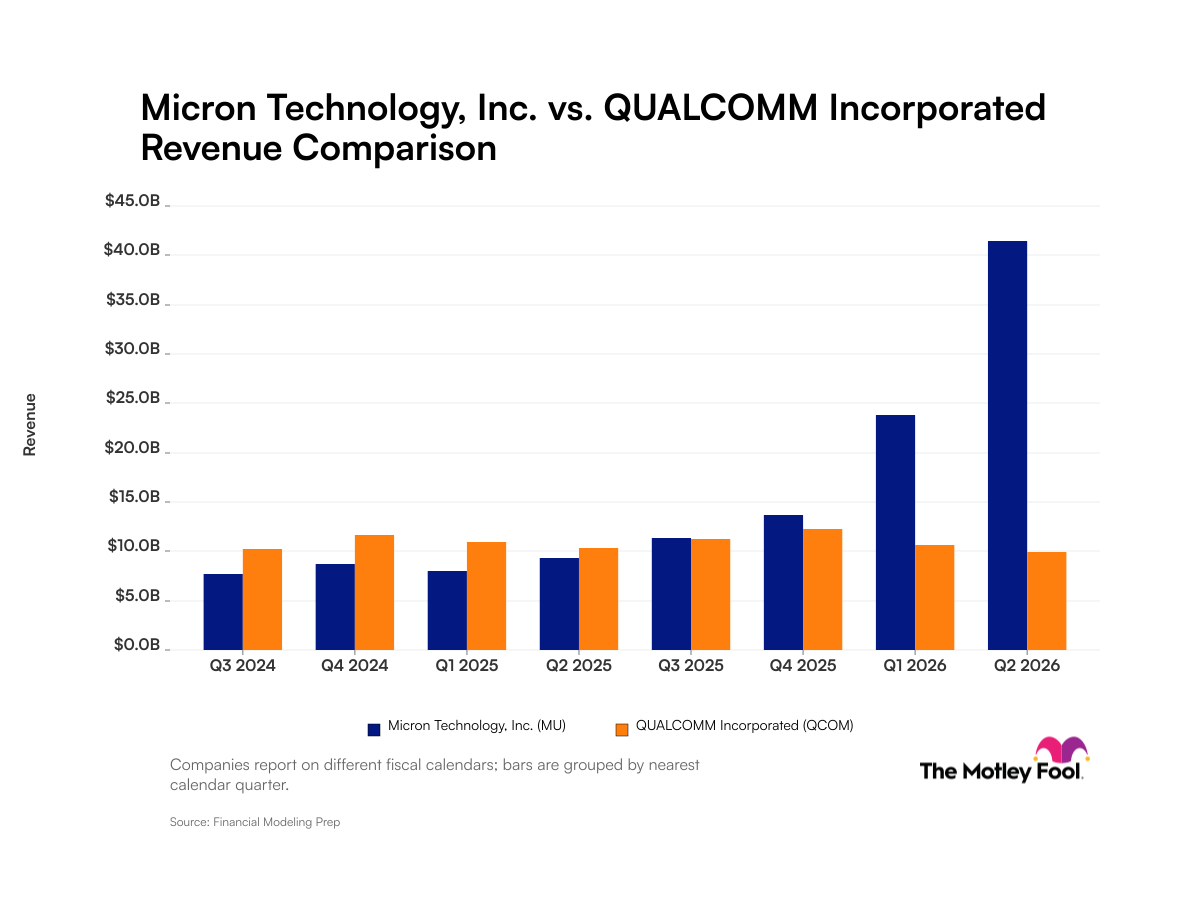
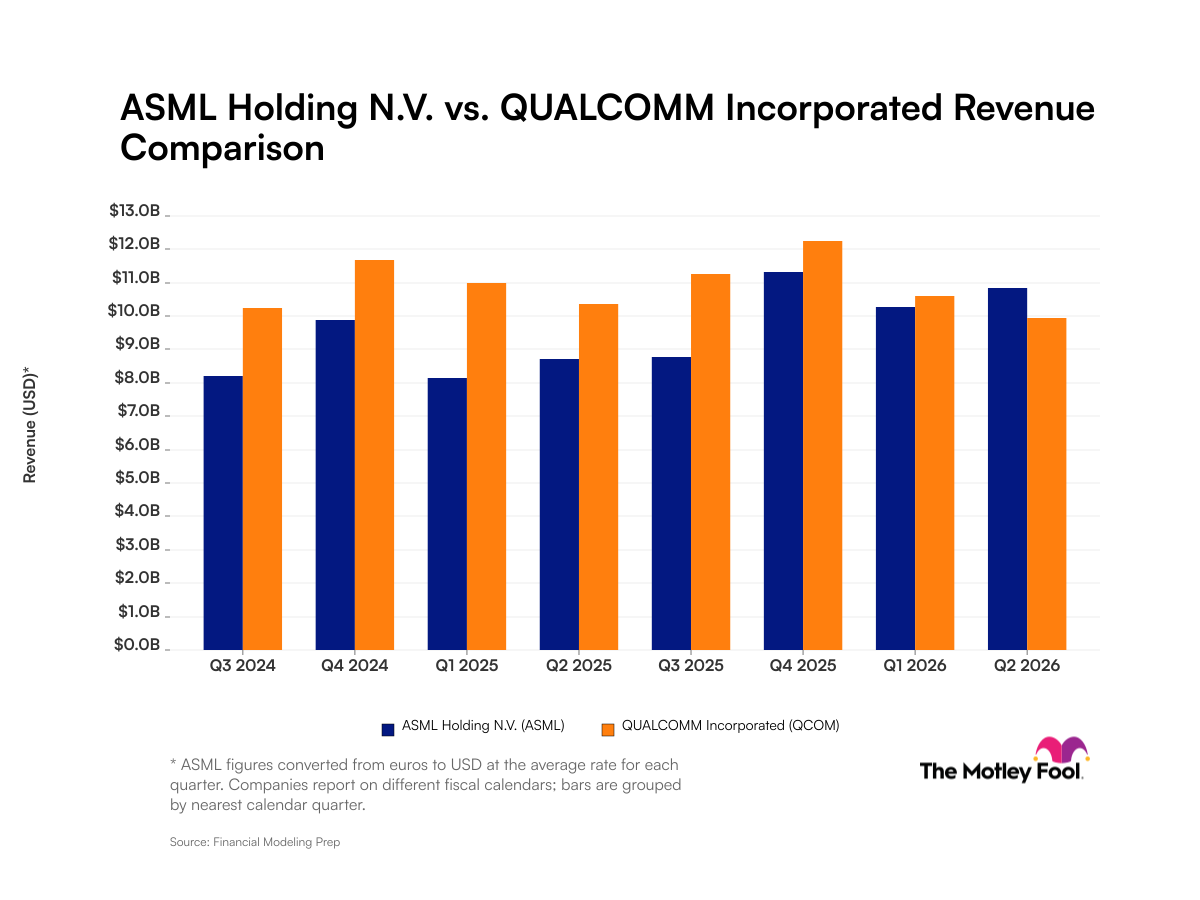
Qualcomm (QCOM -2.21%) has lagged other semiconductor companies this year. It's down by about 7.1% year to date, while the iShares Semiconductor ETF has surged by more than 68%.
That's a big difference, but this underperformance and upcoming projects may give Qualcomm what it needs to break out in 2027. Qualcomm's pivot to AI chips has received a warm reception from key players, and it should translate into tangible revenue growth next year.

Image source: Getty Images.
Sluggish results have driven a low valuation
Qualcomm trades at a P/E ratio of only 18. There hasn't been much reason to expect a premium valuation since results haven't been enticing in recent quarters.
For instance, Qualcomm posted a 4% year-over-year revenue decline in its fiscal 2026 third quarter, ended June 28, with net income dropping by 25% year over year. Those results explain why Qualcomm still has a low P/E ratio relative to other chipmakers like Broadcom and Advanced Micro Devices.
Qualcomm's valuation will remain this low if it continues to produce these types of financial results. On the surface, there doesn't seem to be much reason to be excited. However, the results included some remarks about non-handset revenue growing to $40 billion by fiscal 2029. Artificial intelligence is set to drive that momentum.

NASDAQ: QCOM
Key Data Points
Super growth from AI can immediately change the narrative
Changes are taking place beneath the surface, but the financial impact may show up all at once in 2027. Qualcomm CEO Cristiano Amon told investors that the company expects non-handset revenue to accelerate from a 24% growth rate in fiscal 2026 to more than 60% in fiscal 2027.
There's already some traction toward this goal. Qualcomm and Meta Platforms recently agreed to a long-term deal for data center CPUs. Landing Meta Platforms as an AI chip customer can provide an immediate windfall and validate the company's new technology.
If the deal proves to be successful and boosts demand for Qualcomm's chips, the company may have to raise fiscal 2029 guidance again. Given the high-growth nature of AI, that scenario is very possible.
Non-handset revenue made up 40% of Qualcomm's fiscal 2026 third-quarter revenue. As this segment grows faster, it will make up a larger slice of total revenue and make Qualcomm less dependent on handset revenue.
That has to happen soon, since the contract between Apple and Qualcomm ends in March 2027. Apple has been using its own chips for recent smartphones and is eager to part ways with Qualcomm.
The pivot to AI is well timed and can help Qualcomm navigate a weakening handset market. While handset sales should continue to decline, its non-handset revenue streams may pick up momentum at the right time. Once that bullish opportunity is realized, it can fuel a breakout for Qualcomm shares.