If you've been keeping tabs on Bloom Energy (BE +2.81%), you know this year has been a major turning point for the fuel cell maker. Its first-quarter revenue jumped 130% year over year, while its second-quarter top line of nearly $1.1 billion grew by 166%. The company's expecting to double last fiscal year's revenue in 2026 as well, although given its recent history, that may be conservative guidance.
These are no accounting flukes, either. The bulk of both quarters' sales reflected sales of its solid-oxide fuel cells.
There's a far more important figure that illustrates Bloom Energy's near-term and longer-term potential, however. That's its backlog of business that's already been lined up but hasn't yet been booked as revenue because it hasn't yet been delivered.
But first things first.
What are fuel cells, and what makes Bloom's so special?
On the off chance you aren't aware, Bloom Energy makes and markets electricity-generating fuel cells. This is just equipment that uses an electrochemical process (rather than a combustion-powered, mechanical one) to turn a gas into usable electricity. Most fuel cells require hydrogen as their fuel source, although Bloom's tech is something of a standout in that it's also capable of using more accessible natural gas.
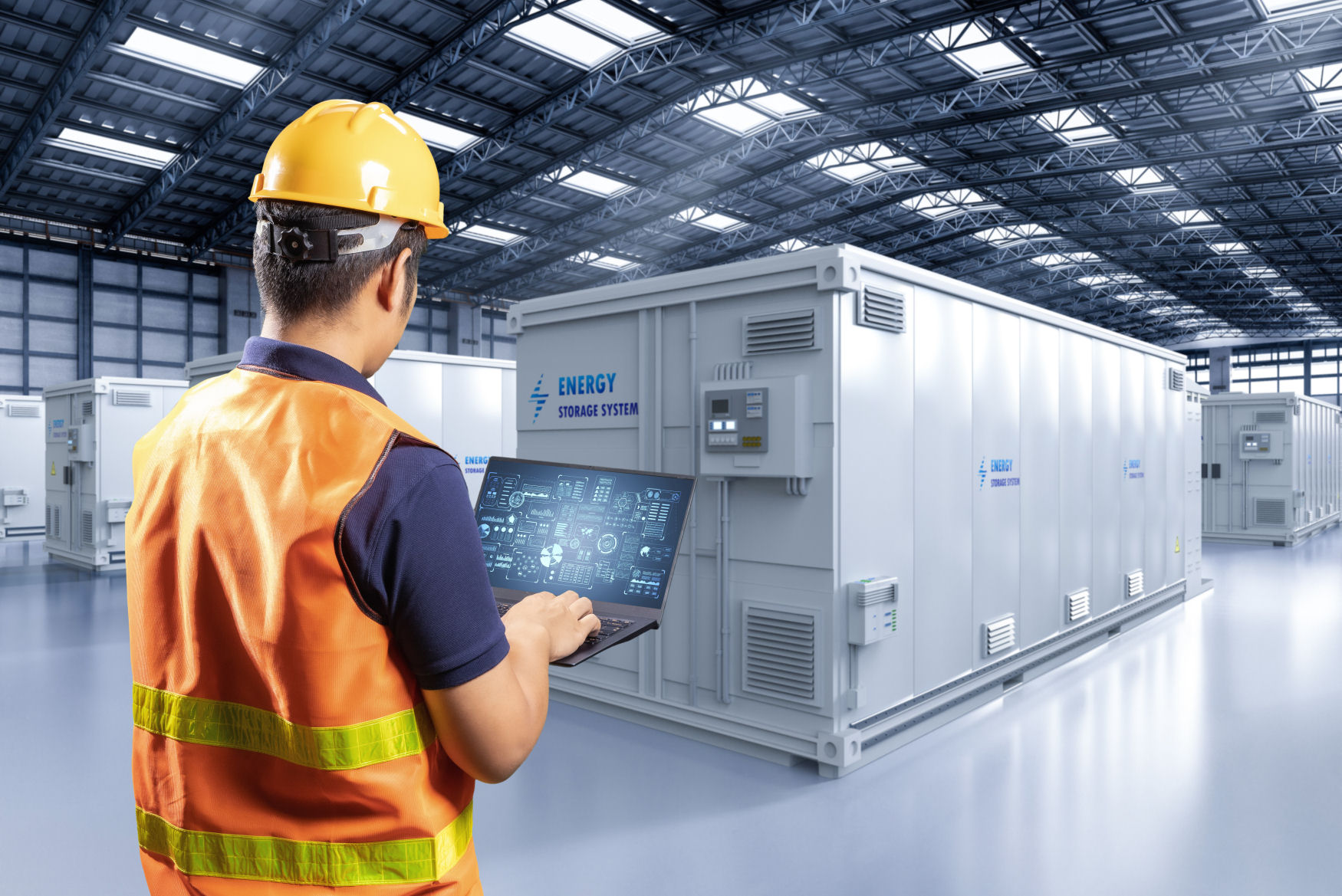
Image source: Getty Images.
And yes, its solid-oxide fuel cells are being embraced by artificial intelligence data center owners as a primary source of power. That's why its revenue is suddenly soaring this year.
Don't expect a slowdown anytime soon, either. An outlook from Precedence Research suggests the worldwide fuel cell market is poised to grow at an average annualized pace of more than 25% through 2035, when it will be worth $112 billion. And that growth just reflects demand for equipment. It doesn't include any related services, like maintenance.
Bloom Energy's predicted backlog
So how much of this future growth might Bloom have lined up by the end of 2026? This is obviously just a guess, but it could easily reach $50 billion.
That sounds outrageous compared to the company's 2026 revenue projection of only around $4 billion. It's not difficult to believe, however, given that Bloom Energy confirmed its backlog stood at $20 billion at the end of 2025 and given that -- without citing a specific number -- CEO KR Sridhar commented during last month's second-quarter earnings conference call that the company's backlog had grown faster than its revenue, which grew by 166%.

NYSE: BE
Key Data Points
Also understand that only $6 billion of 2025's year-end backlog reflected future equipment sales. The other $14 billion was set to come from services, installation, and contracted electricity generation using its own fuel cells over the course of several years; Sridhar mentioned "backlogs stretching to 2029 and beyond" during the Q2 call.
Revenue is revenue, though, and with the exception of installation's near breakeven, all of Bloom's revenue is now profitable on an operating basis. More to the point, if Bloom Energy's backlog growth outpaced Q2 revenue growth, and it reported only around $1 billion in sales last quarter, the vast majority of whatever new business has since been won is still waiting to be booked as revenue. Not bad.