This is a truly groundbreaking year for Berkshire Hathaway (BRKA +0.97%)(BRKB +0.89%). For the first time in well over half a century, the trillion-dollar Berkshire isn't being led by billionaire Warren Buffett. Following the Oracle of Omaha's retirement as CEO on Dec. 31, the torch was officially passed to his protégé, Greg Abel.
Abel hasn't wasted any time transforming Berkshire Hathaway's $359 billion investment portfolio. In addition to jettisoning 16 holdings in the first quarter, he's rearranged the puzzle pieces of his company's top-five positions. Longtime holdings Coca-Cola (KO +0.32%) and Bank of America (BAC +1.32%) have both been knocked down a peg, with the new apple of Abel's eye, Google parent Alphabet (GOOGL +0.97%)(GOOG +0.87%), officially becoming Berkshire's No. 3 position.
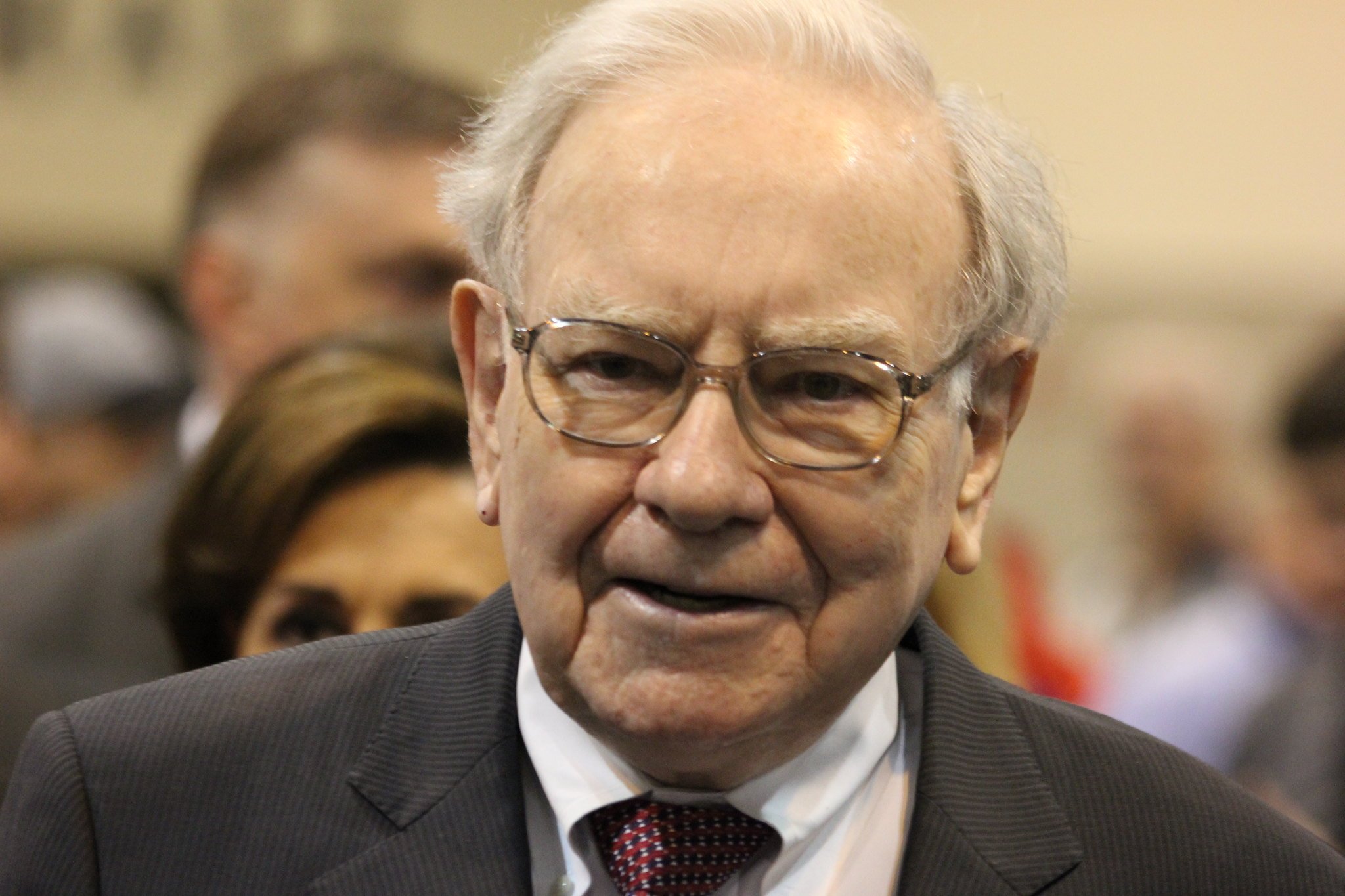
Warren Buffett retired as Berkshire Hathaway's CEO on Dec. 31. Image source: The Motley Fool.
Coca-Cola isn't going anywhere, but BofA may be a different story
Despite ceding its spot as Berkshire's third-largest holding, Coca-Cola isn't going anywhere. Coke was labeled as an "indefinite" holding by former CEO and current board chair Warren Buffett, and Abel has vowed to (more or less) adhere to the same investing principles that the Oracle of Omaha followed.
The real beauty of Berkshire's stake in Coca-Cola is its jaw-dropping yield on cost. Coca-Cola is Berkshire's longest-tenured holding (since 1988) and sports an ultra-low cost basis of around $3.25 per share. Given that Coca-Cola has increased its dividend for 64 consecutive years and is currently doling out $2.12/share annually, Berkshire's yield relative to its cost basis is an astounding 65%!
Suffice it to say, Coca-Cola isn't going anywhere.

NYSE: KO
Key Data Points
Bank of America is another story. Although Warren Buffett has always been a huge fan of financial stocks, BofA isn't the bargain it once was. Since Berkshire's former CEO initially took a position in Bank of America's preferred stock in August 2011, its common stock has vaulted from a 62% discount to book value to a 59% premium to book value.
Perhaps it's no surprise that Berkshire's bosses have pared down their company's stake in BofA for eight consecutive quarters.

Image source: Getty Images.
There's a new apple of Abel's eye
However, the biggest change observed under Greg Abel has been the relentless buying of Alphabet stock. Including an announced $10 billion private placement, Abel green-lit the purchase of $17 billion of Alphabet's Class A (GOOGL) and Class C (GOOG) stock, combined, in the second quarter.
As of the closing bell on Aug. 25, the market value of Berkshire's Alphabet stock was $16 million more than its stake in Coca-Cola.
Alphabet becoming Berkshire's No. 3 holding is in part a function of its virtual monopoly status. Google has accounted for 89% to 93% of global internet search engine traffic over the last decade, and YouTube is the second-most-visited social site behind Google. In other words, Alphabet is ideally positioned to capitalize on a growing advertising market.
$GOOG Alphabet Q2 FY26:
-- App Economy Insights (@EconomyApp) July 22, 2026
• Revenue +24% Y/Y to $119.8B ($2.8B beat).
• Operating margin 34% (+2pp Y/Y).
• $98B net gains from equity investments.
☁️ Google Cloud:
• Revenue +82% Y/Y to $24.8B
• Operating margin 36% (+15pp Y/Y).
▶️ YouTube ads +13% to $11.1B pic.twitter.com/seYlITzfg6
But it's the company's artificial intelligence (AI) ambitions that appear to have Berkshire's new boss intrigued. Since Alphabet integrated generative AI and large language model capabilities into Google Cloud, the world's No. 3 cloud infrastructure services platform by total spend, sales growth has gone parabolic. Sales for this high-margin segment skyrocketed 82% in the June-ended quarter.
Whereas Apple was Warren Buffett's foundational puzzle piece for the last decade, Alphabet may hold that role for Greg Abel going forward.