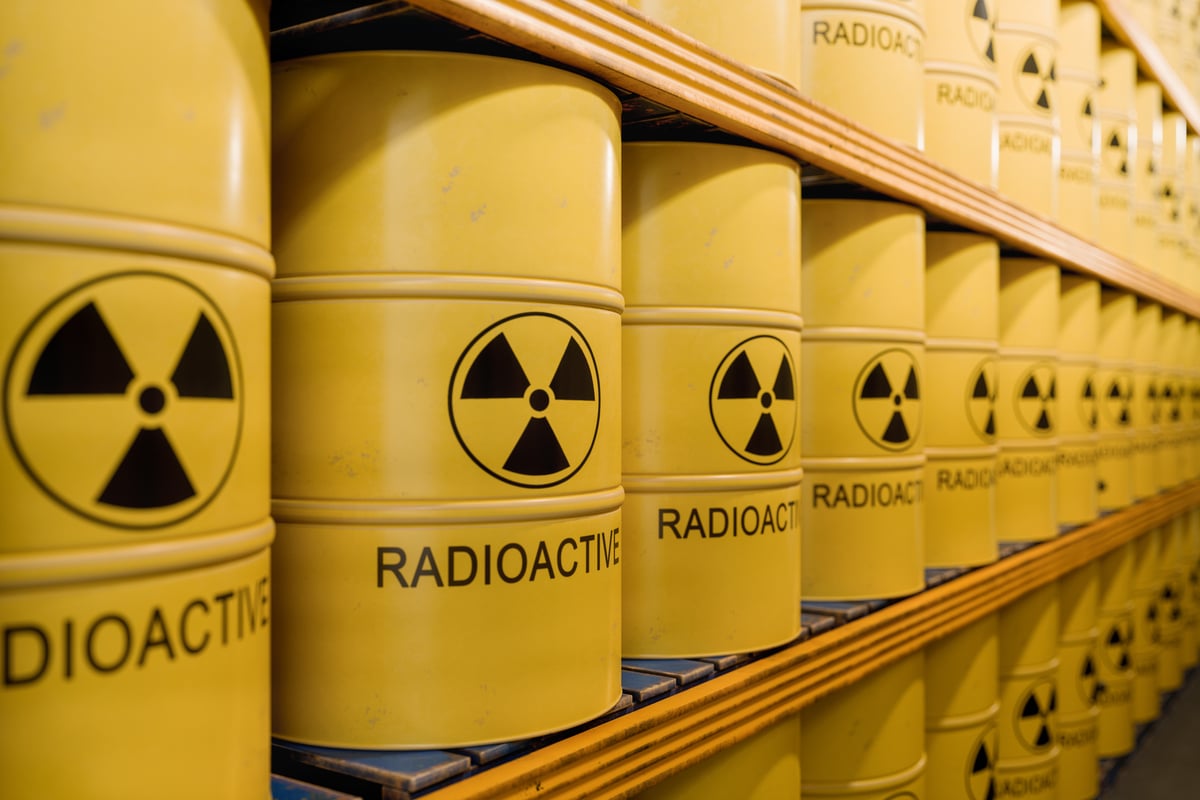
The nuclear energy market fizzled out for roughly a decade after the 2011 Fukushima disaster. But over the past few years, the market's demand for nuclear power rose again -- driven by the expansion of the cloud, AI, and industrial automation markets. New decarbonization initiatives and safer nuclear technologies also drove more countries to restart their nuclear programs.
That shift is generating strong tailwinds for producers of small modular reactors (SMRs). Many top tech companies -- including Alphabet's (GOOG -1.15%) (GOOGL -1.43%) Google, Amazon (AMZN -2.18%), and Oracle (ORCL -5.58%) -- have signed framework, financing, and deployment deals to expand their SMR capacity over the next two decades.

Image source: Getty Images.
What are SMRs?
SMRs are compact nuclear reactors designed to produce up to 300 MWe per unit. By comparison, conventional nuclear power plants typically generate more than 1,000 MWe.
SMRs are much smaller than conventional reactors, and they're prefabricated in factories. Their modular design enables them to be connected to additional SMRs in larger plants. That approach reduces the time and costs for constructing a custom nuclear power plant. Their smaller design also allows them to be deployed in remote areas with challenging terrain.
Key companies to watch in the SMR space include NuScale (SMR -1.78%), Oklo (OKLO -5.10%), and GE Vernova (GEV -0.37%). These companies all produce different types of SMRs (and even smaller microreactors). Still, they'll all benefit from the surging power demands of the cloud infrastructure and AI markets over the next few decades.