Silicon Motion Technology (SIMO -3.25%) is one of the most promising memory chip stocks that you probably haven't heard of. It has more than doubled this year, but its market cap is still below $10 billion.
The growth stock has also dropped by roughly 30% from its all-time high, but that price action is all the more jarring due to the company's fundamentals. Here's what investors should know about Silicon Motion before determining if it is a buying opportunity.
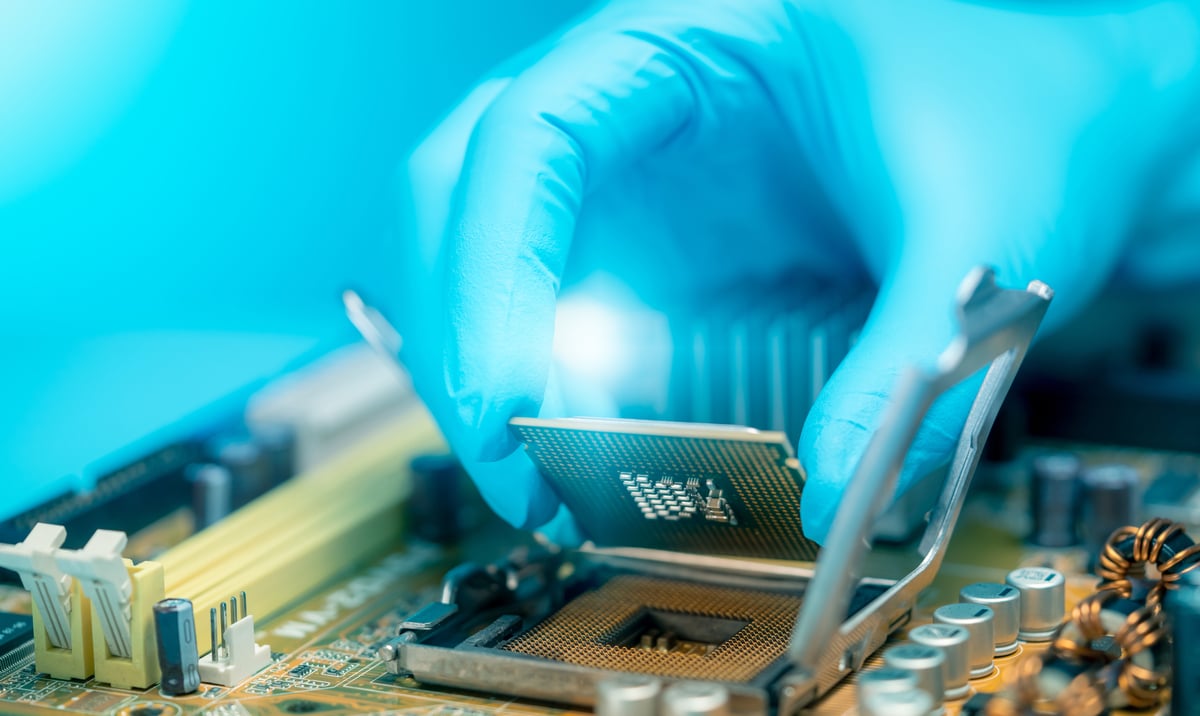
Image source: Getty Images.
NAND flash controllers enable AI infrastructure
Silicon Motion produces NAND flash controllers, which are essential components for solid-state drives because they let companies scale up agentic AI. The company works with some of the largest memory makers, including Micron, Sandisk, SK Hynix, and Samsung. When each of these companies reports record sales and optimistic forecasts, it's a clear indication of how well Silicon Motion will perform in its upcoming quarter.
SIMO Silicon Motion Technology
NASDAQ · As of 4:00 PM ET 10/16/26

For instance, the company delivered 127% year-over-year revenue growth in its second quarter, along with a 32% sequential boost in sales. CEO Wallace Kou also told investors to expect "high-quality revenue and profitability growth for years to come."
Those results came as memory-chip makers crushed expectations, raised guidance, and told investors about their multiyear deals with large customers. With those tailwinds for Silicon Motion's key customers, it's no surprise that the company delivered excellent second-quarter results.
The dip has resulted in a more compelling valuation
The company's fundamentals have continued to improve. Not only are sales up significantly, but it's also delivering higher net margins. Profits more than doubled sequentially, lifting its net profit margin to 30.2% in the process.
These results don't jibe with the slide the stock has taken over the past couple of months. Silicon Motion now trade at a 30 price-to-earnings ratio (P/E). That's a nearly identical valuation to the S&P 500 despite the former achieving much higher growth than the average company in the index.
Kou told investors that he expects the business's momentum to continue through the second half of the year. The company has only become stronger, but recent stock price movements do not reflect that reality.
It's important to consider that top memory-chip makers like Micron and Sandisk recently delivered quarterly results that crushed their guidance. Silicon Motion is currently anticipating revenue growth of up to 124% year-over-year and up to 20% sequentially. It's reasonable to assume that it will outpace its forecasts just as its top customers have done.
Micron told investors in its fiscal 2026 second-quarter report to expect revenues of $33.5 billion at the midpoint in its fiscal 2026 third quarter. Once the company's results arrived, Micron actually showed $41.46 billion in revenue.
If Silicon Motion delivers a similar beat, its current average valuation will become even more compelling. That could result in a big spike when the company reports earnings in late October.
The memory chip trade has multiple years left
Silicon Motion hinted at multiple years of growth, and top customers like Micron and Sandisk have been signing multiyear sales deals with tech giants. However, the biggest recent news came from Samsung, which has made a set of deals that lock in buyers for 70% of its chip capacity through 2031.
These long-term deals will intensify and prolong the memory chip shortage and increase the need for Silicon Motion's NAND flash controllers.
These deals demonstrate that AI isn't a one- or two-year story. The growth stocks that are riding this momentum can continue to outpace the S&P 500 for another decade or more. Physical AI will further boost the demand for memory chips and all of the necessary components for AI infrastructure.
Silicon Motion is well positioned to benefit, yet the stock remains under the radar. Those two factors are key reasons the stock looks like a buy at current levels.