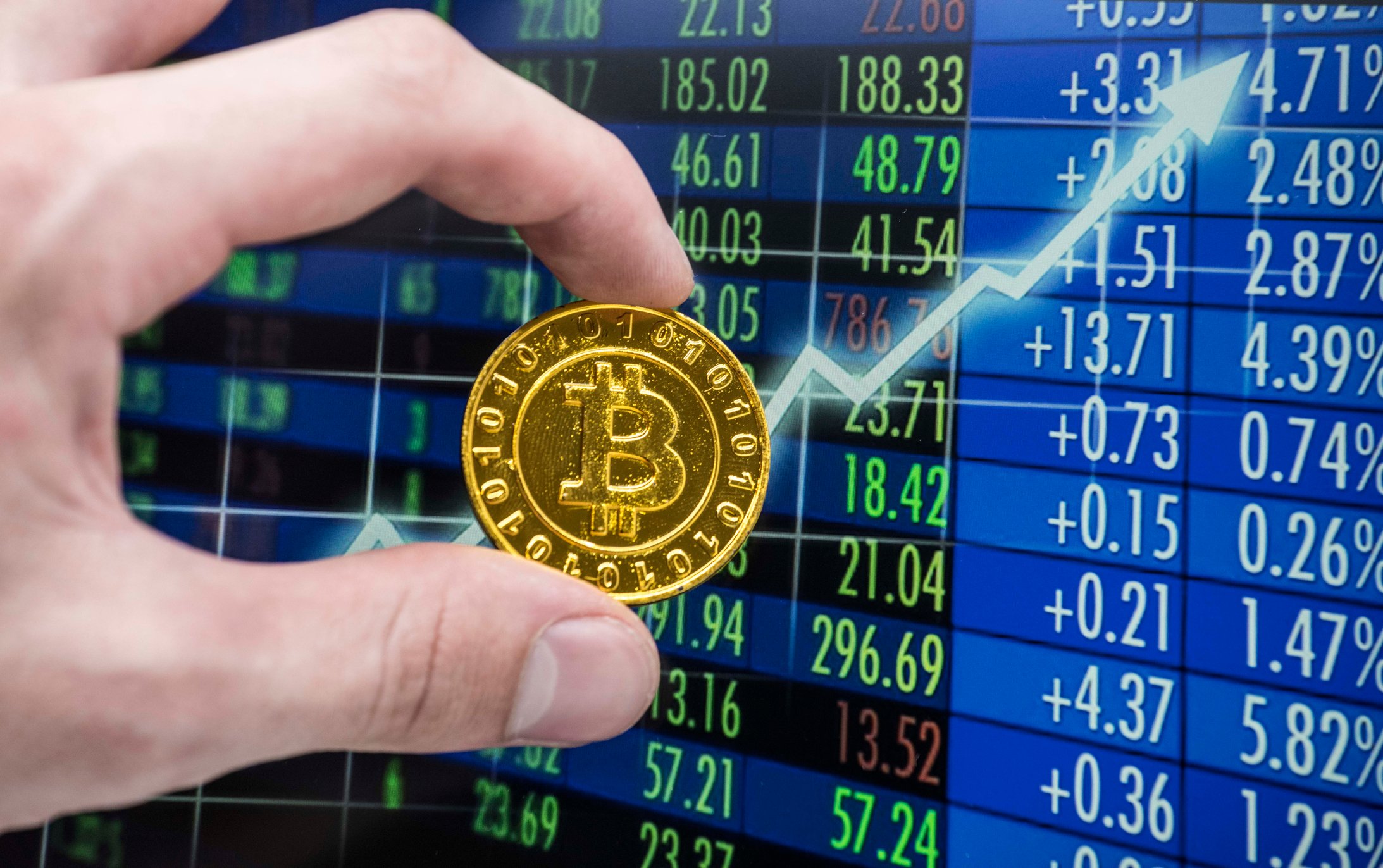
In May, billionaire investor Mark Cuban sold off nearly all his Bitcoin (BTC -3.00%), declaring that it had failed as a hedge against inflation. At the time, Bitcoin was down approximately 40% from its all-time high of $126,000 in October.
Now Cuban's back with another bold statement about crypto: "Chips as an asset class will be the new crypto." In other words, raw computing power -- in the form of advanced semiconductor chips for artificial intelligence -- now offers investors the potential for significantly higher returns than crypto going forward.
The premise is clear: Move your money out of Bitcoin and into GPU compute, because that's where the future is. So is Mark Cuban right?
Yes, Mark Cuban is right
On one level, Cuban's argument makes a lot of sense. Both Bitcoin and GPU compute are characterized by scarcity and their ability to generate outsize returns.

Image source: Getty Images.
Thanks to artificial intelligence, demand for raw computing power is off the charts. The scope and scale of the AI infrastructure build-out are unprecedented, and what is truly scarce right now is computing power. So people are willing to bid a higher and higher price for it.
It's gotten to the point where the CME Group (CME +0.06%) is now planning to launch regulated futures contracts on computing power. These financial derivatives aim to turn raw compute into a standardized, tradable commodity.

CRYPTO: BTC
Key Data Points
The scarcity argument also applies to Bitcoin. Only 21 million Bitcoins can ever exist, and 20 million are already in circulation. Massive amounts of computing power are required to mine Bitcoin, and that limits the amount that can be created at any time. Scarcity helps explain how Bitcoin skyrocketed from $1 to $126,000 in just 15 years.
No, Mark Cuban is wrong
The focus on scarcity and its ability to drive outsize returns is spot-on. But Cuban's argument essentially boils down to the following: "Crypto has failed, and you can make a lot more money investing in the future of AI computing power."
What this ignores, however, is that Bitcoin has always been about more than just outsize returns. Historically, Bitcoin has been uncorrelated with major asset classes, which is what makes it so valuable as a potential hedge. This unique risk-reward profile is what led Wall Street to declare it a stand-alone asset class.
Moreover, Bitcoin is decentralized. There is no corporation, government, or sovereign authority that controls it. The same can't be said for computing power, which is highly centralized and controlled by corporations.
Bitcoin's scarcity
Right now, the global chip supply is in short supply. But what about over the next decade? At some point, AI computing power will reach abundance, with Elon Musk even going so far as to describe a scenario in which AI data centers orbit the Earth.
In contrast, Bitcoin will always be a story of scarcity, and this is what makes it so valuable. Thus, it might be too early to count out Bitcoin, which has proven surprisingly resilient for more than a decade.