When investing in growth stocks like Tesla (TSLA +2.05%), it helps to understand the key risks and opportunities, which center on its Cybercab/robotaxi rollout. Here's what investors need to know about the latest developments and their implications for the stock's investment case.
When will Tesla's robotaxi rollout ramp up?
Two developments are critical to the Cybercab/robotaxi rollout. The first is the Cybercab launch in Austin, Texas. The second is developing a regulatory framework that could accommodate it.

NASDAQ: TSLA
Key Data Points
While the Model Y robotaxis are obviously critical, the reality is that the dedicated robotaxi, Cybercab, is Tesla's ultimate destination. Designed to help Tesla win the upfront-cost and cost-per-mile war against competitors like Alphabet's Waymo and Amazon.com's Zoox, the Cybercab is key to Tesla's vertically integrated transportation-as-a-service (TaaS) model for robotaxis. It promises a long-term stream of lucrative and recurring revenue for Tesla.
The low-key launch left investors wondering when a wide-scale rollout will begin. The answer depends on several factors. One is the validation and release of full self-driving (FSD) software v15. CEO Elon Musk expects that by the end of the year or early next year.
Another part is the second factor outlined above, because, strictly speaking, there's a case to be made that Tesla's Cybercab doesn't currently comply with the Federal Motor Vehicle Safety Standards (FMVSS) set by the National Highway Traffic Safety Administration (NHTSA).
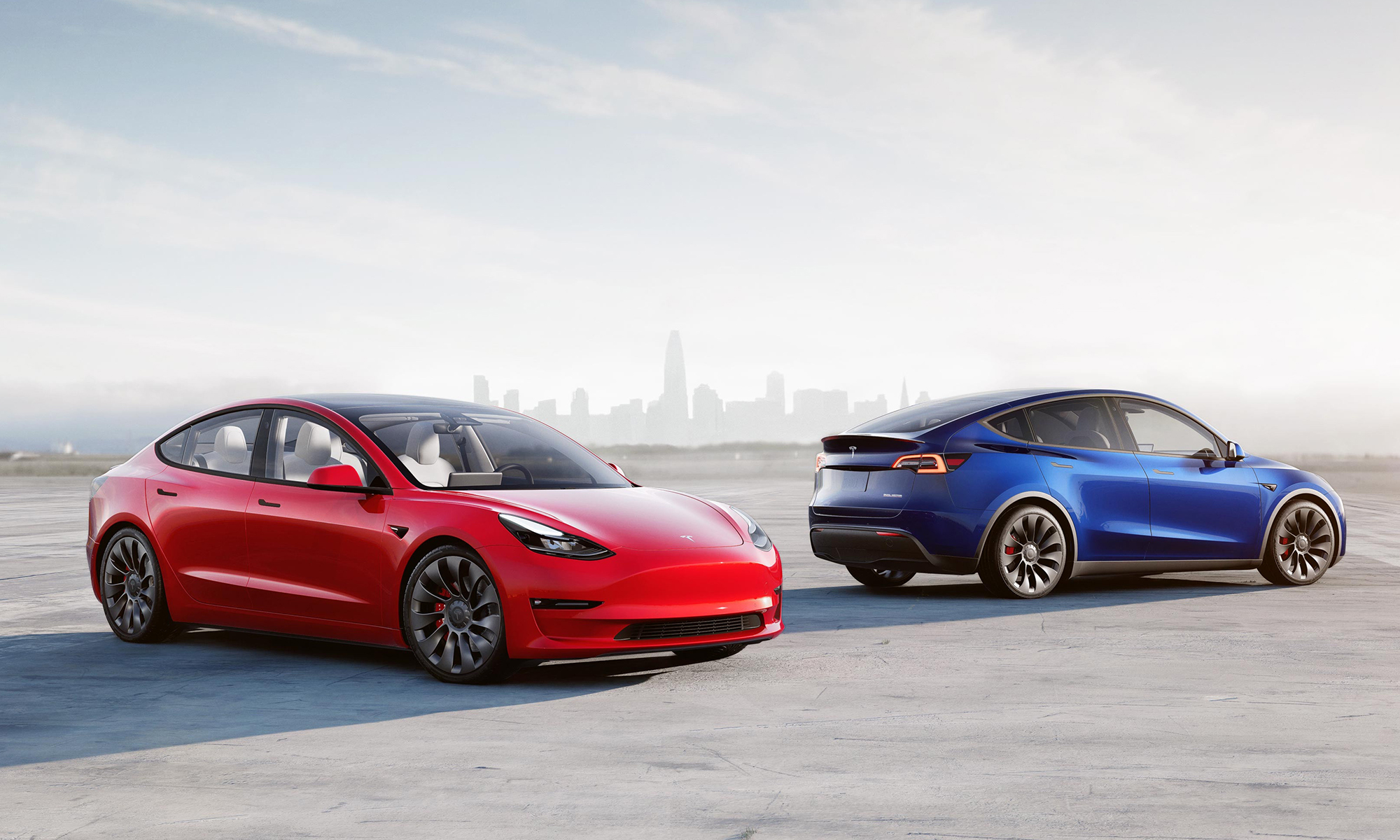
Image source: Tesla.
Cybercab and regulatory compliance
Indeed, the day after the Cybercab launch event, NHTSA immediately opened an investigation (Audit Query AQ26002) into "Tesla Cybercab Self-Certification Following Austin Deployment." The order lists 21 requests that Tesla must respond to, under oath, by Sep. 30, 2026. Unlike the E.U., which requires vehicle type approval before vehicles are allowed on the road, the U.S. approach is to allow automakers to self-certify under the FMVSS and then ensure they have done so. This is what the NHTSA is doing now.
The two key issues for Tesla
The most important requests likely relate to compliance with two FMVSS, namely FMVSS 135 (light vehicle brake systems) and FMVSS 111 (rear visibility devices).
FMVSS 135 S5.3.1. states, "The service brakes shall be activated by means of a foot control," while FMVSS 111 states, "Each passenger car shall have an inside rearview mirror of unit magnification," and "Each passenger car shall have an outside mirror of unit magnification," on the driver's side. Given that the Cybercab has neither a physical brake pedal nor side mirrors, Tesla appears to have a certification issue.
Image source: Tesla.
What NHTSA wants
These two issues are covered in the order's requests, with request 10 asking Tesla to list the FMVSS it "contends does not apply to the subject vehicles" and "describe fully the entire basis of each of your contentions of inapplicability" of them to the Cybercab. Meanwhile, request 19 asks Tesla to "provide in detail how Tesla determined that the subject vehicles comply with the requirement in the first sentence of FMVSS No. 135."
What it means to Tesla investors
These developments need perspective. While the NHTSA investigation is an enforcement action in line with its modus operandi, the responses that Tesla is likely to give to the 21 requests can reasonably be expected to accelerate the process NHTSA is already undertaking to modify FMVSS to better account for autonomous vehicles like Cybercab.
For example, NHTSA has already proposed updating FMVSS 135 to remove the requirement "for hand- or foot-operated brake controls for vehicles designed never to be operated by a human."
Since the standard hasn't been updated yet, NHTSA must investigate Tesla's compliance with a standard that will likely change in ways that benefit autonomous vehicles.
Investors should not panic over the NHTSA investigation, as it's arguably a positive part of the FMVSS modification process. However, they should keep in mind that it could initially constrain the rollout of robotaxis/Cybercabs. The rollout won't happen overnight, but that doesn't mean Tesla can't deliver significant value to shareholders if and when it moves to large-scale expansion.