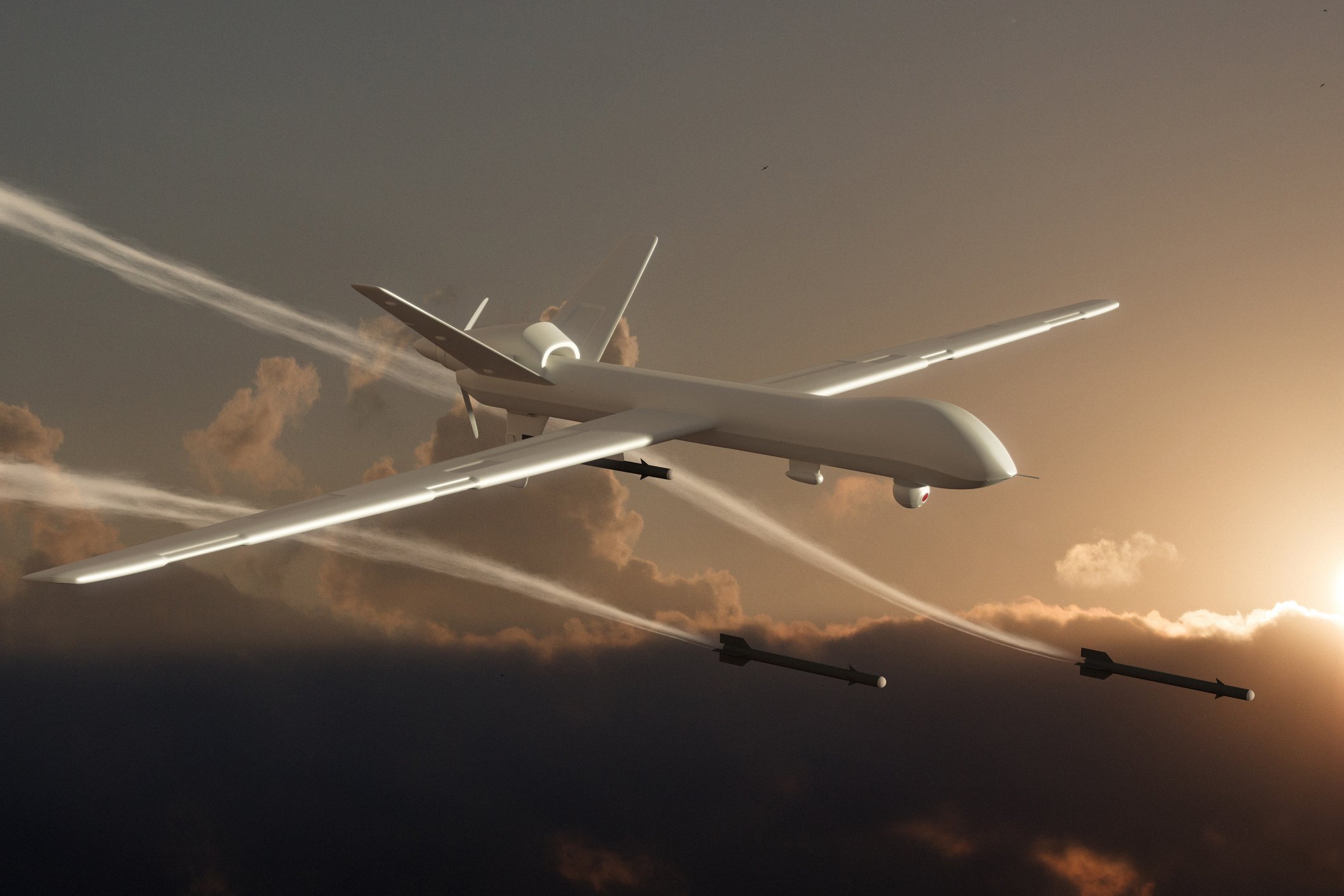
For Lockheed Martin (LMT +0.34%), the bad news arrived in June. The U.S. Air Force had just announced contracts to build new "Collaborative Combat Aircraft" -- CCA, the drone warplanes that will fly in support of piloted fighter jets -- naming two companies as winners.
Lockheed Martin was neither of them.
Good news for Anduril and General Atomics -- and others
In fact -- and bad news for defense stock investors -- no publicly traded defense stocks won CCA contracts. Instead, the Pentagon gave its awards to two privately owned companies, Anduril Industries and General Atomics.
In a twist, the Pentagon decided to award CCA contracts in two parts, however. Anduril and GA will build the FQ-42 and FQ-44 (respectively) drones, but the software needed to run the drones will be "sold separately" -- and awarded in separate contracts.
Anduril won one such software contract for autonomy software, as did both AI specialist Shield AI and traditional defense contractor RTX (RTX +0.90%). Six companies were put on a separate list of vendors for other drone software: Anduril, General Atomics, RTX, Shield AI, Lockheed Martin, and Northrop Grumman (NOC -0.78%). Further CCA software contracts are expected to roll out later this year.
On the face of it, this all still sounds like bad news for Lockheed. On one hand, yes, the company has a chance of winning a CCA software contract because it's on the list of potential vendors. On the other, it's competing with five other companies for this work, so success is not guaranteed.
Plus, for now at least, Lockheed Martin looks shut out of the competition to do what it does best: build the actual CCA fighter jets themselves. Except it turns out that Lockheed Martin is going to build them anyway.
Lockheed Martin still has high hopes
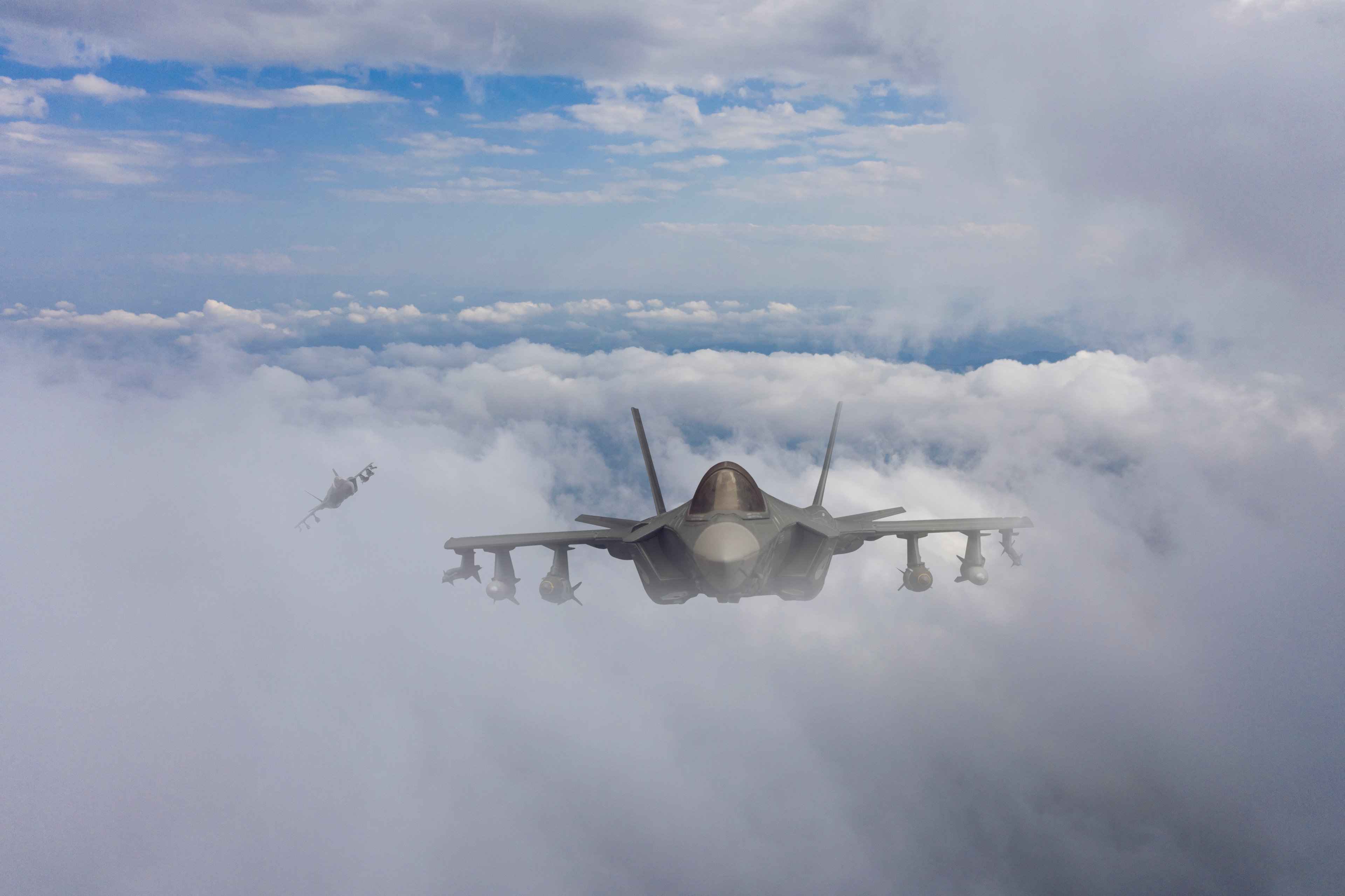
On Monday, Lockheed Martin's Skunk Works division announced that -- contract or no contract -- it's going ahead and building four more Vectis stealth drone fighters. This is in addition to the first Vectis drone that's already under construction (with first flight expected in late 2027).
According to Lockheed, Vectis will be a Group 5 drone similar in size to the General Atomics MQ-9 Reaper. It will be designed to operate either in cooperation with fifth-generation fighters like the F-35 Lightning II or independently and can perform surveillance, counter air, and strike missions -- so it will be an armed drone. It will be stealthy, compatible with other companies' autonomy software, and "affordable," to encourage mass purchases by the Air Force.
The only trick: Somehow, they have to get the Air Force to buy it when Vectis isn't even on the shopping list!

NYSE: LMT
Key Data Points
What's next for Lockheed Martin?
Not deterred by this little detail, Lockheed is so confident the Air Force will eventually want Vectis that it is paying for Vectis's development itself. (The hope is that after the USAF buys Anduril's or General Atomics' CCA offering initially, it will open the competition wider in subsequent competitions to build these drones.)
That's a risky move.
About a decade ago, in the middle of the Global War on Terror, defense company Textron (TXT +1.28%) tried a similar gambit, building an off-the-shelf combat jet called Scorpion "on spec," and then trying to find buyers for it. Textron never did find a buyer.
Ultimately, after spending "many millions of dollars in design and development," Textron had to eat the cost of Scorpion. The good news is that if Lockheed Martin suffers a similar fate with Vectis, well, at least the company is in a healthy financial state to absorb such a loss.
Over the last 12 months, the defense giant reported $6.3 billion in net profits and generated $8.7 billion in positive free cash flow -- 38% more than its reported profits. Valued at just over $123 billion in market capitalization, Lockheed sells for barely 14 times FCF. Yet analysts polled by S&P Global Market Intelligence expect Lockheed to grow its earnings better than 19% annually over the next five years.
With a price-to-free cash flow-to-growth ratio of only 0.7 and paying its shareholders a 2.6% annual dividend, Lockheed Martin today looks like one of the best values in defense. Would Lockheed be an even better bargain if it wins hundreds of millions of dollars in CCA contracts from the Air Force? Absolutely.
But Lockheed Martin stock can also do just fine without CCA.