Space Exploration Technologies (SPCX +0.44%) stock hasn't lived up to its pre-IPO hype. Its share price is still sitting below its opening price of $150 as of this writing.
But a lot can change in five years -- especially with SpaceX's ambitious plans for artificial intelligence (AI), rockets, and its Starlink satellite business.
CEO Elon Musk thinks SpaceX could one day be the most valuable company in the world, and shareholders will have a clearer picture over the next five years of whether it's achieving that goal.
Here's what to expect.
Image source: The Motley Fool.
Its AI data center business could literally take off
One of the most ambitious plans SpaceX has for the next several years is to deploy orbital data centers into space. The company says this could happen as soon as next year, with a ramp-up in 2028.
The idea behind this is that data centers use a lot of energy on Earth and take up a lot of space (not to mention that most people don't want them in their communities). Putting them into space could solve the energy and location problem, with power supplied by solar panels.
Boston Consulting Group estimates that global orbital AI data centers could potentially be a $240 billion to $320 billion market by 2040. SpaceX is taking a more grounded approach to AI as well. The company rents out computing power from its Colossus data centers as part of its neocloud business.
Neocloud companies build their own data centers, use some of the computing power for themselves (as SpaceX does for its Grok AI), and then rent the rest to other companies. This could be an important part of SpaceX's future in the coming years, as Gartner estimates neocloud companies could capture 20% of the $267 billion AI market by 2030.
SpaceX is already a key player, with Alphabet signing a three-year deal for compute capacity for its Gemini AI model, which will generate $30 billion in sales for SpaceX by 2029. Anthropic is also an important SpaceX customer, paying SpaceX about $15 billion annually to rent its Colossus 1 data center.
Analysts at Goldman Sachs said earlier this year that SpaceX's AI revenue could 100x by 2030 -- rising to $322 billion.
Starship and Starlink will do more heavy lifting
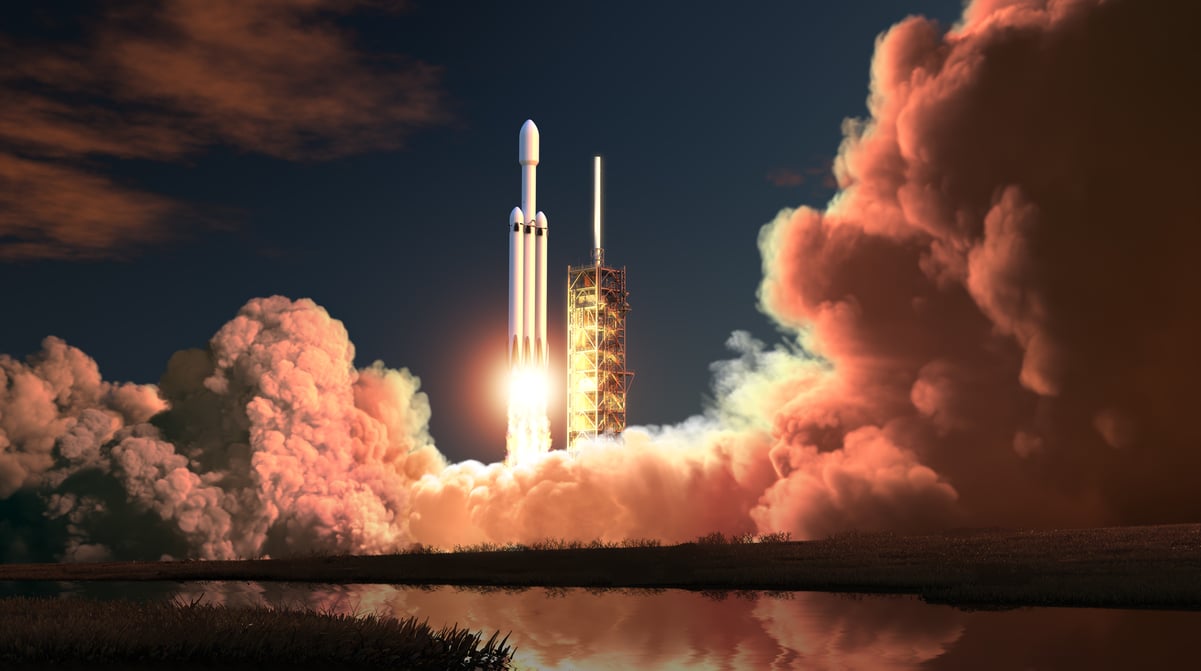
SpaceX has already completed launch tests of its Starship -- the largest rocket ever flown. Over the next five years, it's highly likely that it will become a major part of the company's rocket launch business.
Starship has far more payload capacity than the company's Falcon rockets, and once it reaches operational efficiency, SpaceX says it could reduce the historical cost of single-use rockets by 90%. The benefits could be huge for the company, with Goldman Sachs estimating $8.3 billion from SpaceX's rocket launch business by 2030 -- more than double its 2025 rocket business sales.
The star of the show over the next five years may be SpaceX's Starlink business. The company's satellite internet company generates about 61% of SpaceX's total revenue and is its only profitable business.
Its growth is also accelerating. SpaceX has 12 million global subscribers right now, of which 3 million are U.S.-based. The latest analyst estimates are for Starlink's U.S. customers to 5x by 2030, reaching 15 million.
That would help Starlink capture more of the satellite internet market, which has a total addressable market of around $129 billion.

NASDAQ: SPCX
Key Data Points
Where SpaceX stock could be in five years
SpaceX clearly has a lot of things going for it, and I think it has real potential to achieve some of its goals. However, one of SpaceX's biggest drawbacks right now is that the company is spending heavily to expand, and it's unclear when it will turn off the spigots.
SpaceX's capital expenditures (capex) jumped 308% in the first six months of this year to $26.5 billion. More than 82% of that spending went to SpaceX's artificial intelligence business.
AI holds a lot of promise for SpaceX and its competitors. Still, investors are getting tired of seeing tech companies ramp up AI spending without having a plan for profitability. A recent Wall Street Journal article said that AI spending is "the biggest economic bet in U.S. history" and that spending could total more than $10 trillion between 2025 and 2032.
This spending is coming at a time when inflation is rising again, geopolitical instability is high, and interest rates are increasing.
All this could put pressure on AI companies' ability to turn a profit from increasingly expensive borrowing costs. If that happens, I think SpaceX stock could remain highly volatile, with some potentially unimpressive gains five years from now.