When it comes to factors affecting the S&P 500 (^GSPC +0.73%), Nasdaq Composite (^IXIC +1.19%), and Dow Jones Industrial Average (^DJI +0.49%), interest rates are among the most closely watched for a reason.
For example, after the Federal Reserve voted in mid-September to raise interest rates a quarter point, the agency's new chair, Kevin Warsh, said that the Fed had "removed a dose of accommodation." In that context, the dose of accommodation means a dose of economic stimulus. Given the phrasing, it's reasonable to assume that Warsh interprets current monetary conditions as still fairly loose and that more work is needed to control inflation.
Does his phrasing suggest the Federal Reserve is going to approve more rate hikes this year?
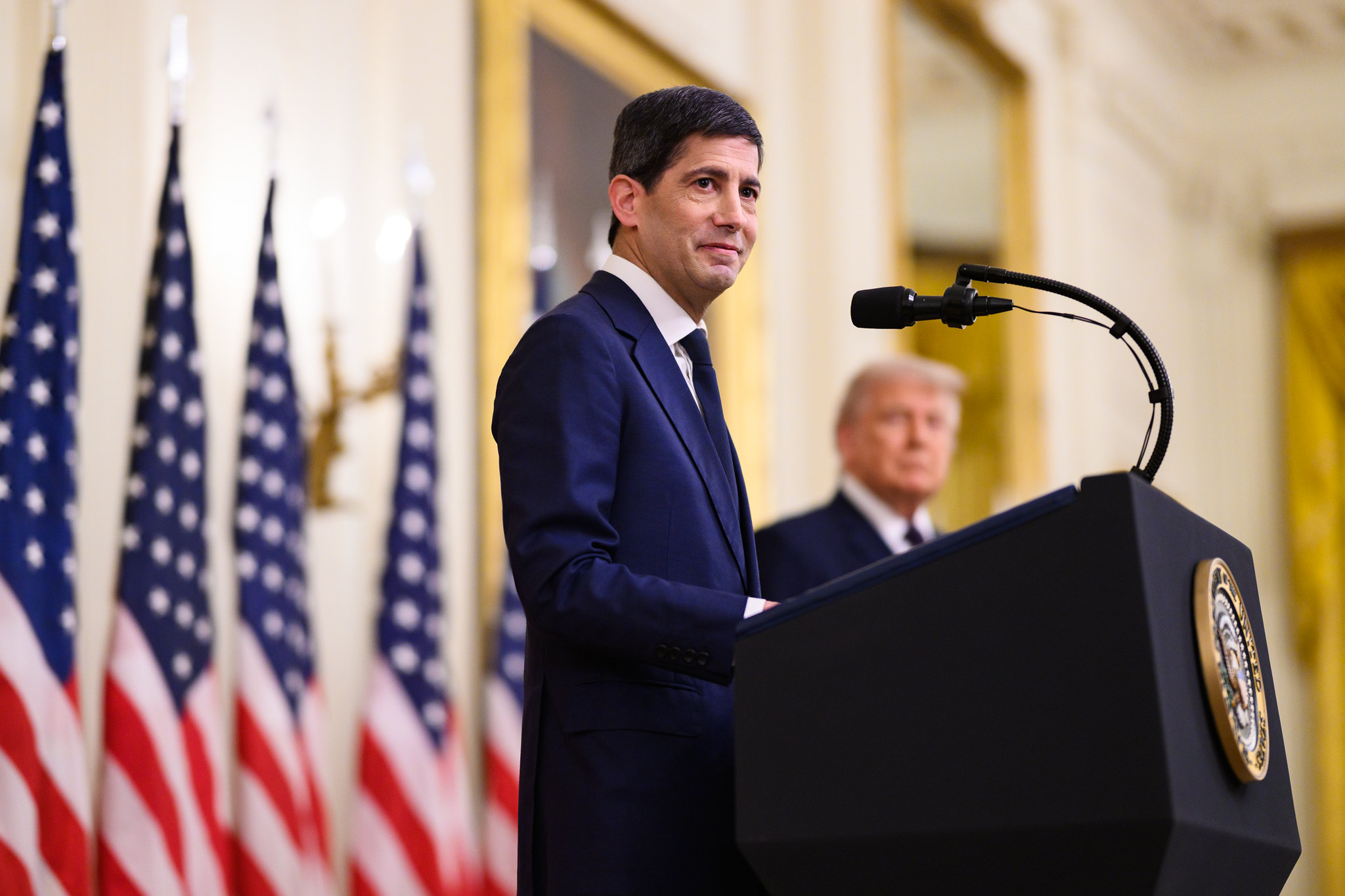
Federal Reserve chair Kevin Warsh. Image source: The White House.
16 of 18 Fed officials expect another hike in 2026
Assuming all else remains largely unchanged in 2026, investors should brace themselves for at least one more rate hike this year.
As of Oct. 1, CME's FedWatch prediction data suggests that the odds of the Federal Reserve hiking rates at its October meeting are about 33%. In the Fed's September 2026 economic projections, 16 of 18 Fed officials who submitted projections expected at least one more rate hike this year.
S&P 500 Index
Key Data Points
The inflation data also indicates that further hikes are highly probable.
In his remarks at the September Fed meeting, Warsh estimated that the Fed's preferred measurement of inflation, the personal consumption expenditures (PCE) price index, rose about 3.6% in the year through August, far higher than the long-term target of 2%. Data from the Bureau of Labor Statistics (BLS) additionally shows that energy prices jumped 16.3% over the 12-month period ending in August.
Moreover, the factors driving this inflation are getting worse, not better.
NASDAQ Composite Index
Key Data Points
Brent crude, the global crude oil benchmark, hit $101.15 per barrel on Oct. 1 as a result of the U.S.-Israel war on Iran. And that most recent spike in oil prices isn't even reflected in the inflation data yet.
Don't panic, but be prepared
Incoming rate hikes are no reason to sell your stocks, bonds, or cryptocurrencies in a rush. The current market conditions suggest traders already expect at least a couple of additional rate hikes.
Dow Jones Industrial Average
Key Data Points
In mid-September 2026, futures pricing implied that the Fed's benchmark rate would be at 4.6% by late 2027, which means three or four more hikes. But a quickly rising price of oil could make even that a bit optimistic. There remains a significant risk of the market going for a tumble if the Fed hikes faster than the market is anticipating.
Keep a close watch on the war, as it's the most important driver of near-term rate increases. Interest rate hikes won't help to make energy any cheaper, but if inflation continues to run hot, the Fed may not have any choice. It's probably a good idea to own some inflation-resistant assets as this process works itself out, just to be safe.