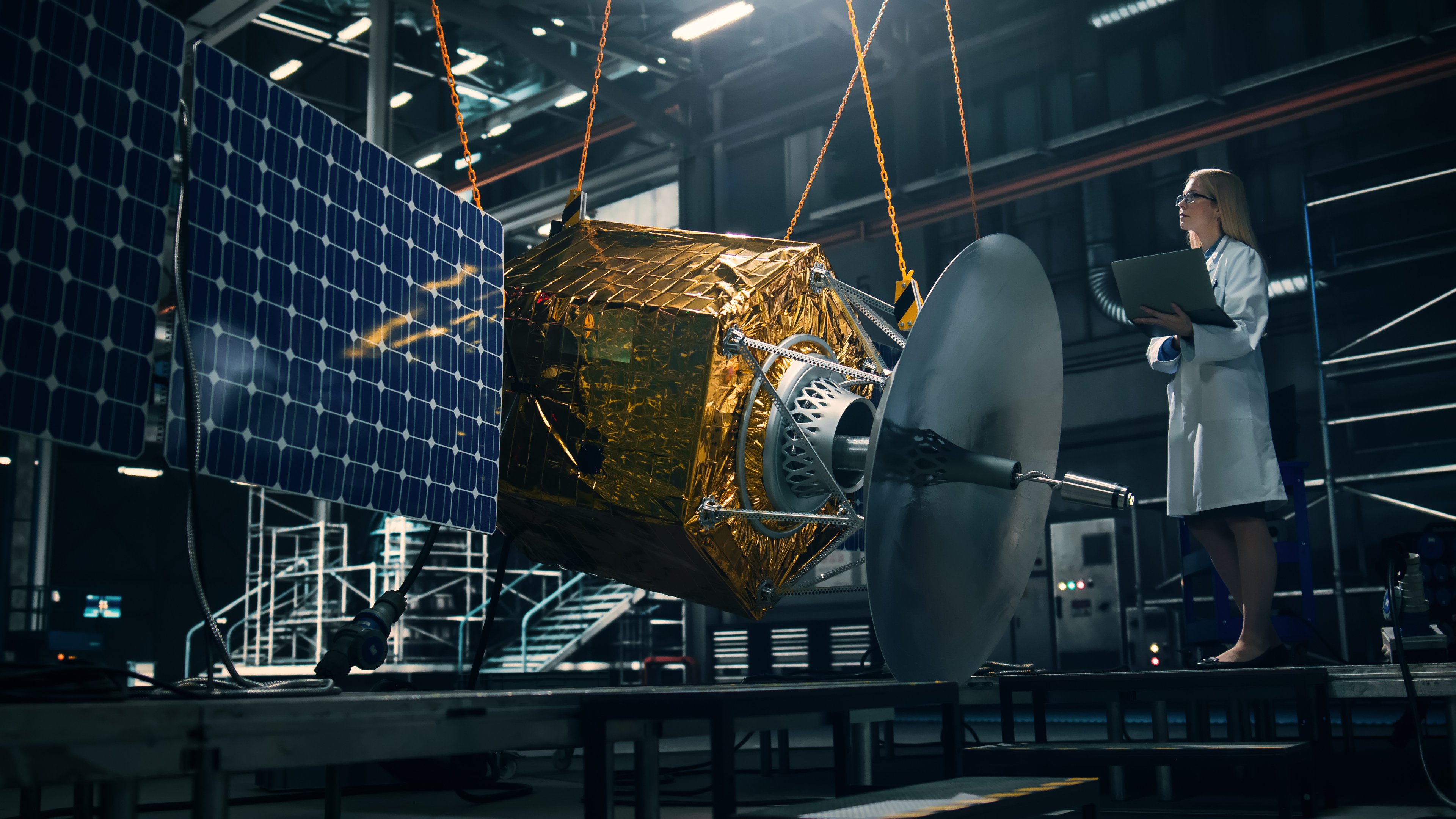
Satellite communications stock AST SpaceMobile (ASTS +8.01%) jumped 8.7% through 10:25 a.m. ET Tuesday after announcing its "first satellite-to-smartphone integration test" with Canadian telecommunications company Telus Corporation (TU +0.00%).

Image source: Getty Images.
Canada news
AST explains that the test marks "a significant milestone" in progress toward connecting Telus's cellphone network to AST's BlueBird satellite constellation. Once complete, the integration will allow cellphone users in Canada to make cell-to-cell calls and texts via satellite and access broadband internet on their devices, even in "remote areas of Canada where traditional cell service isn't available."
AST says if all goes as planned, Telus customers will be able to use "eligible smartphones" (which term is not explained) "within the next year," and use them "beyond the reach of traditional cell towers."

NASDAQ: ASTS
Key Data Points
What's next for AST SpaceMobile
AST SpaceMobile needs between 45 and 60 satellites in orbit to provide continuous coverage across "select" markets, according to The Houston Chronicle -- but at last report had only 13. Providing global coverage will require an even bigger constellation -- about 90 satellites.
So, how close is AST to delivering on its promises to Telus?
Well, AST just shipped three more satellites to Cape Canaveral for launch, so that'll make 16. Right now, the limiting factor appears to be access to rockets, with key provider Blue Origin currently unable to launch, and only SpaceX (SPCX +0.48%) -- an AST competitor -- available. Two more SpaceX launches are on the schedule for AST this year.
According to analysts at William Blair, though, AST's unlikely to reach even 20 satellites in orbit by the end of this year. That's fewer than half what it needs to be operational in "select" markets. For now, Telus customers must remain on hold.