McDonald's (MCD -0.68%) shares are down roughly 32% from the $341.75 all-time high they hit in February, recently trading near $232, close to a four-year low. That's a steep drop for a company this size, but it isn't the first time McDonald's stock has fallen this hard. It's happened twice before, and both times, the stock eventually came back stronger than it went in.

Image source: Getty Images.
The 2003 crisis: McDonald's fell 70% before its biggest turnaround
In early 2003, McDonald's posted its first quarterly loss since going public in 1965, and the stock had fallen 70% from its 1999 peak, hitting an all-time low near $12, according to NPR. The cause was years of overexpansion and inconsistent restaurant quality -- growth for growth's sake rather than a focus on the customer experience.
The company's response -- a plan called "Plan to Win" -- shifted the focus to existing restaurants instead of opening new ones, cut capital spending, and introduced the "I'm lovin' it" brand campaign. It worked. Between March 2003 and October 2004, McDonald's stock rose 105%, more than triple the S&P 500's 35% gain over that same stretch.
The 2015 slump: a stale menu and a modern fix
A decade later, McDonald's hit trouble again. U.S. market share slipped from 17.4% in 2012 to 15.4% by 2016, and the company reported its first negative global same-store sales in more than a decade, according to Entrepreneur. The menu had grown cluttered, and the brand felt dated.
Then-CEO Steve Easterbrook repositioned McDonald's as a "modern, progressive burger company," moved toward a nearly fully franchised model, and launched all-day breakfast in October 2015 after years of customer requests. The stock nearly doubled over the following two years.

NYSE: MCD
Key Data Points
This time looks different in one important way
McDonald's current slump shares real similarities with those earlier ones: There is declining traffic, a menu and value perception that's lost its edge, and new competition. But there is a big new investment plan coming as the fix.
In September, the company unveiled an $8.5 billion restaurant modernization plan running through 2036, including an AI-powered ordering system, hand-breaded chicken, protein-forward menu items aimed partly at GLP-1 drug users, and efficiency upgrades the company says could add roughly $100,000 in annual cash flow per average U.S. restaurant, according to ABC.
But there's a key difference. In 2003 and 2015, McDonald's framed its problems as things it had broken and could fix. This time, CEO Chris Kempczinski has described persistently high food costs, with beef prices nearly doubling over five years, and softer traffic as simply "the environment" going forward, not a temporary rough patch to wait out, according to comments spoken to CNBC. McDonald's is also testing third-party ads on its drive-thru digital order boards, which could eventually bring in about $1 billion in additional revenue.
That's a more honest and creative read of the macro backdrop we are seeing these days. Still, it also means this turnaround has to win customers back in a tougher economic climate than the ones that powered the 2004 and 2016 recoveries.
Is it a buy now?
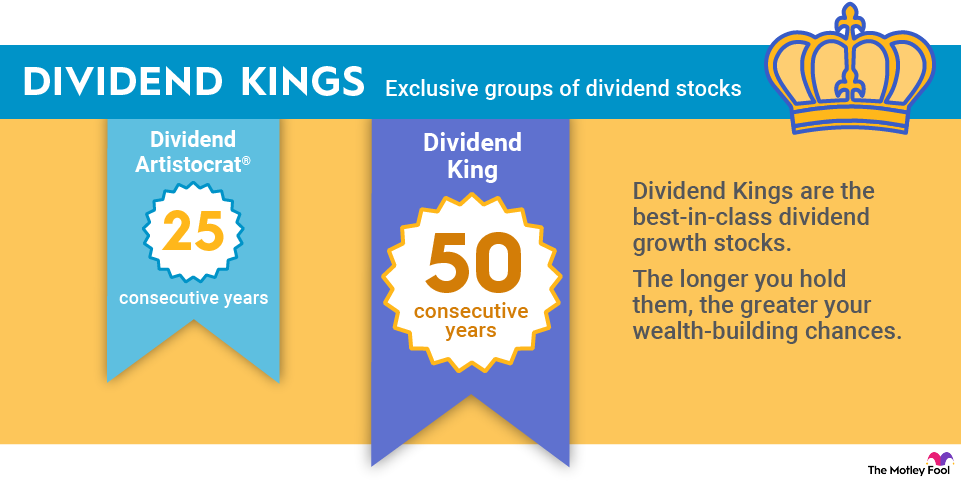
History leans in McDonald's favor here: The company has twice turned a steep, double-digit drawdown into a multi-year stock that more than doubled by actually reinvesting in the core restaurant experience rather than cutting its way to profitability. Add to this the fact that McDonald's has increased its dividend every year since 1976 and just became a Dividend King in 2026 after reaching 50 consecutive years of dividend growth.
I'd treat this less like a quick trade and more like a multi-year bet that McDonald's $8.5 billion plan and AI-driven efficiency push can win back customers, even if the broader economic backdrop doesn't improve.