The heat is on for artificial intelligence (AI) companies. After mind-blowing growth over the past few years, some AI developers have been sounding the alarm over the technology's risks. Anthropic, whose CEO, Dario Amodei, has moved to the forefront of the initiative to slow things down, postponed its initial public offering (IPO) from the initially expected September or October to November, and many executives across the AI space have joined in the call for greater care in model development.
AI stocks as a group fell after Amodei's note went viral in mid-September, although that seems to have been a short-term reaction. More pressing is how a slowdown in AI model development would impact hardware companies like Nvidia (NVDA -2.94%). Here's how CEO Jensen Huang reacted, and what investors can expect for Nvidia.
Doomsday narrative and AI growth
The public's fears over the risks AI poses intensified to a new level in September when an Anthropic AI researcher quit the company and publicized the reason why on social media, claiming that at its current pace, he believed that unchecked AI development was putting humanity at risk of extinction within the next decade.
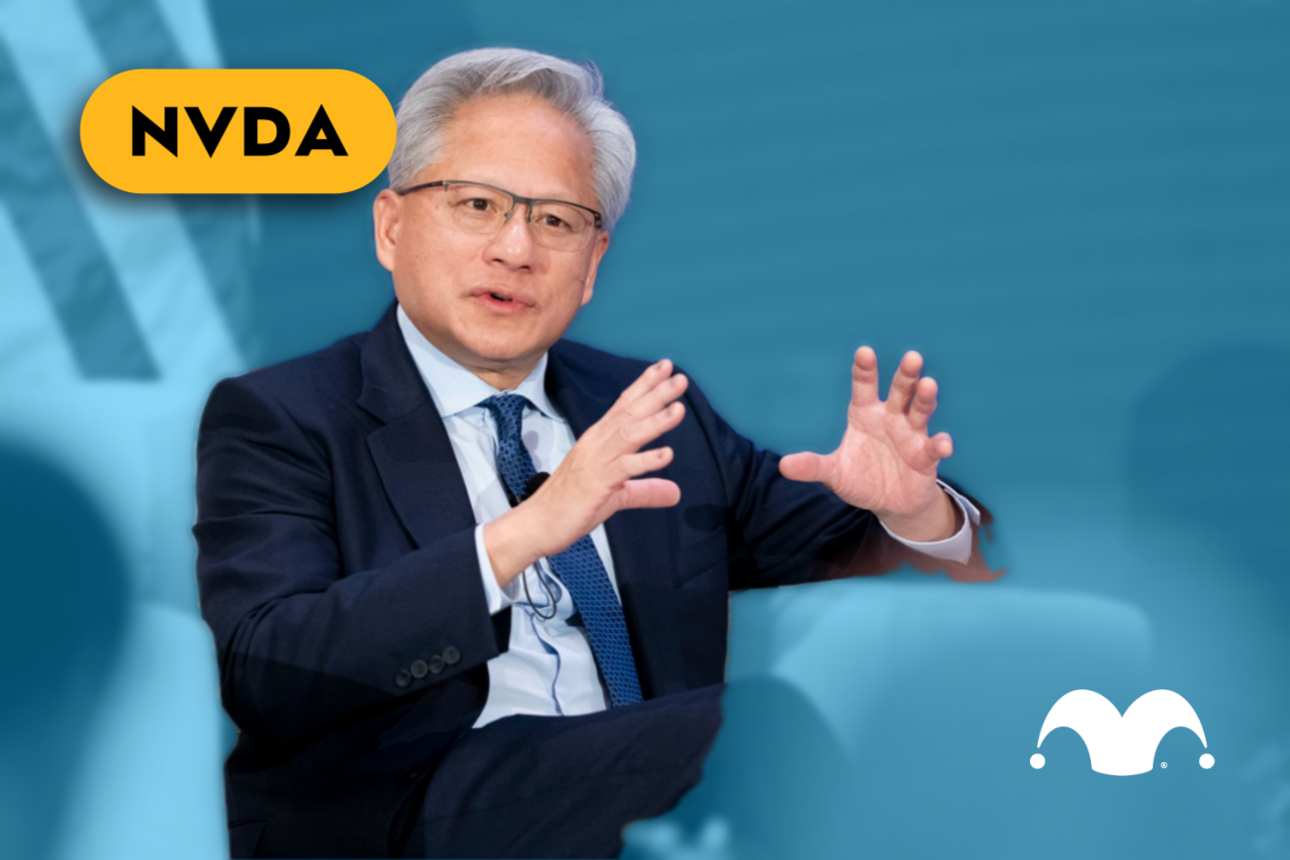
Nvidia CEO Jensen Huang. Image source: Getty Images.
While AI leaders like Amodei, OpenAI's Sam Altman, and Elon Musk chimed in to agree that there were real dangers, Huang took a completely different spin.
"2030 is not going to be the end of the world," he told CBS News in an interview. "There is 0% chance that's going to be the end of the world. Scaring people is unnecessary. It is irresponsible."
While that kind of response seems to argue in favor of AI developers and hyperscalers continuing along a build-out path that would benefit Nvidia, Huang rejected the notion that his opinion might be biased by that.
"Our company's success is directly connected to the safe deployment of products and services," he noted. "If we don't continue to do that, our value would be diminished."
How Nvidia fits in
Nvidia has been arguably the most important and successful player in the AI revolution. It has expanded from a relatively obscure chip designer into the most valuable company in the world, and the only one worth more than $5 trillion.

NASDAQ: NVDA
Key Data Points
Its 11-fold growth over the past five years has come from the unrelenting demand for its best-in-class graphics processing units (GPUs), the chips that provide the parallel-processing power required to drive generative AI. Revenue hasn't just increased at high rates, it has recently accelerated again, which is a feat considering the much larger base it's now comparing that growth to. Even more, it has developed complete computing platforms for training and inference, filling data centers with high-level technology. It's clear that a slowdown in AI development would damage Nvidia's growth prospects.
Nvidia stock fell after the warnings a few weeks ago, but it has bounced back and hit a new high this week. Nvidia hasn't joined the chorus calling for an AI development slowdown, nor has it changed its guidance, and Wall Street expects a 91% year-over-year increase in revenue in the current quarter. The market seems to be on board with Huang, and that's crucial for Nvidia's growth story.