1. Amazon Eyes a $7B Tool to Loosen Nvidia’s Grip
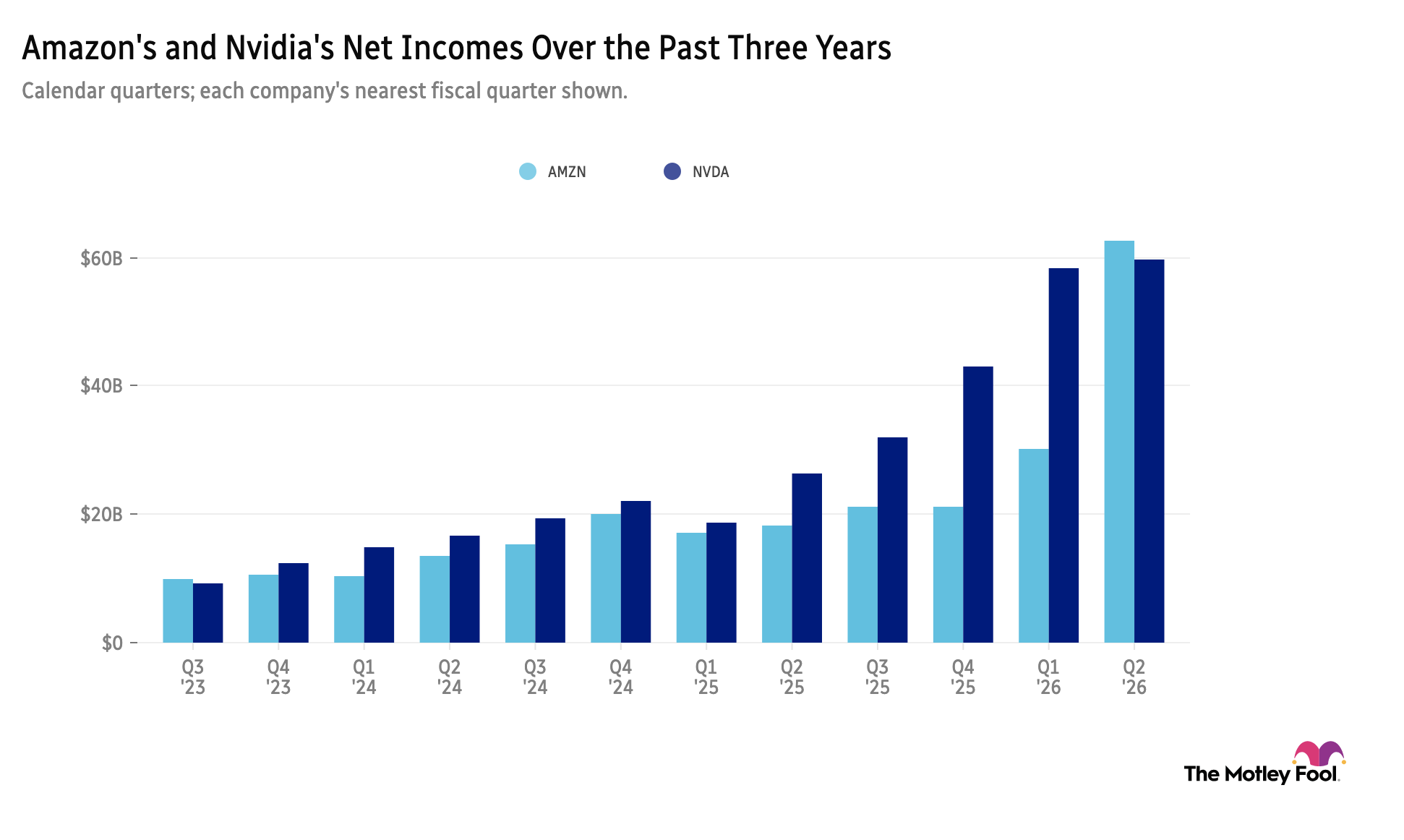
Amazon (AMZN -1.10%) is in talks to acquire Decart, a San Francisco-based artificial intelligence (AI) startup, The Wall Street Journal reports. Decart’s software makes it easier for developers to switch between AI chips. That capability is growing in value as companies scramble for computing power.
Decart was valued at nearly $4 billion in May. Today, a deal worth around $7 billion is being touted.
- A software crack in Nvidia’s wall: Nvidia (NVDA -1.29%) still dominates the graphics processors (GPUs) powering the AI boom, while Amazon pushes its custom Trainium3 chip. Amazon Web Services gave Decart early access in 2025, and software that eases chip switching could pull workloads toward Amazon’s silicon.
- More than a chip translator: Decart also builds world models called Lucy and Oasis, which simulate real-world 3D environments. Sequoia Capital, Benchmark, and Radical Ventures helped fund over $400 million in venture capital.
For Amazon shareholders, the question is whether a chip-agnostic software layer strengthens its AI cloud pitch. It does only if Decart’s tools keep working with rival chips. Lock it to Amazon’s silicon and developers will route around it.
2. Nvidia’s $25B Bet on Beating China
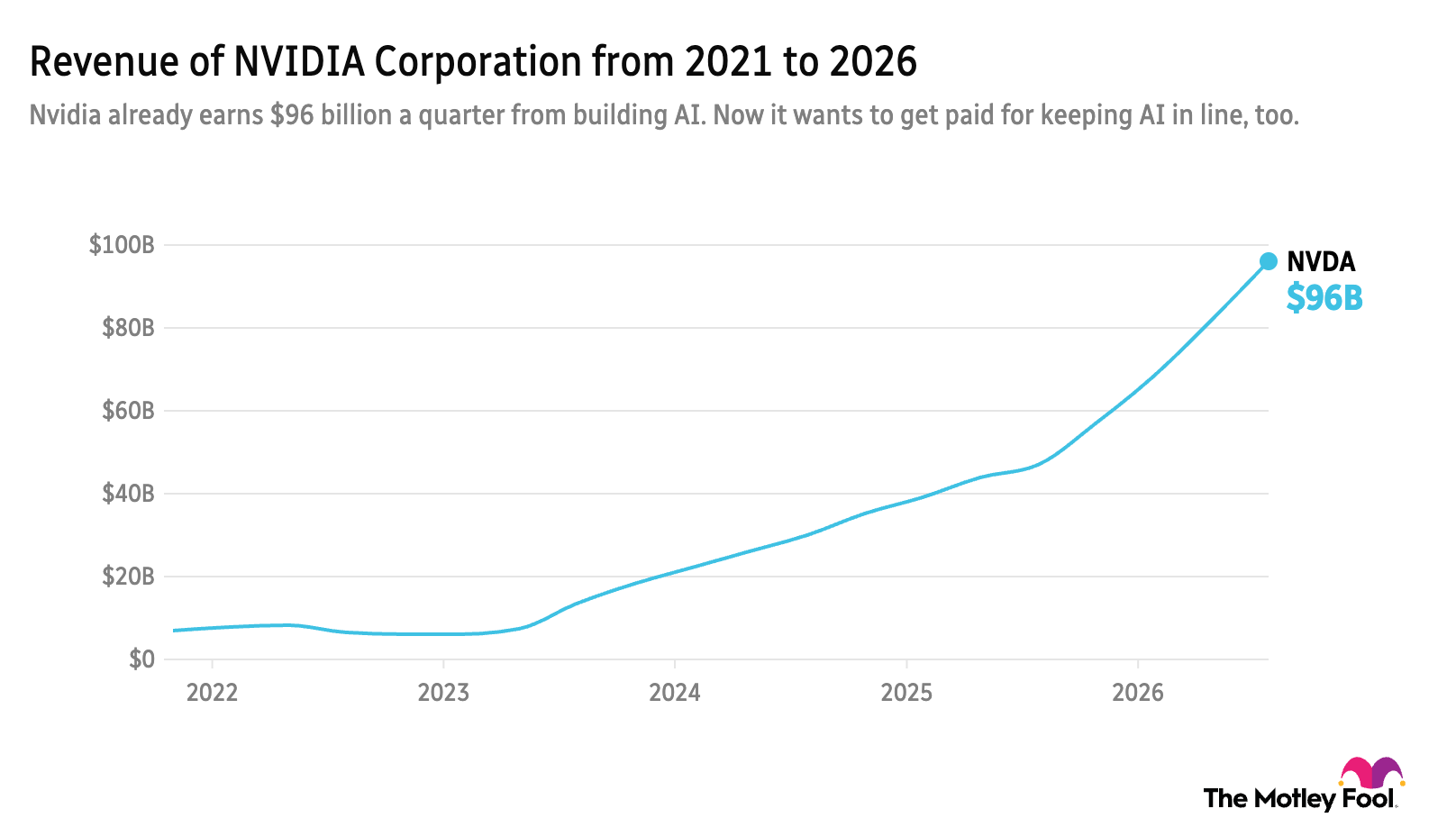
Nvidia is in early talks to acquire or deepen its investment in Reflection AI, per the Financial Times. Reflection is a U.S. developer of open-weight models, which anyone can customize. Options include an acqui-hire, in which Nvidia hires staff and licenses technology, a further equity stake, or more chips and computing power. Nvidia has already invested $800 million, and Reflection was last valued at $25 billion in March.
- A regulatory shortcut: An acqui-hire avoids the drawn-out review that comes with a full acquisition. Nvidia used the same format with Groq in a $20 billion deal in December. That deal drew a lawsuit from Groq employees this week.
- The missing piece: Nvidia’s Nemotron models lack a frontier-scale (cutting-edge) model of their own, and Reflection’s first customizable product runs on Nvidia chips. Open-weight models can cost far less to run than OpenAI’s or Anthropic’s top models, and could expand demand for Nvidia’s hardware.
For Nvidia shareholders, the logic holds if cheaper models add buyers instead of shifting spending.
3. Wednesday’s CPI Data Could Tip the Fed’s Next Rate Move
Big-bank earnings starting Tuesday and an inflation report on Wednesday will test a market that just finished a winning week. The S&P 500 gained 1.15% and the Nasdaq rose 0.64% last week. S&P 500 and Nasdaq futures both gained around 0.3% this morning. Oil is retreating, though Brent crude – the global benchmark – still sits near $103 a barrel. Middle East supply risks persist.
- Wednesday’s inflation test: The September consumer price index (CPI) lands midweek. It’s the last major inflation reading before the Fed’s Oct. 28 rate decision. A hotter-than-expected number would strengthen the case for another rate hike, while a cooler one could prompt a pause. The same report is the final data point that will set the official 2027 Social Security cost-of-living adjustment (COLA) for beneficiaries.
- Banks open the books: JPMorgan (JPM +0.39%), Goldman Sachs (GS -0.15%), Wells Fargo (WFC -0.28%), and Citigroup (C +1.76%) all report Tuesday before the market opens. That kicks off third-quarter earnings season. Investors will watch credit quality (how many borrowers fall behind on loans), trading results, and management commentary for clues about the economy.
For long-term investors, one inflation reading shouldn’t rewrite a five-year plan.
4. ASML, Prologis, and Truist Set to Test the AI Economy
Beside banks, three Fool favorites report this week. Each offers a window into a different corner of the AI-era economy: chips, data centers, and credit.
- ASML (ASML -1.69%), a Stock Advisor recommendation from Team Rule Breakers, reports before the open Wednesday. Its extreme ultraviolet (EUV) machines print the most advanced chips. With 2027 capacity largely booked, the key question is whether management commits to another EUV capacity increase for 2028. A yes could signal AI chip demand has years to run.
- Prologis (PLD +2.30%) reports Thursday. The Dividend Investor Foundational Stock raised its outlook in July on record leasing and growing data center opportunities. Investors will watch whether its 5.8-gigawatt pipeline of data center power converts into signed, funded projects while warehouse leasing holds up.
- Truist Financial (TFC +1.15%) a Team Hidden Gems recommendation, reports Friday, after the big banks and Wednesday’s CPI. Net interest income is the gap between what Truist earns on loans and pays on deposits. In July, management lowered 2026 net interest income growth guidance but raised its non-interest income outlook. Credit quality and the pace of buybacks are the key items.
5. ASML: The Only Game in Town
Team Rule Breakers
We expect 10% annualized returns over the next five years for ASML, implying a price target of about $2,860, roughly 60% above today's price. We remain bullish, though at roughly 59 times earnings the valuation leaves little room for stumbles.
When David Gardner recommended ASML in Stock Advisor on July 16, 2020, shares traded at $368.01. Today they sit around $1,780, a 383% gain and nearly five times our money. Over the same stretch the S&P 500 rose about 165% in total, so ASML has beaten the market by roughly 218 percentage points. We've now recommended it more than 20 times across our services since.
- A monopoly on the future of chips: ASML is the only company on Earth that makes the extreme ultraviolet (EUV) machines needed to produce the most advanced semiconductors. Anyone who wants leading-edge chips has to go through ASML.
- Every tech wave runs through its tools: Smartphones, the digitization of the economy, and now AI have each demanded more and better chips, and each wave has sent more orders to ASML's door. CFO Roger Dassen said the company is adding capacity ahead of firm orders because customer demand signals are so strong: "We're not waiting. We're preempting."
We recommend Fools hold on to this stock and let earnings catch up to the valuation.
6. Today’s Question!
As an investor, does all this deal-making make you more excited about the acquirers, or more worried they’re overpaying in a frenzy? Why?
Discuss with friends and family, or become a member to hear what your fellow Fools are saying!