I know what you're thinking, and I can relate: Who would want to own anything in retail after that shellacking the majority of the sector took last week? In apparel, Gap, Zumiez, Aeropostale,and Wet Seal all had disappointing second-quarter forecasts, while large-scale retailer Target (NYSE: TGT) dipped to within an inch of a new 52-week low.
Luckily for investors, this sector is home to some of the most promising dividend-paying companies. When seeking out retailers that can provide long-term stock growth as well as dividend appreciation, it's important to consider not only brand name, but also whether the business -- and dividend -- can survive in a recession. I've outlined two retailers that you can trust to deliver solid long-term results, along with one that I wouldn't touch with a 10-foot pole.
Home Depot (NYSE: HD) -- trust it
Home Depot is the perfect retail stock, if you think about it. In bull markets where housing is booming, the company will profit from home remodels. In a declining housing market, such as the one we're in now, the company benefits from investors who buy foreclosed or distressed properties, renovate them, and put them back on the market. Regardless of the economy, Home Depot is going to be able to drive business growth.
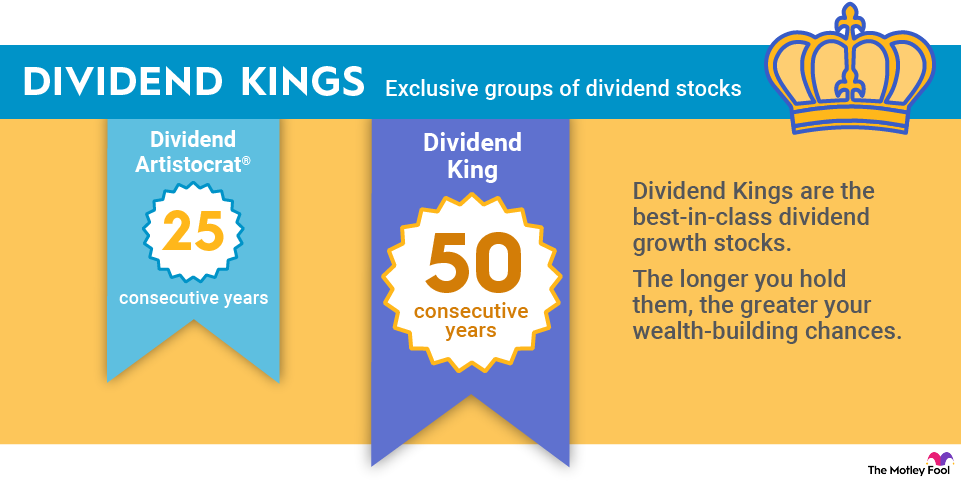
If you don't believe me, I have tangible evidence that Home Depot's dividend can survive in any economic environment. From 2007 until now, arguably the darkest days in the housing sector since the Great Depression, Home Depot's dividend rose by a total of 9%. Better yet, in the past decade, shareholders have basked in a 525% increase in the company's annual payout.
Home Depot is projected to grow at 13% per annum over the next five years and is currently yielding 2.7%. It's one of the safest bets in all of retail.
Hasbro (NYSE: HAS) -- trust it
Were you expecting to see Wal-Mart (NYSE: WMT) in this spot? Trust me -- the thought had crossed my mind, but considering which company had the better chance of having both its stock price and dividends appreciate, Hasbro gets the nod.
I'm bending the rules a bit with Hasbro, since it's a manufacturer of retail products rather than an actual retailer, but the point is the same -- Hasbro delivers! One of the few aspects of life that will not change regardless of the economy is the need for parents to spoil their children. With no shortage of children (and adults like myself who are young at heart) needing entertainment, the company continues to prosper from its product line, and shareholders are seeing those tangible results translate into huge dividend increases.
Since 2001, Hasbro's dividend has increased tenfold, and the company is now paying out an annual dividend north of 2.5%. Compound this with a five-year projected growth rate of 14% and the company's recently announced $500 million share buyback, and you can see why this company is a keeper.
Barnes & Noble (NYSE: BKS) -- avoid it
Barnes & Noble is a bricks-and-mortar book retailer that's living on borrowed time. Investing in retail is about buying into a company with a strong and innovative brand name that also has a business plan that will keep it around for the long term. Barnes & Noble pretty much flops on every aspect of this philosophy. It was late to the game in getting its e-reader to market, and it's now trying to chop down the mightiest tree in the forest -- Amazon.com (Nasdaq: AMZN) and its Kindle -- with a herring (the Nook). And yes, that Monty Python reference was fully intended!
Much to the dismay of its shareholders, Barnes & Noble had been paying its quarterly dividend by using funds from its revolving-credit line. Between losing in-store customers to Amazon's online presence and being undercut in price by the now-bankrupt Borders Group as it closed numerous locations, Barnes & Noble is taking a one-two knockout punch. Although the company suspended its dividend in February, many investors simply see a 5.5% trailing-12-month yield and automatically assume that the company is a great value, when in actuality, it couldn't possibly have a more cloudy future.
Even more worrisome, Liberty Capital (Nasdaq: LCAPA) last week made an offer to acquire Barnes & Noble's dying business platform for $17 a share in an all-cash deal. Now the retailer is trading 8% above that offer price, on the hope that another higher bidder will step in. Not only has Barnes & Noble taken away its only redeeming quality from shareholders -- its dividend -- but its share price is also now approaching bubble territory, given its five-year growth projection of negative-14% per year. Thanks but no thanks, Barnes & Noble.
Foolish thoughts
Retailers won't often dazzle you with high-yield dividends, but retailers with strong brand names and a sustainable business model can exhibit steady dividend growth not often seen in other sectors. Home Depot and Hasbro could provide the stability your portfolio needs to deliver solid long-term results.
What are some of your favorite dividend plays from the retail sector? Share your thoughts in the comments section below, and consider tracking Home Depot, Hasbro, and Barnes & Noble, as well as your own personalized portfolio of stocks with My Watchlist.