Pros and cons of investing in real estate ETFs
Before investing, it's important to weigh the benefits and drawbacks of real estate ETFs, especially if you're deciding between owning a fund and a physical property.
Pros
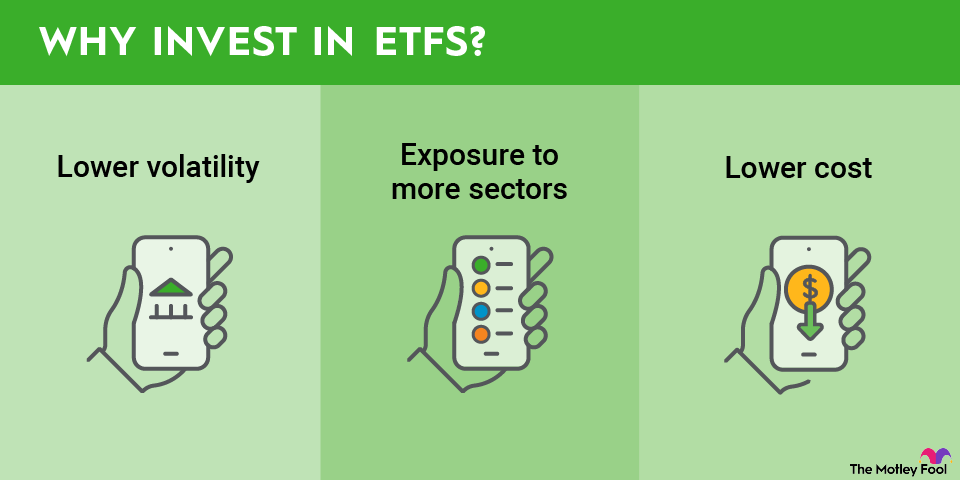
- Highly liquid: They trade on public exchanges during market hours, just like stocks, with real-time pricing through bid and ask spreads.
- Diversified exposure: A single ETF often holds REITs from multiple real estate sectors, and each REIT owns a portfolio of properties. So, you're instantly diversified across asset types and regions.
- No mortgage required: You don't need to take out a loan to gain exposure; if you want leverage, you can use margin through your brokerage.
- No tenant hassles: There's no screening, managing, or dealing with tenants. Income comes from REIT dividends, not monthly rent checks.
- No property taxes or maintenance: You're not directly responsible for the recurring costs associated with physical ownership.
Cons
- Market risk: Because they trade like stocks, real estate ETFs are exposed to stock market volatility, even when real estate prices are stable or rising.
- Dilution risk: Some REITs may issue new shares to raise capital, diluting existing shareholders' value.
- Tax inefficiency: You can't deduct costs such as mortgage interest, property taxes, or depreciation like you could with a rental property, making them less flexible from a tax-planning perspective.
Methodology: How These REIT ETFs Were Chosen
We focused on REIT ETFs that combine low ownership costs with sufficient scale and liquidity for long-term investors. That meant prioritizing competitive expense ratios, substantial assets under management, long operating histories, and healthy trading liquidity. A larger asset base can also reduce the risk of fund closure, while lower fees leave more of the portfolio's real estate income and capital appreciation for shareholders.
Diversification was equally important. We favored ETFs that spread their holdings across multiple property types, such as industrial facilities, apartments, retail properties, healthcare real estate, data centers, and self-storage, rather than making a concentrated bet on a single segment. We also considered dividend yield and portfolio construction, including how heavily each ETF is concentrated in its largest REITs, to balance income potential with company- and property-specific risk.
Should you invest in real estate ETFs?
Start by asking whether real estate exposure actually fits your goals. Most investors turn to real estate for two reasons: to potentially outpace inflation over the long term and to generate steady income from rents and property cash flows. Real estate ETFs package those characteristics into a liquid investment that trades like a stock.
Before adding a real estate ETF, check how much real estate exposure you already have. If you own a home and are paying down a mortgage, you may already have a meaningful portion of your net worth tied to property values. In that case, adding more real estate through ETFs may not meaningfully improve diversification.
If you decide you do want additional exposure, consider where you hold it. Real estate investment trusts, which make up most real estate ETFs, tend to pay higher yields that are often taxed as ordinary income. Because of that, these ETFs are frequently better suited for tax-advantaged accounts such as Roth IRAs, where those distributions can compound without creating annual tax drag.