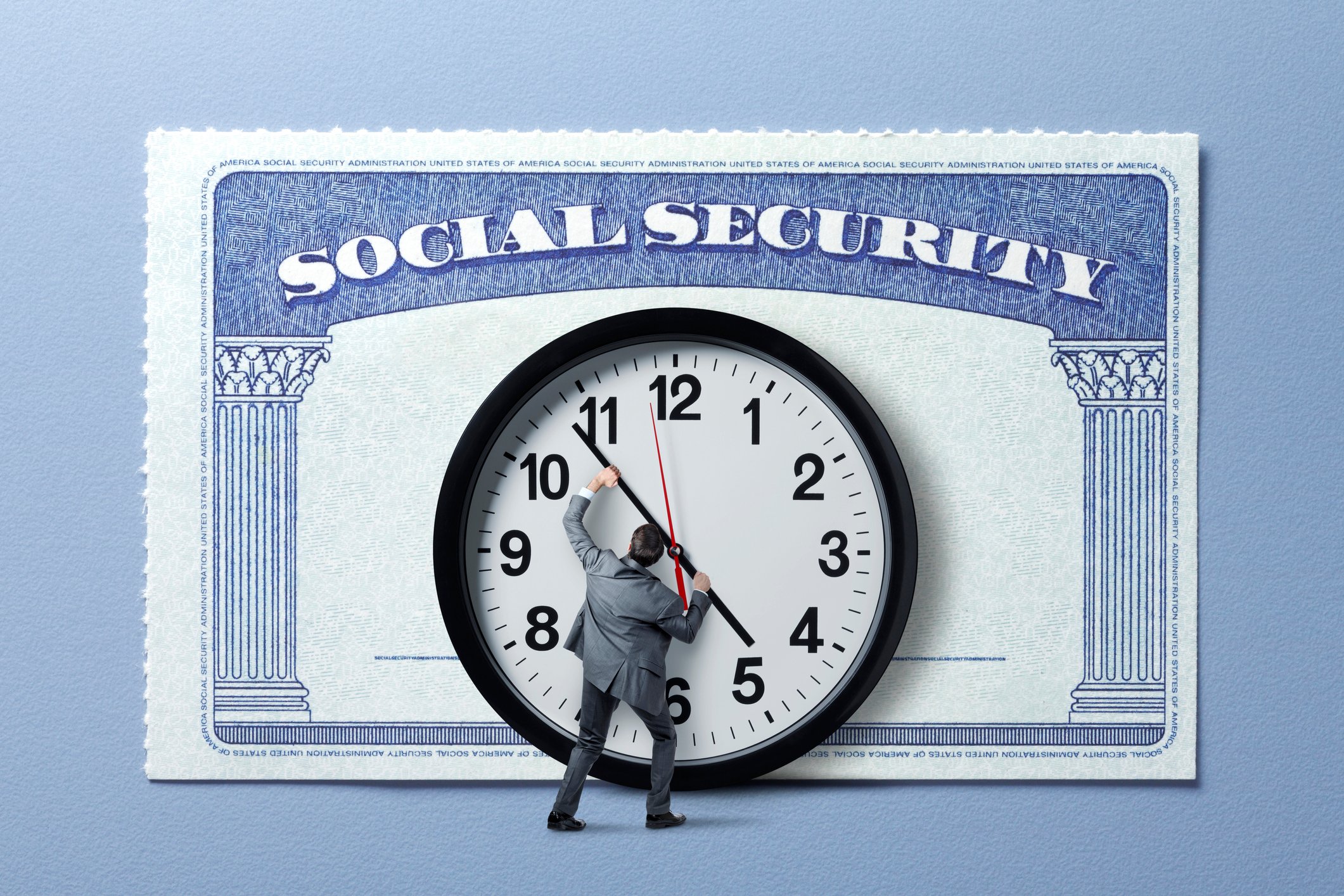
When you first retire, the last thing you may want to do is work. After all, you just ended what was probably a long career. And now, it's time to reclaim your free time.
But at some point, you may decide that you'd like to return to a job in retirement, whether because you feel your savings aren't holding up as well as you'd hoped or you're bored and need some structure.

Image source: Getty Images.
The good news is that you're allowed to work while collecting Social Security. But if you're going to do that, there are two key numbers to know.
Be mindful of Social Security's earnings test
Once you reach full retirement age, any income you earn from a job won't put you at risk of having benefits withheld. But you're allowed to sign up for Social Security starting at age 62. And if you were born in 1960 or later, full retirement age doesn't arrive until 67. So there may be a years-long period when you're getting benefits and are subject to Social Security's earnings test.
The earnings test allows you to earn a certain amount of money from a job before you have benefits withheld. And the limits for the earnings test change every year.
In 2026, the two key numbers you need to know are as follows:
- $24,480, which is the limit if you haven't reached full retirement age and won't reach that age this year
- $65,160, which is the limit if you haven't yet reached full retirement age but will reach it by Dec. 31
Once your earnings exceed the limit that applies to you, you'll have $1 in Social Security withheld per $2 of earnings (in the first scenario above) or per $3 of earnings (in the second scenario). So if you're working part-time and don't want to lose out on any Social Security in the near term, you may want to adjust your schedule so you're right below the applicable threshold.
Know what happens to withheld benefits
Before you get too worried about Social Security's earnings test, you should know that withheld benefits are not lost forever. Once you reach full retirement age, your monthly payments will be recalculated, and you'll get that money back in the form of larger checks.
But it's important to understand how the earnings test works, especially if your motivation to hold down a job stems from a financial need. And if you're working to stay busy more so than anything else, you may want to limit what you're earning to avoid having to deal with withheld benefits -- even though the money eventually comes back to you.