Here's what that means: To receive the Aug. 14 dividend payment, you needed to own or buy Apple shares before Aug. 11 (the ex-dividend and record date). If you bought shares on or after Aug. 11, you missed that dividend payment.
Under the current T+1 settlement system, when you buy stock on a given day, you become the owner of record the next business day. Before May 2024, it took two business days for trades to settle (T+2).
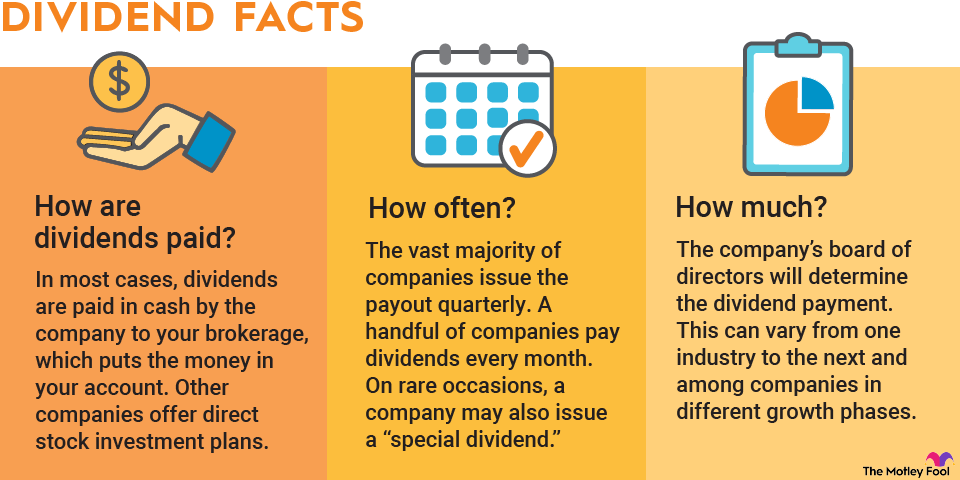
How are dividends paid?
There are several ways investors can receive dividend payments.
Cash payments
In the vast majority of cases, companies pay dividends in cash. The money flows from the company to your brokerage account. The cash is deposited into your account on or shortly after the payment date. If you need that cash for living expenses, factor in an extra few days to transfer it from your brokerage to your bank account.
Stock dividends
Some companies pay dividends in additional shares rather than cash. This is rare but does happen. Companies typically make it clear when dividends aren't paid in cash. If you receive a stock dividend but want actual cash, you'll need to sell those shares and wait for the trade to settle (which generally takes one business day) before your broker will allow you to withdraw the proceeds.
Dividend renvestment (DRIP) plans
While some companies offer dividend reinvestment plans that bypass brokerages, the widespread availability of zero-commission trading has made these programs less attractive. Most investors find managing dividends through their brokerage simpler and more convenient.