Know what you want to invest in
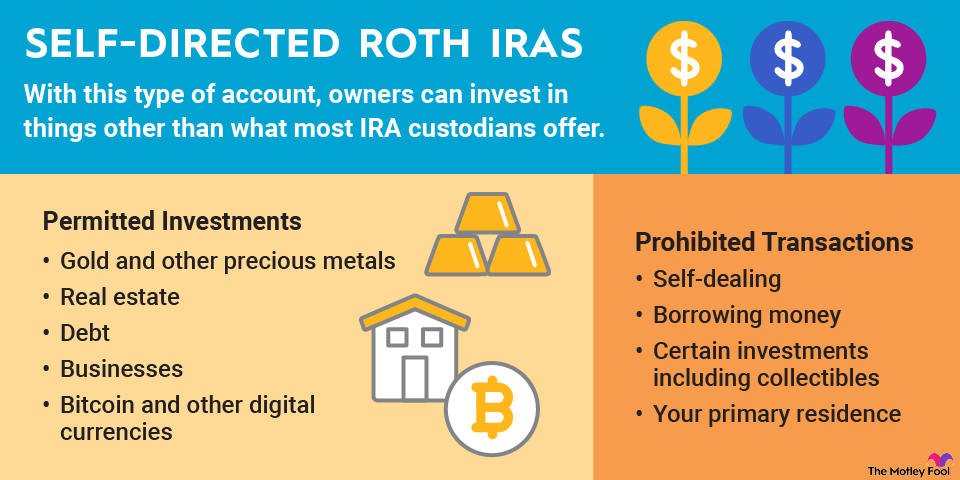
What you invest in is largely up to you, but you need to consider your investing experience and your risk tolerance. Some types of investments are well-suited to beginners, while others are difficult to turn a profit unless you have specialized knowledge of the industry.
Some investments are also riskier than others. Generally, younger people can afford to invest heavily in more volatile assets like stocks because their portfolios will have decades to recover from losses before they need to draw on them. But as you age, your risk tolerance declines, so you'll want to move more of your money into less volatile assets, such as bonds.
You also have to make sure you're diversified between many investments and sectors. This reduces the risk of significant loss if one of your investments underperforms. Mutual funds, including low-cost index funds, provide a simple way to diversify your investments quickly.
Choose your Roth IRA custodian carefully
Once you have a clear idea of what you want to invest in, you need to find a Roth IRA custodian that offers those options. If you think you may want to open other types of investment accounts in the future, like a traditional IRA, a taxable brokerage account, or a 529 college savings account, look for a custodian that offers these as well.
Contribute money regularly
You technically have up until the tax deadline for the year -- usually April 15 of the next year -- to contribute to your IRA, but waiting this long deprives you of months of potential investment growth. You're better off making a lump-sum contribution at the beginning of the year or contributing a regular amount each month.
Stay mindful of your tax bracket
Because Roth IRA contributions don't reduce your taxable income for the year, you could end up in a higher tax bracket than you're used to if you've contributed to a tax-deferred account in years past. In that case, you may want to put a little money in a tax-deferred account to keep yourself in a lower tax bracket so you can pay a smaller percentage in taxes on your Roth savings.
If you're earning less this year than normal, consider converting some of your tax-deferred retirement savings to Roth savings. You will pay taxes in the year you do the conversion, but this may not affect your tax bracket if you're careful about how much you convert at a time.
Roth IRAs give you a lot of freedom to invest in a way that aligns with your preferences. But if you want to get the most out of yours, it helps to understand how they work and what steps you can take to maximize your savings. Review your Roth IRA contributions and asset allocation at least once a year and make any changes you feel are necessary to keep yourself on track for the retirement you want.
Related Retirement Topics