What do price targets tell you?
Price targets, like weather forecasts, are influenced by a lot of factors outside of anyone's control. So, if you're worried that a price target for a favored stock is lower than you expect, you may really be stressed for no reason.
Price targets are an attempt to predict future prices based on current information. That information is often incomplete since companies tend to keep anything they're not required to disclose close to their chests until it's time to show investors how well they're doing. And rightfully so -- the daily drama of the balance sheets might get to be too much if we had to hear about it more than once every few months.
Ultimately, the goal of price targets is to predict the future, but it's often through a foggy crystal ball. A 2006 study showed that share prices met or exceeded the price target at some point over the following year for just 53% of observations and only met or exceeded the price target in 30% of cases at the end of those same 12 months.
How do you calculate price targets?
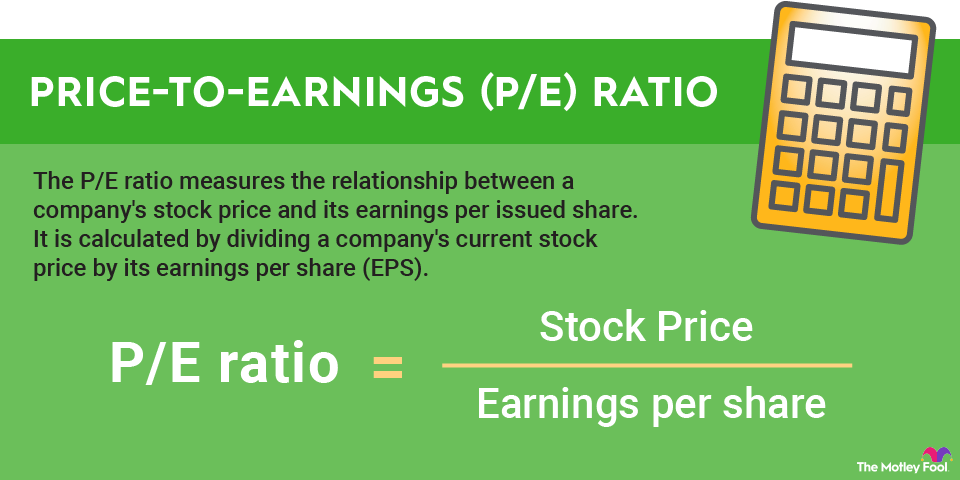
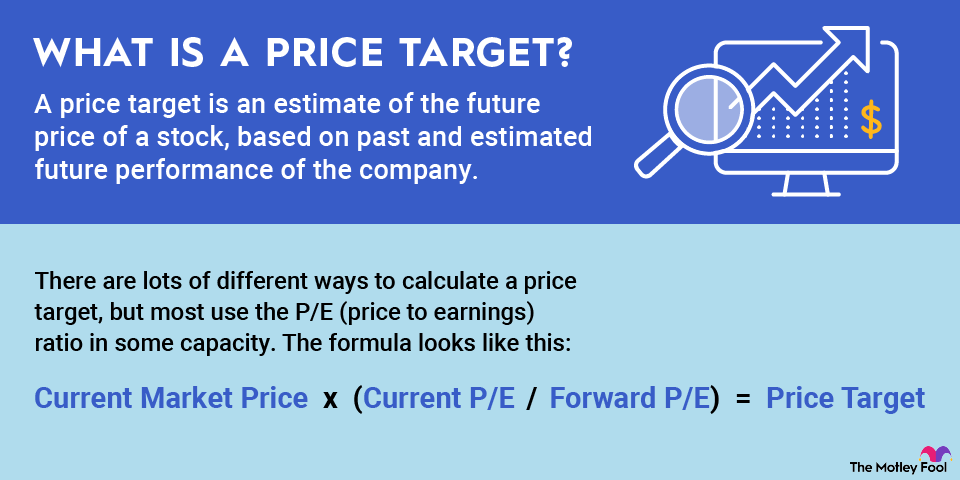
There are many different ways to calculate a price target, but a common method involves using price-to-earnings ratios. If you divide the current P/E by the forward P/E and then multiply by the current price, you should have a reasonable prediction for the price target a year from now.
The current P/E gives you the earnings for the last 12 months as a ratio of the current market price to the average earnings of the prior 12 months. The forward P/E does the same but is calculated by dividing the market price by the average estimated earnings for the next 12 months. Using both balances the equation so that it's (theoretically) not relying too much on either ratio (although the forward P/E is calculated based on past performance to some extent).
The formula looks like this:
Current Market Price x (Current P/E / Forward P/E) = Price Target
Remember that this is only an estimate, and there are a lot of other factors that should be taken into consideration when you're trying to decide whether to buy, sell, or continue to hold any financial instrument in your portfolio.
Related investing topics