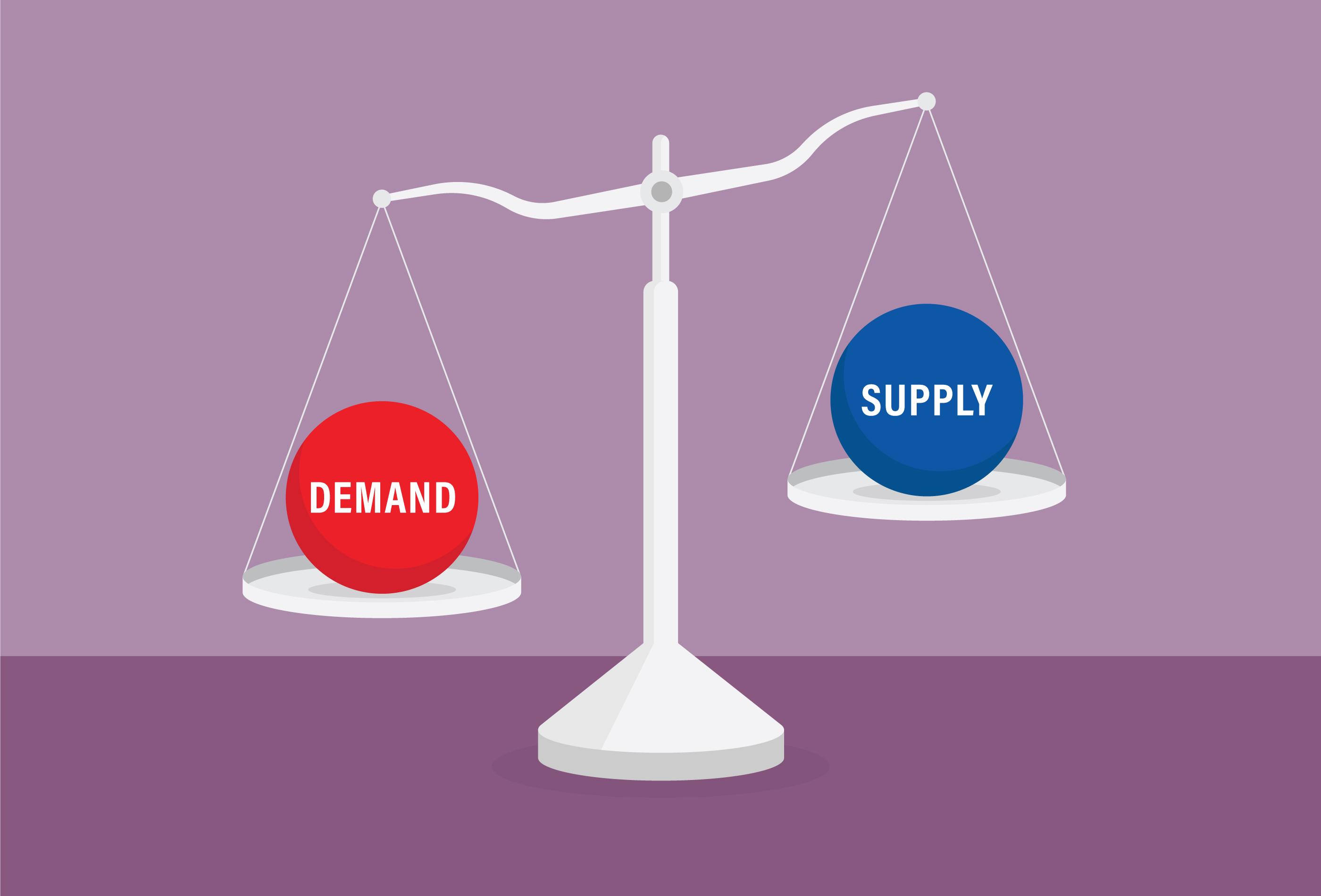
How does the law of supply and demand work?
In practice, the law of supply and demand is readily visible in multiple industries. Travel-related companies, such as hotels and airlines, will raise prices according to demand, which fluctuates over the course of the year.
For example, if you wanted to visit New Orleans during Mardi Gras, you would expect to pay a higher rate for a hotel than you would at another time of year. Why? Because the supply of hotel rooms is fixed, but demand spikes when there is an event or festival in a city.
As a consumer, there’s no way to change the law of supply and demand, but you can take advantage of opportunities when demand is low and supply is high to save money.
How the law of supply and demand affects you
As a consumer and an investor, the law of supply and demand has a direct affect on your personal finances. If you’re seeking to take advantage of low prices, you’ll want to time your purchase to when demand is lowest and supply is highest.
For example, if you’re in the market for a rental apartment, you can get lower prices by looking in the winter when demand is lower. People tend to prefer to move in the summer when the weather is nicer, and the nature of the school schedule means that it’s also easier for families with school-age children to move then. Because the summer season is more competitive for moving, prices will be higher for rental properties.
As an investor, supply and demand is also worth considering. A company like Apple (AAPL +0.38%), for example, is able to charge high prices because there is so much demand for its smartphone and other devices.
Expert views