The Vanguard Dividend Appreciation ETF (VIG 0.67%) and the iShares Core High Dividend ETF (HDV 0.66%) differ most in portfolio makeup, sector exposure, and yield, with VIG favoring dividend growers and HDV leaning into high-yield, defensive stocks.
Both VIG and HDV target investors seeking income from U.S. equities, but their approaches diverge: VIG tracks companies with a proven record of dividend growth, while HDV focuses on stocks selected for high current yields. This comparison breaks down costs, performance, risk, and portfolio structure to help clarify which may appeal more, depending on priorities.
Snapshot (cost & size)
| Metric | VIG | HDV |
|---|---|---|
| Issuer | Vanguard | IShares |
| Expense ratio | 0.04% | 0.08% |
| 1-yr return (as of 2026-03-11) | 16.2% | 17.6% |
| Dividend yield | 1.6% | 2.9% |
| Beta | 0.81 | 0.42 |
| AUM | $121.5 billion | $13.3 billion |
Beta measures price volatility relative to the S&P 500; beta is calculated from five-year monthly returns. The 1-yr return represents total return over the trailing 12 months.
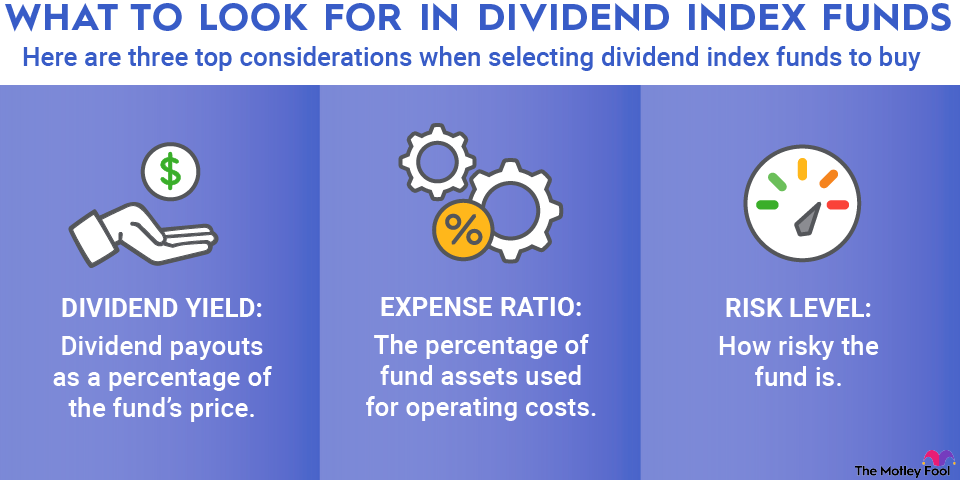
HDV charges twice the expense ratio of VIG, but both remain cost-effective by industry standards; in return, HDV delivers a substantially higher dividend yield, which may appeal to income-focused investors.

NYSEMKT: HDV
Key Data Points
Performance & risk comparison
| Metric | VIG | HDV |
|---|---|---|
| Max drawdown (5 y) | -20.39% | -15.41% |
| Growth of $1,000 over 5 years | $1,528 | $1,423 |
What's inside
HDV concentrates its $13.3 billion in assets under management across 74 U.S. companies, with a heavy tilt toward consumer defensive (28%), energy (26%), and healthcare (17%) sectors. Its top holdings—Exxon Mobil (XOM +0.61%), Chevron (CVX +0.87%), and Johnson & Johnson (JNJ 1.33%)—together make up a significant portion of the portfolio, and the fund’s 15-year track record reflects a focus on established, high-yield names.
In contrast, VIG spreads its assets over 338 stocks, favoring technology, financial services, and healthcare. Its largest positions—Broadcom (AVGO 1.15%), Apple (AAPL 1.19%), and Microsoft (MSFT 0.26%)—reflect a growth-oriented approach within the dividend space. VIG’s broad sector coverage and rules-based focus on dividend growth companies give it a different risk/return profile than HDV’s income-first strategy.
For more guidance on ETF investing, check out the full guide at this link.

NYSEMKT: VIG
Key Data Points
What this means for investors
Chasing the biggest dividend yield and building a growing income stream are two very different investment strategies, and VIG and HDV represent each one in its purest form. VIG requires companies to have raised their dividend every year for at least a decade, then deliberately excludes the highest-yielding names to avoid financially stressed companies propped up by unsustainable payouts. HDV zeroes in on roughly 75 stocks currently paying the fattest dividends that also have a sustainable competitive advantage.
That difference shapes what each fund owns. VIG holds around 300 stocks anchored by stable blue chips like Microsoft and JPMorgan Chase, yielding a modest 1.6%. HDV concentrates heavily in consumer staples and energy and yields closer to 3%. HDV charges 0.10%, twice VIG's 0.05%, though both remain genuinely low-cost by industry standards.
The yield gap is real and worth acknowledging: HDV's 3% versus VIG's 1.6% translates to roughly $140 more in annual income per $10,000 invested -- a meaningful difference for anyone living off portfolio distributions. Investors prioritizing total returns and reliably growing income will find VIG the stronger long-term compounder. HDV is the better fit for those who need meaningful income right now and are comfortable with a concentrated portfolio of slower-growth, high-yielding companies in defensive sectors. VIG builds wealth through compounding, while HDV puts more cash in your pocket today.