Image source: The Motley Fool.
DATE
Thursday, April 30, 2026 at 12 p.m. ET
CALL PARTICIPANTS
- Chairman and Chief Executive Officer — Ryan M. Lance
- Executive Vice President and Chief Financial Officer — Andrew M. O’Brien
- Executive Vice President, Global Operations — Nicholas G. Olds
- Executive Vice President, Lower 48 — Kirk L. Johnson
TAKEAWAYS
- Production -- 2.309 million barrels of oil equivalent per day, including negative impacts from the Middle East conflict and higher Surmont royalties, partially offset by Lower 48 and international strength.
- Lower 48 Production -- 1.453 million barrels of oil equivalent per day, reflecting 4% year over year underlying growth.
- Free Cash Flow -- $2.4 billion generated in the quarter.
- Cash from Operations (CFO) -- $5.4 billion, with 45% targeted for shareholder returns.
- Shareholder Returns -- $2 billion returned: $1 billion in ordinary dividends and $1 billion in share repurchases.
- Adjusted Earnings -- $1.89 per share reported.
- Capital Expenditures -- $2.9 billion spent in the quarter.
- Cash and Short-Term Investments -- $6.7 billion at quarter-end, plus $1.2 billion in liquid long-term investments.
- Annual Production Guidance -- Midpoint updated to 2.31 million barrels of oil equivalent per day, reflecting a 20 thousand barrels of oil equivalent per day reduction from exclusion of Qatar in second-quarter guidance and a 15 thousand barrels of oil equivalent per day decrease from Surmont royalties.
- Second-Quarter Production Guidance -- Midpoint set at 2.2 million barrels of oil equivalent per day, reflecting Qatar exclusion, Surmont adjustment, and planned maintenance.
- Operating Cost Guidance -- Full-year guided at $10.2 billion, unchanged from prior update and $400 million below the previous year due to cost reduction programs.
- Capital Spending Guidance -- Updated to $12 billion–$12.5 billion, up 2% at midpoint due to increased Permian activity and higher non-operated spend.
- Willow Project Progress -- 50% complete with completed gravel scope and bridges, targeting early oil in 2029.
- Alaska Exploration Program -- Four-well program completed with hydrocarbons discovered; appraisal ongoing to define commerciality and resource additions to support Greater Willow area.
- LNG Portfolio Developments -- Third-party tolling agreement executed in Equatorial Guinea, extending facility life into the 2030s; Port Arthur LNG on track for first LNG in 2027.
- Permian Activity Increase -- Additional rig and more non-operated spending in the second half of the year to sustain operational efficiency into 2027.
- Cost Reduction Progress -- On track for $1 billion in annualized run-rate savings by year-end across labor and operating expenses.
- Divestiture Progress -- $3 billion of the $5 billion asset sale program completed; $2 billion remains, focused on non-core Permian assets.
- Commodity Price Exposure -- 40% of crude production is linked to premium benchmarks (Alaska North Slope—ICE Brent and Dated Brent); WTI realizations reached 98% for the quarter.
- LNG Strategy Update -- 10 million tons of LNG placed, with half already contracted (mainly to Europe); remaining capacity attracting intensified interest post-market disruptions.
Need a quote from a Motley Fool analyst? Email [email protected]
RISKS
- Andrew M. O’Brien said, "we are downgrading our view of global oil demand to be flat year over year with probably a bit more risk to the downside if the conflict goes on."
- Kirk L. Johnson said, "QatarEnergy has been explicit that they expect that to impact the global market for upwards of three to five years," noting ongoing outages and project delays could persist, influencing LNG availability and company production.
- Ryan M. Lance indicated that European gas inventories are "well below where they should be given the build," highlighting potential winter supply risks if disruptions continue.
- The capital spending guidance incorporates "a range of uncertainty on what happens with NFE and NFS capital during the year," tied to ongoing regional conflict and macro volatility.
SUMMARY
ConocoPhillips (COP 1.93%) increased capital spending guidance by 2% at the midpoint, reflecting expanded Permian activity and higher anticipated non-operated spending in the second half. The company achieved 4% year-over-year growth in Lower 48 oil production. Strategic progress advanced with the Willow project reaching 50% completion, breakthroughs in Alaska exploration, and execution of a long-term Equatorial Guinea LNG agreement extending asset life. Updated guidance explicitly excludes Qatar production from the second quarter, tightening output expectations amid ongoing regional conflict. The company reiterated its unhedged approach to commodity price upside and ongoing commitment to returning 45% of CFO to shareholders.
- Management described the global oil supply environment as facing "the brunt of the supply shortfall" due to refinery run cuts and demand curtailments as lost Middle East supplies reach end markets.
- Cost guidance remains at $10.2 billion for full-year operating expenses, benefiting from accelerated cost-out initiatives across labor and lease operations.
- LNG macro commentary indicated a "structural change" in the market, with management warning of long-term shortages and highlighting high interest in remaining uncontracted LNG capacity.
- Asset sale progress includes $3 billion completed out of a $5 billion divestiture program, with remaining dispositions targeting non-core Permian holdings.
- The company’s portfolio diversification was underscored by substantial exposure to premium oil price benchmarks and a competitive cost position in both operated and non-operated projects.
INDUSTRY GLOSSARY
- OBO (Operated by Others): Projects in which ConocoPhillips holds an interest but is not the operator, often leading to flexibility and partner-driven spending decisions.
- ANS (Alaska North Slope): A key crude oil benchmark price representing the value of oil produced in Alaska, often trading at a premium to other benchmarks.
- NFE/NFS (North Field East/North Field South): Major Qatari LNG expansion projects central to global liquefied natural gas supply outlook.
- Run-rate Savings: The sustainable annualized reduction in costs projected by the end of a stated period from ongoing efficiency or cost-reduction initiatives.
- Tolling Agreement: A contract allowing a third party to process raw gas into LNG for a fee, extending asset utilization and commercial life.
- Fracs/Completions: The process of hydraulically fracturing and then finishing a well, critical measures of drilling and operational efficiency in shale development.
- SPA (Sales and Purchase Agreement): A binding contractual agreement for the sale and purchase of LNG cargoes, usually over a long-term period.
Full Conference Call Transcript
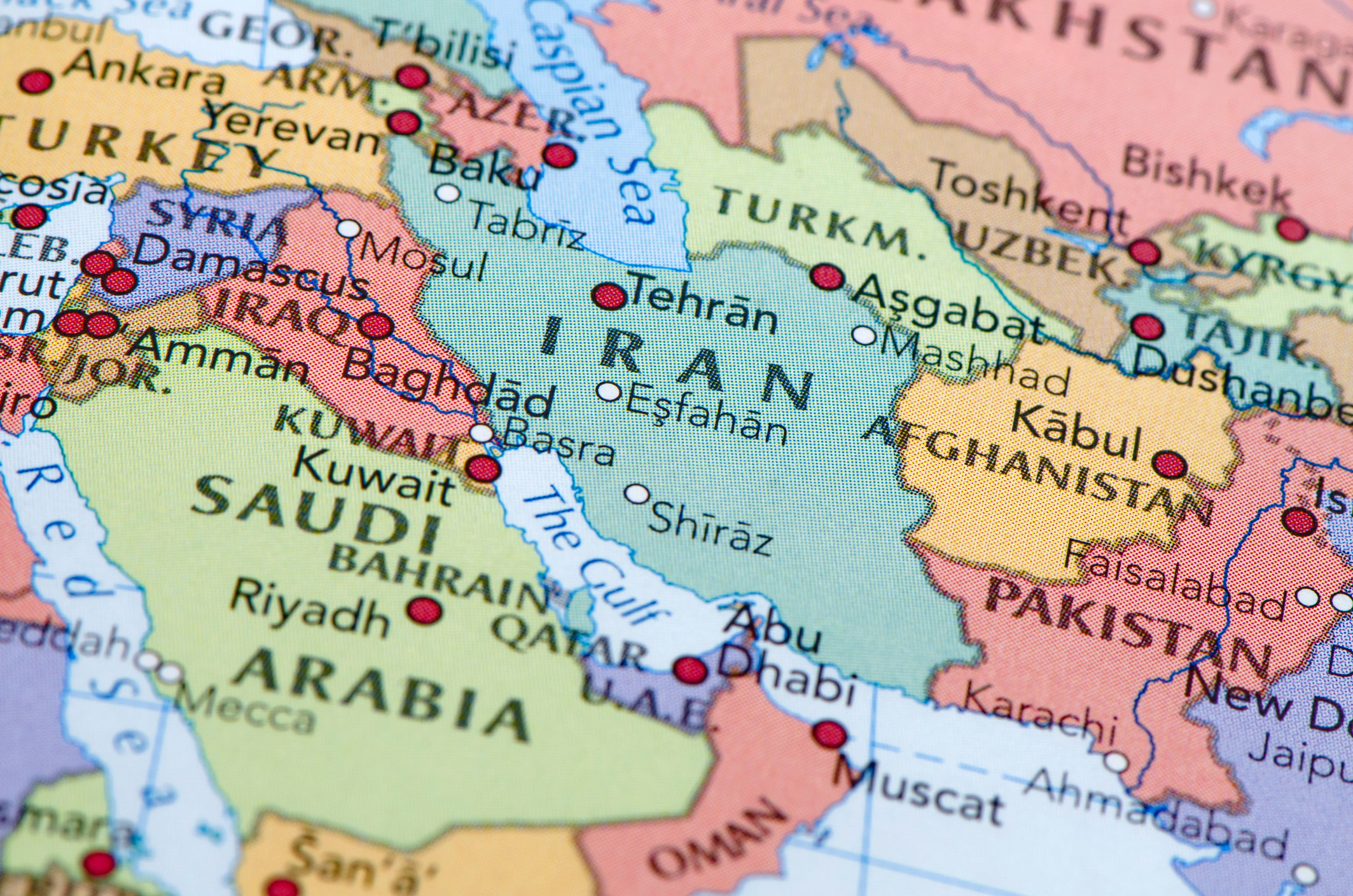
Ryan M. Lance: Thanks, Guy, and thank you to everyone for joining our first quarter 2026 earnings conference call. As we begin, I want to start by acknowledging the ongoing conflict in the Middle East. Our thoughts are first and foremost with our employees, our partners, and the broader communities directly affected by these events. The supply curtailment and ensuing macro volatility have not only impacted energy markets, but are also being felt across the global economy. Periods of volatility in our industry are inevitable, but this conflict reinforces the importance of both U.S. and global energy security. We certainly hope for a swift and diplomatic solution that resolves the conflict, protects U.S. interests, opens commerce, and provides stability in the region.
Now turning to the first quarter results, we delivered another quarter of strong financial and operational performance. We generated $2.4 billion of free cash flow and returned $2 billion of capital to our shareholders. In the Lower 48, where we have the deepest and highest-quality inventory of any operator, we continue to improve our peer-leading capital efficiency, meaningfully increasing the number of three-mile-plus laterals in our program. In Alaska, we are winding down another successful winter construction season. The Willow project is now 50% complete. Our teams have completed the project's gravel scope, an important milestone, and mobilization for summer work is underway.
We also recently completed our four-well exploration program in Alaska, the first in a multiyear program to leverage existing infrastructure to unlock additional low cost of supply resource. Consistent with our track record, it is still early days, but we are excited about the opportunity and the results and more low cost of supply resources coming to the Greater Willow area. As the broader industry recognizes Alaska's unique resource potential, we believe our longstanding position, legacy infrastructure investments, and technical expertise provide us with a meaningful competitive advantage. Turning to LNG, we recently executed a third-party tolling agreement in Equatorial Guinea, extending the life of the LNG facility well into the next decade.
This is a strategically located asset in a gas-rich part of the world surrounded by discovered resource, which supports its long-term potential. Additionally, the Port Arthur LNG project continues to progress very well with first LNG expected next year. Turning to the outlook, while ongoing events have significantly tightened crude oil and LNG markets, the macro environment remains volatile and pretty impossible to predict. Amid such uncertainty, it is critical our priorities remain steadfast. They are clear, consistent, and durable. They have served us well for the last decade and will continue to guide us into the future. We will continue delivering base dividend growth competitive with the top quartile of the S&P 500.
We will maintain and protect our investment-grade balance sheet. Recall last year, we were one of the only companies that delivered on our shareholder return objectives and strengthened the balance sheet. We will continue returning significant CFO to shareholders right off the top. We have averaged about 45% over the past decade through the cycles. And after meeting all these priorities, we will evaluate disciplined reinvestment for growth. In terms of how these priorities are translating to our 2026 plan, our expected CFO generation is up materially given our unhedged oil and LNG torque. Shareholders will directly share in this upside with our 45% of CFO return of capital objective.
We have also added a modest amount of Permian activity over the second half of the year to maintain our operational efficiency into 2027. Long term, ConocoPhillips continues to offer a compelling value proposition that is differentiated in the market. We believe we have the highest-quality asset base in our peer space. As we have said before, we are resource rich in a world that is looking increasingly resource scarce. This is a distinguishing competitive advantage. We have the deepest and most capital-efficient Lower 48 inventory in the sector, and outside the Lower 48, we have an abundance of diversified low cost of supply legacy assets.
And we are uniquely investing in our portfolio to drive peer-leading free cash flow growth. We are on track to deliver our previously announced $7 billion free cash flow inflection by 2029, driven by our cost reduction efforts, LNG projects, and Willow. With that, let me turn the call over to Andy to cover our first quarter performance and updated outlook in more detail.
Andrew M. O’Brien: Thanks, Ryan. Starting with our first quarter performance, we produced 2.309 million barrels of oil equivalent per day. This includes the impacts of the Middle East conflict on Qatar volumes and higher royalty rates at Surmont from higher oil prices. These impacts were partially offset by strong performance across our Lower 48 and International portfolio. In the Lower 48, we produced 1.453 million barrels of oil equivalent per day, representing 4% year-over-year growth on an underlying basis. We generated $1.89 per share in adjusted earnings and $5.4 billion of CFO. Capital expenditures were $2.9 billion. We returned $2 billion to our shareholders during the first quarter: $1 billion in ordinary dividends and $1 billion of share repurchases.
We ended the quarter with cash and short-term investments of $6.7 billion as well as $1.2 billion in liquid long-term investments. Turning to our outlook, we are updating our guidance to account for the impact of recent macro events and the uncertainty surrounding the Middle East conflict. To be clear, this is not a call on when we think the conflict will resolve. We are simply trying to provide a clear and transparent framework to model and assess the underlying performance of the company. For production, the midpoint of our annual guidance is updated to 2.31 million barrels of oil equivalent per day.
This reflects a 20 thousand barrel of oil equivalent per day annual impact due to Qatar being excluded from second-quarter production guidance and a 15 thousand barrel of oil equivalent per day annual royalty rate adjustment at Surmont due to higher prices. We have made no other adjustments to our annual production guidance. The midpoint of our second-quarter production guidance is 2.2 million barrels of oil equivalent per day, which reflects the full exclusion of Qatar production from guidance for the quarter, the Surmont royalty rate adjustment, and planned second-quarter maintenance.
Moving to operating costs, full-year guidance of $10.2 billion is unchanged, reflecting a $400 million reduction from 2025 due to the benefits of our cost reduction and margin enhancement program. We made strong progress in the first quarter and we remain confident in realizing the full $1 billion run rate by year end. For capital spending, we are updating our guidance to a range of $12 billion to $12.5 billion versus our prior guidance of about $12 billion, representing a 2% increase at the midpoint.
This increase is due to slightly more Permian activity over the second half of the year; we are adding a rig to keep pace with the completion efficiencies, and we expect higher levels of non-operated spend. These modest activity additions maintain our operational continuity into 2027. Additionally, we are incorporating a guidance range to capture the uncertainty around the macro environment as well as the Middle East conflict, specifically as it pertains to timing for NFE and NFS spending. To wrap up, we delivered strong first quarter results. We executed well financially and operationally.
We continue to advance our strategy and, amid a volatile macro environment, we remain committed to clear, consistent, and durable priorities that have served us well for the last decade. As Ryan mentioned, our expected CFO is up materially from the beginning of the year. We remain unhedged in oil and LNG to ensure we capture the price upside, with 40% of our crude production linked to premium markets such as ANS and Dated Brent. And shareholders are directly participating in this upside as we remain committed to returning 45% of our CFO, consistent with our long-term track record.
Looking ahead, we remain focused on executing our plan and enhancing our differentiated investment thesis: unmatched portfolio quality, including leading Lower 48 inventory depth, attractive long-cycle investment, strong return on and off capital, and driving sector-leading free cash flow growth through the end of the decade. That concludes our prepared remarks. I will now turn it over to the operator to start the Q&A.
Operator: Thank you. We will now begin the question-and-answer session. In the interest of time, we ask that you limit yourself to one question. If you have a question, please press 11 on your touch-tone phone. If you wish to be removed from the queue, please press 11 again. If you are using a speakerphone, you may need to pick up the handset first before pressing the numbers. Once again, if you have a question, please press—
Operator: Our first question comes from Scott Michael Hanold from RBC Capital Markets. Your line is now open.
Scott Michael Hanold: Yes, good afternoon. Thank you. Hey, a lot happening, obviously, on the macro front. I know you all do a lot of work on the oil macro in addition to, obviously, having feelers out there. Can you give us a sense of your view of what has happened in the market, if you have any view of physical versus the financial kind of position of oil, and how you expect operators to act and react? It sounds like you are going to maintain operational efficiency, but it would be good to see if you have a view on what you are seeing and hearing from others.
Ryan M. Lance: Thanks, Scott. Maybe I will let Andy talk a little bit about some of the numbers that we see out there, then I can come back and address some of your broader questions after that.
Andrew M. O’Brien: Thanks, Ryan, and morning, Scott. I will start with, there are certainly a lot of moving pieces out there right now, and I will summarize our view of the world. I am not sure it is too different to others, but I think it is good to summarize it. For about two months now, we have had about 10 million barrels a day of production offline. That even factors in the redirected volumes in countries like Saudi Arabia. We have seen inventory and SPR releases that have partially backfilled some of that lost supply, and the ongoing SPR releases that have been announced will certainly help through the May–July timeframe.
But I think it is really important for people to understand that the brunt of the supply shortfall is currently being absorbed by refinery run cuts and demand curtailments. Now, if you include the Persian Gulf refineries that have been damaged, the total global refinery run cuts right now probably amount to around 8 million barrels a day. As we look forward from here, we think the biggest challenge we are about to face is that the market had a bit of a grace period initially when the tankers that left the Persian Gulf in late February were still on the water.
Now all of those have reached their destination, and the impacts of the lost supply are going to start to become more apparent. So we could possibly see, from here, inventory draws really start to accelerate. You have already seen that governments in over a dozen countries are implementing policies to ration or otherwise reduce demand in advance of physical shortages. Given those factors, we are downgrading our view of global oil demand to be flat year over year with probably a bit more risk to the downside if the conflict goes on.
One final point I would make is, despite efforts that are ongoing to manage demand, we are going to start to see some import-dependent countries potentially start to face critical shortages as we get into the June–July timeframe. I will stop there and let Ryan add a bit more.
Ryan M. Lance: Maybe, Scott, how are people acting? I think people are watching pretty closely to see what happens, maybe a little bit of short-cycle investments. I am sure that will come up in our call with the capital. We are just trying to maintain the efficiency gains that we have in the Lower 48, and we will not be drilled out of some of our OBO activity. We are trying to look longer term as well, as Andy said, assess the supply and the demand fundamentals. I think at a minimum the floor probably is going to have to raise up a little bit at least relative to where we were before the conflict started.
Recall we had a mid-cycle WTI price of about $65, and we believe that floor is probably going to come up. We are trying to assess right now, given the demand dynamics and the supply dynamics, what long-term effect that is going to have on what we would call a mid-cycle equilibrium price and for how long that might persist. Recall, we were pretty constructive over the last few years before this got started. There was some uncertainty around how the physical and paper markets were reacting a little bit, and this has just accelerated a lot of that.
But certainly, I think the floor probably has to come up to account for the changes that have occurred over the last couple of months.
Operator: Our next question comes from Neil Singhvi Mehta from Goldman Sachs. Your line is now open.
Neil Singhvi Mehta: Yes. Ryan, Andy, great comments there, and definitely, our thoughts are with your people in the region. I want to pivot over to Alaska. We went through winter construction season, and I would love a mark to market on how those plans progressed. Where do you stand in terms of Willow construction, and what are the big milestones as we continue to derisk this project and get to that free cash flow inflection?
Kirk L. Johnson: Good morning, Neil. Thanks for the question. We have had a really strong showing here just in the last six months in Willow, so I will address a couple of things. We are 50% complete on the project, and achieving that requires a collection of key milestones that our teams have been able to accomplish. In this winter season in Alaska, we accomplished the entirety of our planned work scope, which admittedly was a little bit of a challenge. We had quite a few weather days, not dissimilar from our very first winter season, and despite that, the teams were able to accomplish the full winter scope. Most important to us as part of critical path was the civil work.
We were able to get all of the bridges down and the entirety of the gravel scope—think roads, pads, and the airstrip. That sets us up for our ability to execute the summer work and, especially important with gravel, it allows you to dry and mature that gravel and create the compression necessary to continue the structural work that follows in the construction of future facilities and pipelines. As it relates to pipelines, important this year for us was the East–West scope, and that is important because it allows us to begin to make the connections back into the existing operations. By that I mean Western North Slope or Alpine.
With those connections, within the coming week we will be bringing fuel gas in, and we will be firing up our power for Willow. We have been really successful in accomplishing the scope in Willow that we have laid out as we continue to commission the op center. With engineering largely wrapped up and complete, here in the Lower 48 on the Gulf Coast our process modules achieved a similar milestone—slightly better than 50% complete in fabrication. That is important because next summer we have plans to sealift those into Alaska, which becomes the next major milestone to get those processing modules up there.
All of this in aggregate puts us in a very strong position for our early oil expectation in 2029, and all that is on track. That is important as it underpins the compelling value proposition of the $7 billion free cash flow inflection. Thinking beyond that is exploration. As you heard from Ryan, we had a strong showing here too. We speak a lot to the four wells that we had planned this year, which were successful for us, but this is the largest winter season in exploration that we have had since 2020.
With that came the four wells, but we also shot seismic, and we also did quite a bit of gravel exploration and had a really high success ratio there on finding gravel for future pads. When we look at that exploration program, I am pleased to report we found hydrocarbons where we were exploring. Naturally, our subsurface teams are pouring over the results, seeking to ensure that we can characterize what we found. Commerciality typically comes with more than one season; that is why we call these exploration and appraisal wells and seasons. It will take several, but with what we found, we are really looking forward to the opportunity to keep Willow full.
That underpins our objective to identify new resource and pad development opportunities to keep this infrastructure full. You have seen the track record from us in the past, and with the success we have been realizing just in the last six months, it has been a really strong showing from our Alaska team.
Operator: Our next question comes from Betty Jiang from Barclays. Your line is now open.
Betty Jiang: Hi. Good morning, guys. A lot of focus right now on the short-cycle response to higher oil prices and you guys being the first one out of the gate and leaning into activity in the Permian, which clearly makes sense for you given the deep inventory. Can we get a bit more color on the decision process from ConocoPhillips’ perspective to lean into Permian activity now? And alluding to your mid-cycle views earlier, what price would it take to flex activity further, and what will be the sensitivity on production outcome in 2027?
Andrew M. O’Brien: Morning, Betty. Andy here. I covered in the prepared remarks that we have increased the midpoint of CapEx by $250 million, and it is important to describe why we are doing that. We keep having operational efficiency that Nick will talk to, and it is important, the way we think about steady state, that we keep that going. On the operated side, it really is just a continuation of our steady state given how efficient we are being. On the non-operated side, as I said in our prepared remarks, it is in anticipation and we are starting to see the early signs of some of our non-operated partners starting to ballot us for more wells.
I would say the $250 million is more about operationally setting ourselves up and being thoughtful about our steady state and how we react to partners, versus a big macro call on price. With that, I will let Nick give a bit of the specifics on what we are doing.
Nicholas G. Olds: Thanks, Andy. Good morning, Betty. As Andy mentioned, that $250 million of additional activity is concentrated in the Delaware, and that is a combination of operated and non-operated. On the operated side, we continue to drive significant efficiencies in both drilling and completions. Our completion efficiencies are slightly outpacing drilling, so we are adding another Permian rig versus prior plan to help us keep pace with our frac crews and maintain our level-loaded, steady-state operations approach that we have talked about for a number of years. The key item is that we do not want to have any frac gaps due to the efficiency improvement we are continuing to capture.
If you recall, as we exited 2025, we had a 15% improvement in D&C operational efficiencies, and we continue to see those trends, with completions outpacing drilling. On the non-operated OBO side, we have started to see more well ballots from our partners, which will likely translate to a higher level of OBO spend over the second half of the year. We are not going to elect out of low cost of supply, high-return OBO projects in this price environment. We have seen it in the past. They are competitive projects, short cycle, with good returns. These additions are a modest capital add to our second-half program and will maintain our operational efficiency going into 2027.
Ryan M. Lance: I would just add, Betty, these are no-brainers for us. We are not going to be drilled out of inventory by others, and we are going to keep our efficient machine running. These adds are weighted to the last half of the year, so they do not have a large impact on 2026, but they set us up for the continued growth that we are seeing in the Lower 48 in our portfolio year on year. You saw it in the first quarter; you will see it year on year, and that will continue into 2027.
In the meantime, we will be assessing what we think mid-cycle price is going to do and what the new equilibrium might look like and then what that follow-on means to the cash flows that we generate as a company, the returns that we send back to our shareholder, and what we reinvest for growth and development in the company. That will be coming later this year as part of our normal processes.
Operator: Our next question comes from Doug Leggate from Wolfe Research. Your line is now open.
Doug Leggate: Thanks for taking my questions. Hi, everybody. I am looking at slide five, and those of us who have been around long enough, Ryan, remember what you went through in 2016 with the dividend. Now we are sitting here looking at low 70s. You are probably doing $10 billion of free cash flow according to your chart, and that has got 70% upside. My question is that you have stuck to the 45% cash flow payout. Your commitment is actually more than 30%. Clearly, there is a little bit of procyclical stuff going on with the share price. These windfalls can be capitalized in different ways, especially through your dividend policy.
Can you walk us through, in these situations, why not flex down in the payout? Why not think more about the longer-term dividend, the breakeven, the balance sheet? I am curious where your head is at on buying your shares at the top of the cycle—it might not be the top, but it is certainly elevated for the time being.
Ryan M. Lance: Thanks, Doug. We like to think about share repurchase as dollar-cost averaging. We tweak around the edges, which is why it was probably a little bit lower in the first quarter, but it was a good time to be buying in March and April. You will see us probably buying more in the second quarter. More fundamentally to your question, our 30% floor is set in a mid-cycle price construct that we start with for the company. We think about what mid-cycle prices are, what an equilibrium looks like.
We know we are never in a perfect world, but we have to understand from a supply and demand perspective what cash flows we generate and what we can give back to the shareholder. Since we set that coming out of the downturn in 2014 and 2015, when we recast the value proposition for the company, it made sense. Actual prices have been higher than our mid-cycle call for most of that time, so we have been able to provide more than 30% back to the shareholder. Our history now, coming up on a decade through the cycles—even through the low point of the COVID pandemic in 2020 and the high point of 2022—is consistent. We think about it through-cycle.
We try to set a mid-cycle price, and we are constantly trying to drive down the reinvestment rate in the company. We are trying to drive growth for as little capital as we can in the business, which is why Nick talks about what we are doing in the Lower 48 to drive efficiencies, and what Kirk is doing around the rest of the world and the opportunity we have in our legacy assets. We have been able to afford something higher than our base, and that represents the 45% commitment we have made for this year because we recognize the strength and power of the company.
We do not want the dividend to get outsized as you referred to before—pre-2015, 2016—there are not many of us around anymore, Doug, maybe you and I. We want to make sure that we can sustain the dividend and grow the dividend at a competitive S&P 500 rate. Being able to continually, annually grow it is something we think is competitive with the S&P 500 top quartile; that is our commitment. At the same time, we want to make sure the dividend does not get an outsized portion of our cash flows at mid-cycle price, whatever we call mid-cycle.
Typically, the dividend today is certainly affordable and growable, but it does not represent the full 45%, so we are augmenting that with share repurchases. We think that makes sense over the long haul; it reduces the absolute burden of the dividend going forward. It might have some procyclical nature to it a little bit, but we do not cling to it steadfast. We will ratchet up and down a little bit quarter to quarter to try to manage some of that, but we do want to make sure we hit the 45%, made up between the base dividend and whatever shares we are repurchasing in the market, and we try to take a pretty ratable effort to do that.
Operator: Our next question comes from Francis Lloyd Byrne from Jefferies. Your line is now open.
Francis Lloyd Byrne: Hey. Good morning, Ryan and team. Can we talk about OpEx a little? It continues to stand out. If you could just comment on the trajectory from here, and then is there anything other than maybe conservatism that keeps you from bringing the full-year guide down?
Andrew M. O’Brien: Morning, Lloyd. We set our budget at $10.2 billion, which was $400 million lower than last year. As you point out, our 1Q results were very strong. We are really pleased with them. It is being driven by taking costs out faster than we originally premised from our cost reduction, both on the labor side and non-labor side with our lease operating costs. Q1 reinforces that we are very confident we will hit that $1 billion in run-rate savings by year end. To the heart of your question on guidance, it is only the first quarter.
We are very pleased with how things have gone, but we would like a little more time before we revisit whether we would want to reduce guidance.
Operator: Our next question comes from Devin McDermott from Morgan Stanley. Your line is now open.
Devin McDermott: I wanted to ask on the LNG portfolio outside of the Middle East for a little bit of additional detail on the EG agreement you signed. More broadly, you have this big commercial portfolio of LNG offtake contracts, including 5 million tons off of Port Arthur. Can you give an update on where you stand in marketing and placing those commercial LNG volumes? I would imagine they have gotten more valuable with everything going on in the market right now.
Andrew M. O’Brien: I can start with the second half of your question and then, specifically to Equatorial Guinea, I will let Kirk jump in. On our LNG strategy, we could not be more pleased with the progress we are making commercially. Even pre–Middle East events, we had a contrarian view versus consensus where we thought the market was more in balance versus a thesis of a bit of a glut. That is obviously gone now. Everyone is seeing the tightening market. We have a first-mover advantage; we have already put 10 million tons in place. Just like our E&P portfolio, low cost of supply—in LNG, low liquefaction costs—are important. We have that.
We have already placed the first 5 million tons predominantly to Europe and a bit into Asia on Phase 1. As you can imagine, conversations about placing the rest are intensifying right now; interest in those volumes is high. This has reinforced the global security elements and the importance of having positions on the Gulf Coast and the value of that—right in line with our strategy. We would also be remiss not to mention the rest of our resource LNG business outside of commercial with APLNG and others, where those projects are priced off long-term contracts linked to Brent for the most part. They are also doing well in this environment.
The LNG strategy is all proving out very nicely for us. Specific to Equatorial Guinea, I will let Kirk jump in.
Kirk L. Johnson: Good morning, Devin. The EG LNG asset came to us through the Marathon acquisition with a strong reputation of performance. The question for us was longevity. The more we have come to understand the performance and capability of the asset and organization, we have been quite pleased. As described in the release, we struck a tolling agreement with a third party at EGLNG. Stepping back, our Equatorial Guinea asset includes the upstream Alba unit with offshore production facilities and, on Bioko Island near Malabo, our equity position in EGLNG.
Our ability through EGLNG to strike this agreement allows us to further extend the life of EGLNG, run the facility at strong utilization, and push the life of that asset well into the 2030s. That gives us time, and you have seen press from us around HOAs we have been striking with the ministry in Equatorial Guinea looking at discovered resource. There are known gas opportunities in and around the island in Equatorial Guinea waters that we can begin pursuing to bring those to commercial opportunity and utilize the available capacity long term at EGLNG.
It is an interesting asset—sales at EGLNG consist of both a long-term SPA as well as spot—and it is well positioned to take cargoes both north into Europe or around the Horn into Asia. We are pleased with how this asset is continuing to prove itself out.
Operator: Our next question comes from Arun Jayaram from JPMorgan. Your line is now open.
Arun Jayaram: Thanks for taking my question. I had a quick follow-up on LNG. Could you comment on how some of the Middle East disruptions are impacting your view of the LNG macro picture? And could you give us an update on the NFE and NFS projects given some of the disruptions in that part of the world?
Andrew M. O’Brien: I can start with the macro and then Kirk can go into the specifics on NFE and NFS. From a macro perspective, for the two months that we have basically had Qatar production shut in terms of not going through the Strait, that is roughly 20% of global LNG not flowing. To put that into context, that equates to something like 200 cargoes that have not sailed—200 cargoes not delivered. Our view is that we have already seen a structural change where there will be LNG shortages for quite some time. Prices are likely to be quite constructive for a period as people bid up price to manage demand and supply.
Qatar has publicly said there is damage to Ras Laffan that will take some time to get capacity back to market. Our in-house view is that we have essentially seen a structural change in LNG with all that has happened, and it will take a long time to get anything back close to where we used to be. I will let Kirk talk specifically about our position in NFE and NFS.
Ryan M. Lance: I would add, Arun, we are watching gas inventories in Europe. Today they are well below where they should be given the build they should be experiencing. We are really concerned depending on when winter comes across Northern Europe and how hard that winter comes—will the gas be there? The inventories at this moment would put a blinky light on some of that going forward. Maybe Kirk can talk specifically about Qatar.
Kirk L. Johnson: A few quick clarifying comments on how this is affecting us. Our single producing asset there in Qatar is QG3, and as a run rate that was roughly 80 thousand barrels of oil equivalent per day last year—roughly 3% of our total company production and similar on total CFO. The remainder of our global portfolio has been largely unaffected—really unaffected—by these recent events. It has been quite contained to this single asset. As you would expect, QatarEnergy executed a very controlled ramp down and ultimately largely a shutdown across most of their trains at Ras Laffan for both security and process integrity reasons, but also because with the Strait closed, there is limited capacity, if any, to lift cargoes.
As QE disclosed, two trains were struck—those were not ours—and that took just under 12 mtpa off the market. QatarEnergy has been explicit that they expect that to impact the global market for upwards of three to five years. While it is easy to conflate the construction of NFE and NFS with operations, they are quite separate. We are pleased to see that, despite the conflict, construction on NFE and NFS has been progressing. Naturally, there have been some impacts and interruptions, but very different than operations. QE has disclosed that they expect delays; it is a bit premature to provide firm guidance on how that will manifest, but we expect the delay to be on the order of months.
You will recall QE guided to second half of this year for startup, and it could be possible that extends into the early part of next year. We chose to remove Qatar from 2Q production guidance for clarity. We will be watching closely both construction and our own production there; it remains very conflict dependent. Hopefully that is helpful.
Operator: Our next question comes from Bob Brackett from Bernstein Research. Your line is now open.
Bob Brackett: Good afternoon. Apologies for a bit of an educational question, but there are a couple topics I am working on educating folks on and you may help. One is price realization 101, especially as it pertains to timing given the very sharp moves in crude price we have seen. The second would be a bit of 101 around the engineering of shut-ins—you have a 2020 track record of understanding that—shut-ins and the potential long-term impacts to production. I would appreciate that.
Andrew M. O’Brien: Okay, Bob. I will start with the first part on pricing. From ConocoPhillips’ perspective, when you think about our portfolio, about 40% of our crude volume is linked to either Alaska or international price markers, conveniently split pretty equally between the two. International crude oil volumes are mainly linked to Dated Brent pricing. Everyone is now talking about Dated and ICE like we have not in a long time, and you are seeing how Dated Brent has been trading at a premium to ICE—the more physical to the paper. On ANS, for us, ANS is effectively priced off ICE Brent. So we have a fifty-fifty split between ANS-linked ICE Brent and international linked to Dated Brent—lots of Brent leverage.
Specifically to your question around timing, you do see a bit of a lag in when you see cash versus earnings. You see it flow through earnings first, with a lag in timing of when the cash actually comes in, and that varies market to market for us. You start to see the cash more meaningfully come in about a month or so later. Hopefully that helps explain our exposure and the importance of whether we are on Dated versus ICE. I will take the opportunity to mention another point that sometimes gets lost. We also have a large Lower 48 component priced off WTI. We were really pleased with realizations on our WTI—about a 98% realization this quarter.
That might get lost when you look at our total company realization when it all gets mixed together, because when you mix it all together you had three or four things happening: the WTI-to-Brent diff expanded to about $9 a barrel, and you have the timing of sales in places like Norway. It is a complicated set of moving parts, and there will be timing between cash and earnings that will take a month or two to line back up.
Ryan M. Lance: On your second part, Bob, I assume you are talking about subsurface impacts to shut-ins. We do not have direct experience with a lot of the Middle Eastern assets like Saudi and UAE, but they are probably similar to what we have on the North Slope—very large, productive, high-porosity, high-permeability assets. We would not expect a whole lot of problem with them coming back; there will be a ramp-up period, but they should come back to pretty much full capacity, minus any surface constraints or issues created as a result of above-ground damage. In some of these, you have to ask if they are keeping the waterflood going while shutting in.
If that is the case, they are probably building pressure and you probably get some flush production. Very high-level answer to your question, but I would not expect huge supply impact or subsurface damage as they bring these fields back on.
Operator: Our next question comes from Josh Silverstein from UBS. Your line is now open.
Josh Silverstein: Hi. Thanks, everyone. I wanted to get an M&A update from you, maybe more from a divestiture angle. You are very resource rich, as you mentioned, and you have an ongoing divestiture program. Are you seeing strengthening valuations for these non-core assets given the higher pricing? Does it make you want to be more aggressive in selling assets into this market? And maybe just an update on how you are thinking about the Port Arthur Phase 1 equity stake on the lead investor front.
Andrew M. O’Brien: Morning. It is worth putting our announced $5 billion divestiture program in context. $3 billion is already behind us, so there is about $2 billion to go. I would put this very much in the “business as usual” category for us. We do have a data room open in the Permian right now with a couple of packages in there. Importantly, it is not one big thing; it is a collection of assets within the basin. These are assets we would consider non-core within the Permian—probably something we would not get to in 10 to 15 years given the depth of our inventory. Of course, we are seeing a lot of interest.
Our track record will show we are not going to be schedule-driven. We will not sell anything without getting full value. We will go through a process and, if we get offers for full value for non-core assets that we are not going to develop for a while, we will certainly take a look, but it is very much around the edges and the usual portfolio cleanup work we always do. On Port Arthur Phase 1, we are in a perfect situation—we certainly do not need to sell anything. That asset is being derisked every day as it comes closer to first production, and we will have that asset online in 2027.
Everything that has happened in the Middle East has reemphasized the importance of having these secure assets in our portfolio. Maybe a day will come in the future where we get an offer that fits an infrastructure-type investment, but we are under no need to sell that asset, and I cannot see why we would contemplate that while it is still under construction. We would rather get it online; maybe in the future it is non-core, but there is nothing there that we are not happy with.
Operator: Our next question comes from Phillip Youngworth from BMO Capital Markets. Your line is now open.
Phillip Youngworth: Thanks. Your Montney position has a lot of resource, and you have had better results than some of the offset operators up there. What is the appetite or value-creation opportunity to add to this liquids-rich position where others might not have the same technical understanding or operational capabilities? Separately, could Canada fit into the LNG offtake strategy if you were to target the high end of 10 to 15 mtpa?
Kirk L. Johnson: Morning, Phillip. We continue to see strong performance from our Montney asset. We have been progressing this in a very disciplined and deliberate manner, and while we are out of the appraisal phase, we are admittedly still in early development—actively optimizing our plans and incorporating learnings that are unique to the basin as well as optimizations we can reap from our mature, distinguished position in the Lower 48. We have been running roughly one rig and expect to continue at a similar pace because, as we have experienced in the Lower 48, pairing strong drilling and completions crews yields strong performance across both.
We like the performance because of the strong liquids—we are roughly 50% liquids with streams between NGLs, condensate, and crude—and we can take advantage within each of those liquids markets. It is a very competitive resource. Because we have a strong position and good performance, we are watching opportunities and the landscape. As it relates to M&A or BD, we will be smart; if we see an opportunity with a lot of synergies, we would naturally entertain that.
On the gas side, because we are so dominant in liquids, gas is not a major driver for us, and we are naturally hedged to some degree because we use fuel gas and gas directly associated with Surmont and our oil sands operations. We are encouraged to hear plans for the next phase of LNG offtake coming out of Canada. We would like to see Canada bring more scope and scale at a better pace. Our growth plans are dependent on offtake; to get very aggressive in the Montney, with our own development plans or via acquisition, we will need to see a call on those barrels and that gas, and more offtake coming out of BC.
This is something for us to watch carefully, and we would like to see more progress by those maturing those projects.
Andrew M. O’Brien: Very directly from a commercial LNG perspective, we would be happy to have a bit more offtake on the West Coast. Just like our E&P portfolio, cost of supply—here, liquefaction fees—drives everything. If there are competitive liquefaction fees from expansions or new projects in Canada, we would certainly want to take a look, just like we look at offtake from many other locations. Having some West Coast offtake would not be a bad thing in our portfolio.
Operator: Our next question comes from Analyst from Citi. Your line is now open.
Analyst: Thank you very much. I wonder if I can get you to talk about the attractiveness of incremental capital in the Delaware versus refrac opportunities in the Eagle Ford. How would you compare and contrast those?
Nicholas G. Olds: If you look at the Delaware and Eagle Ford, they are quite different. On refracs in the Eagle Ford, we typically do 50 or 60 in a year. You can execute one for about 60% of a development well’s cost and get roughly a 60% uplift on that original completion on your EUR. In that case, you are looking at mid-$30 cost of supply—upper $30s for refracs. In the Delaware, which is some of our lower cost of supply, you are executing currently in the low to mid-$30s. Overall, Delaware will have a stronger return than a refrac, but they are very close—we are talking probably $2 to $5 difference in cost of supply.
Both are very competitive in the portfolio.
Operator: Our last question comes from Kevin McCurdy from Pickering Energy Partners. Your line is now open.
Kevin McCurdy: Hey. Good morning. Looking at the updated capital program this year, you addressed the Permian activity earlier, but on slide five of your deck you show some potential variance regarding the macro Middle East uncertainty. Can you expand on that a little bit? Would this just be deferred Middle East spending? Are there any other considerations represented in that chart?
Andrew M. O’Brien: Predominantly, as Kirk and I covered earlier, it is really a range of uncertainty on what happens with NFE and NFS capital during the year. Nick and Ryan also covered we do not know exactly what will happen on the non-operated side in the Lower 48, but we are not going to put ourselves in a situation where, if we get balloted, we will not participate in low cost of supply projects. I would take it as general uncertainty in a very uncertain world right now.
Operator: Thank you, ladies and gentlemen. This concludes today's conference. Thank you for participating. You may now disconnect.