Image source: The Motley Fool.
DATE
Tuesday, May 5, 2026 at 8:30 a.m. ET
CALL PARTICIPANTS
- Chairman, President, and Chief Executive Officer — Juan R. Luciano
- Chief Financial Officer — Monish Patolawala
- Vice President, Investor Relations — Kathryn Walsh
TAKEAWAYS
- Adjusted EPS -- $0.71 for the quarter, as directly reported by management.
- Total Segment Operating Profit -- $764 million, reflecting consolidated operational performance.
- Return on Invested Capital (ROIC) -- 6.4%, calculated on a trailing fourth quarter basis.
- Cash Flow from Operations (before working capital) -- $442 million, remaining approximately flat compared to the prior year quarter.
- Updated Adjusted EPS Guidance -- $4.15 to $4.70 for 2026, increased from prior guidance of $3.60 to $4.25.
- AS&O Segment Operating Profit -- $273 million, down 34% year over year, impacted by $275 million in net negative mark-to-market and timing effects.
- Crushing Subsegment Operating Loss -- $79 million, $126 million lower than last year due to negative mark-to-market and timing effects.
- Ag Services Subsegment Operating Profit -- $200 million, up 26%, driven by higher North American export activity and increased trade with China.
- Refined Products and Other Subsegment Profit -- $86 million, a 36% decrease, primarily due to net negative mark-to-market impacts.
- Equity Earnings from Wilmar Investment -- $66 million, down 8% year over year as cited in the financial review.
- Carbohydrate Solutions Segment Operating Profit -- $356 million, a 48% year-over-year increase led by strengthening ethanol margins.
- Vantage Corn Processors (VCP) Operating Profit -- $127 million, an increase of $94 million year over year, reflecting ethanol margin benefits.
- Starches and Sweeteners Subsegment Profit -- $229 million, up 11% with increased ethanol results but offset by weaker global liquid sweeteners and starches.
- Nutrition Segment Revenue -- $1.8 billion, down 1% compared to the prior year quarter, indicating a modest slowdown in top-line growth.
- Human Nutrition Revenue -- Up 3% year over year, supported by higher flavor sales and foreign exchange gains.
- Animal Nutrition Revenue -- Down 5% year over year due to portfolio exits and joint venture impacts.
- Nutrition Segment Operating Profit -- $135 million, up 42%, reflecting both human (up 39%) and animal (up 55%) subsegment profit growth.
- Full-Year CapEx Expectation -- $1.3 billion to $1.5 billion, with $194 million invested in the first quarter.
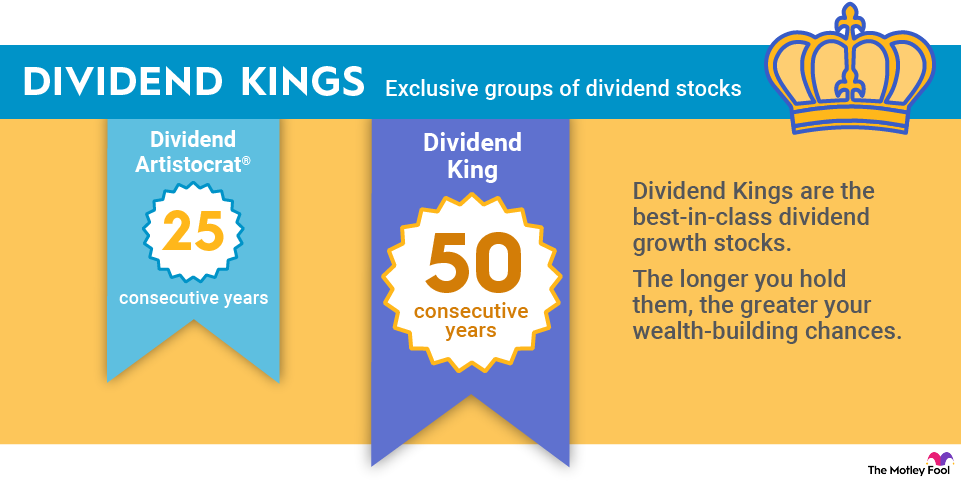
- Dividend Distribution -- $254 million paid during the quarter, representing the company’s 377th consecutive quarterly dividend.
- Net Leverage Ratio -- 2.2x at March 31, higher than the previous quarter but in line with seasonal trends and commodity price impacts.
- Oilseeds Crush Volumes -- Global oilseeds tonnage increased 2%, achieving a record for global site crush production.
- CO2 Sequestration -- 300,000 metric tonnes captured in the quarter as part of decarbonization efforts.
- Cost Savings Program Progress -- On track to reach $500 million to $750 million in aggregate savings over the 2025-2028 period.
- 45Z Tax Credit Impact -- $150 million expected benefit for full-year 2026 included in current guidance.
- Crush Rates in March (North America) -- Increased by approximately 10% compared to last year, as supported by market demand and RVO impacts.
- Soybean Meal Demand -- Remains strong, driven by favorable soybean meal/corn ratios and robust export demand, particularly aided by delayed Argentine harvest.
Need a quote from a Motley Fool analyst? Email [email protected]
RISKS
- The AS&O segment experienced a $275 million net negative mark-to-market and timing impact in the quarter, which management notes could recur with additional volatility in future periods.
- Starches and sweeteners subsegment continues to face persistent volume and margin softness, which management links to ongoing consumer behavioral trends.
- The net leverage ratio increased to 2.2x, attributed to seasonality and higher commodity prices, although this aligns with internal expectations.
- Management is monitoring external factors—energy costs, foreign exchange rates, tariffs, and global trade policy—that could impact performance for the remainder of 2026.
SUMMARY
Archer-Daniels-Midland (ADM +0.66%) raised its full-year 2026 adjusted EPS guidance following notable outperformance in Carbohydrate Solutions and substantial profit growth in Nutrition, underpinned by improved ethanol margins and effective portfolio management. Management anticipates that most of the $275 million in negative mark-to-market impacts recognized in AS&O will reverse in the upcoming quarters, reflecting improving underlying market conditions. The company affirmed its path to aggregate cost savings and highlighted decarbonization milestones, including 300,000 metric tonnes of CO2 sequestered and a projected $150 million benefit from the 45Z tax credit. Capital allocation priorities remain focused on disciplined investment in growth platforms, ongoing dividends, and a balanced approach to potential share repurchases. ADM’s strategic orientation also includes advancing technology, such as automation and AI, to further optimize transaction costs and supply chain efficiency.
- Management attributed higher Ag Services operating profit to “increased shipments of soybeans and sorghum to China, and the continuation of a strong corn export program.”
- Juan Luciano reported that “crush rates in March for North America run about 10% higher than last year,” reflecting the rapid margin improvement triggered by RVO formalization and soybean oil demand.
- Human Nutrition operating profitability improved due to both the recovery of the Decatur East plant and “higher flavor sales,” with benefits augmented by foreign exchange gains.
- Ethanol demand benefited from both tightened RIN values and export demand growth, with U.S. ethanol exports projected at approximately 2.4 billion gallons for 2026.
- Animal Nutrition profit gains are driven by “strategic portfolio and cost optimization actions,” even as revenue contracted due to previous portfolio exits and joint ventures.
- Portfolio diversification—especially through biosolutions into industrial applications—continues to play a role in stabilizing starches and sweeteners performance, although these initiatives are described as gradual in impact.
INDUSTRY GLOSSARY
- AS&O: Ag Services and Oilseeds segment, encompassing crop origination, storage, processing, and associated oilseed product lines.
- VCP: Vantage Corn Processors, ADM’s corn dry milling and ethanol production unit.
- RVO: Renewable Volume Obligation—regulatory mandate governing the volume of renewable fuel that must be blended into the U.S. fuel supply.
- RIN: Renewable Identification Number—a credit used for compliance with the U.S. Renewable Fuel Standard.
- 45Z Tax Credit: A federal tax credit for clean fuel production under Section 45Z of the U.S. Internal Revenue Code, linked to carbon intensity reductions.
- Crush Rate: The ratio or volume of oilseeds processed (crushed) to yield meal and oil; a core operational metric for oilseed processors.
Full Conference Call Transcript
Juan Luciano: Thank you, Kate. Hello, and welcome to all who have joined the call. Please turn to Slide 4, where we have outlined this quarter's performance highlights. Today, ADM reported adjusted earnings per share of $0.71 and total segment operating profit of $764 million for the first quarter of 2026. Our trailing fourth quarter adjusted ROIC was 6.4%, and cash flow from operations before working capital changes was $442 million for the quarter. Operating performance was robust during the quarter as our team advanced our company priorities, and our crushing and ethanol businesses benefited from an increasingly constructive commodity and margin environment.
In particular, soybean crush and ethanol margins strengthened meaningfully as the market anticipated the finalization of renewable volume obligations for 2026 and 2027, which the EPA published on March 27. We commend the administration and the EPA for advancing our renewable volume obligation that strengthens markets for American farmers and enhances America's energy security. The RVO drives demand for corn, soy and other domestic feedstocks, and it supports a reliable domestic fuel supply chain that offers consumers dependable choices in their daily lives. I also want to thank our team for delivering on our plan in a complex and rapidly changing environment.
Based on our expectation that we will continue to successfully advance our priorities throughout the remainder of the year, combined with the expectation that the constructive margin environment we are in continues, we are raising our earnings guidance range for 2026. Our full year adjusted EPS guidance range is now $4.15 to $4.70, up from our previous range of $3.60 to $4.25. Please turn to Slide 5. As we look at our strategic priorities for 2026, we remain focused on continuing to reduce our manufacturing and transaction costs, generating strong cash flows, investing in our growth platforms, and further developing and expanding our deep bench of talent to support our strategic priorities.
Based on these priorities, we achieved notable progress in a number of areas during the first quarter. Here are several highlights. Our Ag Services business achieved higher North American export activity, which included increased shipments of soybeans and sorghum to China, and the continuation of a strong corn export program. We demonstrated the ability to capture underlying margin opportunities in crushing and refined products and other subsegments. We also delivered strong soybean meal sales during the quarter, driven by robust global consumption. Our team capitalized on the constructive margin environment for ethanol, with strengthening ethanol margins more than offsetting the continued softness in starches and sweeteners volumes.
And our Nutrition business achieved higher flavor sales, and we're seeing momentum built around natural colors and flavors. Also, we are seeing the benefits of our strategic portfolio actions taking hold. From a manufacturing standpoint, we made solid strides in increasing throughput and decreasing unplanned downtime across our production footprint. During the first quarter, our team delivered strong global crush volumes, with oilseeds tonnage increasing 2% compared to the prior year quarter, and we achieved the best overall global site crush production on record. For Nutrition, the team continued to improve operational execution, and we are seeing substantial progress with the continued recovery of our Decatur East plant and animal nutrition operations.
As we look ahead, we're also targeting a meaningful reduction in transaction costs across our global footprint, including further automation and use of AI in workflows to reduce manual touch points, errors and cycle times. These initiatives also extends to our supply chain management and freight and logistics networks. We continue to pursue high-growth opportunities that are designed to generate enduring returns. We recently created a new senior innovation and growth leadership role responsible for accelerating projects in this area across the enterprise. A number of the initiatives underway are already generating revenue, and we are encouraged by the progress we are making. I'll talk more about this on the next slide.
All of this is bolstered by the development we are doing around our workforce talent and capabilities. We're strategically focused on making sure we have the right people and skills for both our business needs today and for the future. For example, we recently established the ADM capability center in India to build and maintain deep technical and functional experience in priority areas. In summary, our team is executing well against our plan, and we're taking advantage of market opportunities while consistently strengthening the performance of our operations.
Looking through to the rest of 2026, we have clear priorities that are centered around ensuring we have the right talent and capabilities in place to drive growth, margin expansion and cash flow, while remaining steadfast in our discipline around cost management and capital allocation. And to that end, we remain committed to returning value to our shareholders with the dividend we paid in first quarter representing our 377th consecutive quarterly dividend. Please turn to Slide 6. We're making disciplined investments today in the platforms that will drive our growth for tomorrow.
Our next wave of value creation is grounded in 5 key pathways that span both near-term opportunities already contributing to growth today as well as long-term initiatives that will continue to scale over time. Importantly, these are areas where we understand the markets and the customer needs and where we believe we are well positioned to win. I'll take a few moments now to discuss our growth pathways in a little more detail. Starting with advanced nutrition, we are developing innovative solutions as customers shift from artificial to natural ingredients, particularly in colors and flavors in North America. We are expanding both capabilities and capacity to meet growing demand for healthier products that deliver on appearance, texture and taste.
Within functional health, we continue to build on our leadership in digestive and metabolic health and immune support, with a growing pipeline of solutions targeting stress, mood and sleep. For biosolutions, our initiatives are centered on valorization or the unlocking of new markets for our existing products, essentially doing more with what we already produce. A concrete example of this is a starch-based component we developed for fabric softeners, for which we were recognized earlier this year with the best innovation contributor award by Henkel Consumer Brands. In precision fermentation, we see significant opportunities at the intersection of biology and engineering.
Advances in technology are enhancing the efficiency and scalability of our existing fermentation assets and we're expanding our portfolio of cleaner, simpler and more sustainable solutions. For example, during the quarter, in animal nutrition, we successfully completed a trial for a scalable animal-free protein for pet food. And in the human nutrition space, we progressed the development of a novel enzyme with widespread functionality in food applications. And in decarbonization, we are leveraging our existing carbon capture and storage footprint to develop a broader portfolio of solutions. This includes serving customers with high purity CO2 needs, expanding renewable natural gas operations and advancing pathways to convert ethanol into sustainable aviation fuel.
During the first quarter alone, we sequestered approximately 300,000 metric tonnes of CO2, a milestone that underscores our leadership in this space. Taken together, these platforms represent a compelling set of value creation opportunities that leverage our core business and provide meaningful expansion into new markets for years to come. With that, let me hand it over to Monish to share a deeper dive into our first quarter financials and full year outlook.
Monish Patolawala: Thank you, Juan, and I wish you all a very good morning. Please turn to Slide 7. AS&O segment operating profit for the first quarter of 2026 was $273 million, down 34% compared to the prior year quarter. Included in the first quarter of 2026 is approximately $275 million of net negative mark-to-market and timing impacts, of which roughly 70% were attributable to the crushing subsegment, and the remaining balance was 2/3 attributable to refined products and other and 1/3 attributable to Ag Services. In the prior year quarter, the net negative impact of approximately $22 million were mainly related to Ag Services.
The Ag Services subsegment in the current quarter generated operating profit of $200 million, representing an increase of 26% compared to the prior year quarter. The increase was driven primarily by higher export activity in North America, which was supported by increased trade with China and a strong corn export program. Additionally, prior year quarter results were pressured by certain export duties. For the crushing subsegment, we reported an operating loss of $79 million for the quarter, which represents a decrease of $126 million from the prior year quarter. The decrease was driven by net negative mark-to-market and timing impacts. The team executed well during the first quarter of 2026, with planned productivity improving compared to the prior year quarter.
Additionally, soybean meal sales remained strong throughout the quarter as a result of strong global demand. For the refined products and other subsegment, operating profit was $86 million, down 36% compared to the prior year quarter, primarily driven by net negative mark-to-market and timing impacts. Equity earnings from our investment in Wilmar was $66 million for the quarter, down 8% compared to the prior year quarter. Turning now to Slide 8. For the first quarter, Carbohydrate Solutions segment operating profit was $356 million, representing an increase of 48% compared to the prior year quarter. The period-over-period increase was primarily a result of strengthening ethanol margins, supported by effective risk management and policy incentives.
In the starches and sweeteners subsegment, operating profit was $229 million, representing an increase of 11% compared to the prior year quarter. The increase was driven by stronger results from ethanol in our corn wet milling plants in North America, and was partially offset by lower global liquid sweeteners and starches volumes and margins due to similar trends to what we saw last year. In the vantage corn processors subsegment, operating profit was $127 million, representing a $94 million increase from prior year quarter. ADM's corn dry milling ethanol operations benefited from strengthening ethanol margins, supported by effective risk management and policy incentives.
Overall, base ethanol EBITDA margins for the quarter were higher both sequentially and compared to the prior year quarter. Now turning to Slide 9. For Nutrition, segment revenues in the first quarter were $1.8 billion, down 1% compared to the prior year quarter. Human nutrition revenue increased by 3% year-over-year, driven primarily by higher flavor sales and inclusive of foreign exchange gains. Animal nutrition revenue decreased by 5% year-over-year, with the decrease primarily attributable to our previously disclosed portfolio exits and the formation of the animal feed joint venture with Alltech, which was partially offset by foreign exchange gains.
Nutrition segment operating profit was $135 million for the first quarter, representing an increase of 42% compared to the prior year quarter. Human nutrition operating profit was $104 million, up 39% compared to the prior year quarter as a result of higher flavor sales and foreign exchange gains as well as the continued recovery of the Decatur East plant. Animal nutrition operating profit was $31 million for the quarter, up 55% compared to the prior year quarter. The increase was primarily attributable to benefits associated with strategic portfolio and cost optimization actions taken over the last year, foreign exchange gains and the increased focus on higher-margin product offerings.
Corporate and other businesses contribution to operating profit was lower compared to the prior year quarter, driven primarily by higher claim settlements in other business, which were partially offset by lower corporate function costs. Turning now to Slide 10. For the first quarter of the year, ADM generated cash flow from operations before working capital of approximately $442 million, approximately flat relative to the prior year quarter. We continue to be very disciplined in the areas in which we invest. During the first quarter of 2026, we invested $194 million and maintain our expectations of full year 2026 CapEx being in the range of $1.3 billion to $1.5 billion.
During the quarter, we distributed $254 million in dividend, marking our 377th consecutive quarter of paying a dividend. And lastly, our net leverage ratio at March 31 was 2.2x, which is higher than the previous quarter. However, this is generally in line with our expectations given the normal seasonality of our business and the impact of higher commodity prices. Our year-end net leverage ratio expectations remain at approximately 2x. Now on to Slide 11, where we have provided details on our updated 2026 outlook. Earlier today, as Juan mentioned, we raised our current outlook for 2026 adjusted EPS to a range of $4.15 to $4.70, up from the previous range of $3.60 to $4.25.
There are 2 main drivers to our guidance range. First, the expectation that our team will continue to solidly execute against our plan for the remainder of the year; and second, the expectation that the improved margin environment for crushing and ethanol businesses will continue. Overall, our guidance range is underpinned by several factors. In AS&O, first quarter 2026 results include approximately $275 million of net negative mark-to-market and timing impact. Negative mark-to-market and timing impacts are the result of increasing commodity prices, and in this case, signal improving underlying market conditions for us.
As a reminder, the final impact of the mark-to-market and timing impacts will be realized when the underlying inventory forward contracts and futures and foreign currency contracts are executed. Based on that, the majority of the $275 million of net negative mark-to-market and timing impacts reported in the first quarter are forecasted to reverse in the second quarter. The remaining impacts are forecasted to reverse during the second half of this year. As a reminder, we cannot and do not estimate new mark-to-market and timing impacts in our guidance, and there could still be additional mark-to-market and timing impacts in future reporting periods.
In Ag Services, we are assuming that China will resume a normalized buying pattern for North American soybean. For Carb Solutions, we expect strength in ethanol margins supported by policy incentives will continue to more than offset softness in starches and sweeteners as the same consumer behavior trends we experienced in 2025 continue to pressure S&S volumes and margins. Expectations for year-over-year growth in Nutrition remains intact, with operating profit increasing primarily as a result of higher flavor sales, continued recovery in Decatur East and margin expansion in Animal Nutrition as we maintain our focus on higher-margin product lines and ongoing cost optimization initiatives.
We will continue to closely monitor external factors, including consumer trends, energy costs, supply chain dislocations along with global trade and tariff dynamics, foreign exchange and ethanol industry development throughout the balance of the year. We also are progressing the cost savings program we launched last year, and remain on track to achieve our targeted aggregate cost savings of $500 million to $750 million over the 3- to 5-year period which commenced in 2025. In summary, Q1 presented a dynamic market environment, characterized by significant events that created challenges but also created opportunities, and we were well positioned to capitalize on the environment as evidenced by the underlying margins across our Ag Services and Oilseeds businesses and our ethanol operations.
Beyond that, we continue to execute well in our Nutrition business, particularly in our flavors product line. In closing, I would like to recognize our ADM team members for their focus and dedication in executing against both our near-term objectives and our strategic priorities. It is their hard work that positions us well in a rapidly shifting global landscape, enabling us to continue delivering on our financial commitments and consistently returning value for our shareholders. With this, I'll hand it back over to Juan. Juan?
Juan Luciano: Thanks, Monish. As we look ahead, we are increasingly constructive on our outlook for 2026. Despite the complexity of the global environment, the policy clarity we now have, combined with our team's disciplined execution, position us well to deliver meaningful growth in 2026. Beyond 2026, we have a clear road map for long-term value creation that we're actioning, one that leverages both our deep capabilities and the breadth of our operations to create enduring value for years to come. With that, we'll take your questions now. Operator, please open the line. Operator, please open the line.
Operator: [Operator Instructions] Your first question comes from the line of Manav Gupta from UBS.
Manav Gupta: Congrats on a strong quarter and a guidance raise. The beat and race story is always welcome. My quick question here is, obviously, sir, there's one part where the RVO is helping you, policy formalization is helping you. But there is another part where [ world ] is generally short diesel, and what we are seeing out there is globally shortages of diesel and one area where U.S. is somewhat unique is we have this level of higher renewable diesel, biodiesel production, we can do to meet some of those challenges. And I just wanted your view on it.
Are you already seeing out there, producers with ideal plants who are not running that hard in 2025 already looking to run much harder in 2026? And how does that benefit ADM? If you could talk a little bit about that.
Juan Luciano: Yes. Thank you, Manav. Listen, I think we said it in the previous quarter what we expected the RVO impact was going to be in the market. The first thing that we said, it was going to come in RINs coming up, and we saw RINs going up by $1. Then that created a margin for all these biodiesel plants and renewal diesel plants to come on stream. That pulled soybean oil demand and that increased crush margins, so crush rates. So if you look at on margins. So if you look at crash rates for March, we jumped 6%. So crush rates in March for North America run about 10% higher than last year.
So I think that it happened in the sequence we expected. Probably, it's happened with more violence than we expected. It was faster maybe because of pent-up demand. We've been waiting for RVOs for a couple of years or maybe the effects of shortages or the perception of shortages given the Strait of Hormuz issues. But -- so we see that. We see that biodiesel traded mostly with RVOs, I would say. And we see those plans coming on stream. So yes.
Manav Gupta: Perfect. My quick follow-up is on human nutrition, a very positive trend, revenue up 3%, but profit up 39% in human nutrition. Can you talk a little bit about that positive trend? And what's driving the improvement in profitability in the human nutrition business?
Juan Luciano: Yes, the team did a very good job. Of course, part of the drivers are in flavors, and I think that our -- they can continue to convert our pipeline, and maximizing profitability with product mix, cost management, the normal levers you pull in these cases. I would say you also have to remember that we finally brought the Decatur East plant back. That product has always been lauded as the best quality in the industry. And now we are back with our full volume and recovering the position we lost over the last couple of years. So I think that very strong performance in both areas in human nutrition, and we expect that to continue into Q2.
Monish Patolawala: Manav, as for our script, we had some foreign exchange gains that help us there, too. But operationally, the team did very well.
Manav Gupta: Congrats on a very good quarter.
Operator: Your next question comes from the line of Ben Theurer from Barclays.
Benjamin Theurer: Congrats on a very good first quarter. Maybe just following up on some of the changes to guidance, and if you could maybe help us frame a little bit the high versus the low end of it? I mean, I guess the market was expecting some sort of a race. But just to understand what factors you're kind of like seeing that could drive you to the higher end of that new guidance versus what are the risks that keep you on the lower side? That would be my main question.
Juan Luciano: Yes. Let me give you a flavor, and maybe Monish can chime in later. So we underpin the raising guidance on, of course, the continued advancement of our priorities that the team continues to execute well, and this constructive biofuels environment that we got after the clarity with the RVOs. If you think about the businesses, from an AS&O Ag Services perspective, we expect a normalization of the offtake of soybeans from China. And then we continue to expect a constructive biofuel environment going forward. We expect the majority of our -- you know the big mark-to-market, we have $275 million in Q1. We expect the majority of that to come back in Q2.
But of course, margins, as they continue to climb, we may generate new mark-to-market that we don't have the ability to forecast, that is not included in our guidance. From a Carb Solutions perspective, we expect the same dynamics, a little bit of softer sweeteners and starch, with a strong ethanol dynamics to continue into Q2 and probably the rest of the year or at least the rest of the summer. And nutrition growth continued to be intact the way we see it forward with strong flavors, with still a strong recovery of specialty ingredients given by the Decatur plant being back.
And animal nutrition continues to -- on a smaller scale because it's smaller than human continue to put very good year-over-year improvements based on their improvement plan, but now they are shifting to more specialty products. So all in all, we see most of our business doing very, very well.
Monish Patolawala: I think, Ben, you had a question on what risks also we are watching. If you've seen the strip we had laid it out, but just again to reiterate. Of course, we'll watch all external events that play out. But energy costs, foreign exchange, input cost for nutrition, global trade policy, all of those tariffs are all things that we are watching, and we'll keep you all posted as we see things evolve.
Benjamin Theurer: Okay. Fantastic. And then just quick follow-up on the sweeteners and starches business within Carb Solutions. Obviously, that continued weakness something we've kind of like seen industry-wide. What are the -- are there any specific measures that you can take to kind of like maybe stop the bleeding a little too harsh, but like stop the decline be supportive here? Are there any things around innovation or things that you can do shifting away from that business on the sweeteners side? What are like the things you're looking at in order to kind of like manage that business?
Juan Luciano: Yes. We've been working for many years in the diversification of the grind that you've heard us many times saying the fight for the grind. So we produce many products and that helps sometimes soften this. You heard us saying talking about biosolutions and how we are moving some of those products into different applications, industrial applications. So we have some successes with starches in places like personal care or fabric softeners, things like that. So is a slow because, of course, those markets are smaller than a sweeteners market, and then it takes more effort, but we continue to have efforts there to diversify the grind. We can't invent that Mexico will help us with a great World Cup.
Everybody will drink lots of softdrinks.
Benjamin Theurer: I'm going to do my best.
Juan Luciano: Help us.
Operator: Your next question comes from the line of Pooran Sharma from Stephens, Inc.
Pooran Sharma: Congrats on the strong results here. I maybe wanted to just focus on -- absolutely, the first question, just wanted to focus on ethanol. Can you talk about what is driving margin strength here? I think it's export demand. And there was momentum prior to the start of the conflict with Iran. So just want to understand from your point of view, what is -- what's driving this? And have you seen any incremental upside from the conflict?
Juan Luciano: Yes. Listen, as you said, before the conflict, we were already seeing good margins for ethanol. I think that we had rough weather, in general, that affected some of these plans with the polar vortex in January or something. So we were coming into an environment we had strong domestic demand, given by the tightening of the RINs and the values of the RINs. Also a strong export demand. Demand for exports were about 10% year-over-year. So that was pulling on an industry that was not producing fully, and I draw down inventory. So we are going a little bit through maintenance now before the driving season anyways as well. So we expect that to do well.
Don't forget that ethanol at about $2 per gallon is incredibly competitive globally. You have [ our but ] trading at north of $3.50. So there is a big incentive here to blend domestically, so we expect domestically to something in the range of 14.5 billion gallons, give or take. When you add to that, 2.4 billion gallons, that is our expectation for exports, that's almost close to 17 billion gallons. I still remember how much I was celebrating with our exports worth 1 billion gallon a few years back. So now we're talking about 2.5 billion gallon. Whether those exports are being held by maybe the conflict or the tightness, maybe there is some of that.
But you see more and more countries trying to bring resilience to their fuel system by diversifying into biofuel. So you see Vietnam increasing now to E10, you see Brazil going now to B32. So you have many countries popping up into that, and they are -- all of that is helping the U.S. export.
Pooran Sharma: Great. Appreciate the color there. And just really quickly, was there any 45Z incorporated to ethanol earnings? And then when we think about modeling this, should we be adding this to segment income? Or should we be excluding these from the tax line?
Juan Luciano: Yes, you should be including it to segment income. And I would say, yes, we have. And of course, we continue to work on all the details that need for implementation of that. But the team has done a good job. And at this point, for the year, we are expecting an impact of about $150 million for a full 2026.
Operator: Your next line comes from the line of Andrew Strelzik from BMO.
Andrew Strelzik: Obviously, a very dynamic environment out there, inverted curves. I was hoping that maybe you could help us think about the kind of earnings cadence through the year, whether it's first half, back half split or however you want to frame that? And also, to what extent you have visibility for the balance of the year versus where you typically are at this time of the year, obviously, that had been a little bit of an issue in prior quarters. So curious where that is, too.
Juan Luciano: Yes. Listen, I've been doing this for quite a while. So at the beginning of my mandate, I remember we were like 48.5 to 51.5 or 48-52 in our split first half, second half. Since our product mix has shifted and maybe the U.S. is not as competitive as exports of grain. Probably now we are talking about something like 49-51 type of split between first half and second half. Of course, there is a lot of uncertainty still. The visibility we have, listen, what we get to this point of the quarter, for Q3, if you will, we're probably sold about 30% in mill and about 50% to 60% in oil. So we still have a piece open there.
And of course, for Q4, it's only maybe 10%. So we still have a lot to go through. In general, I would say customers are not buying that much in advance. The oil industry is normally more spot. And I would say the -- for our oil customers and for human consumption is also relatively, we don't have a huge book yet. So I think we're trying to stay open. So.
Monish Patolawala: I'll add on, Andrew, for Q2, when you think about the operating -- the quarterly cadence that Juan mentioned. Just on Q2, Q2 will be stronger than Q1. A couple of things we've talked about, the mark-to-market of $275 million approximately that we took in Q1. Majority of that will reverse in Q2 and the balance in the second half. Secondly, seasonally, nutrition is higher, especially our flavors product line. So that you can factor that into. And the third one is strength in ethanol, as Juan mentioned. So that's all put together. You'll also see tax rate was a little lower in Q1, that will normalize itself over the year.
And then the second piece is, as we have talked about, we've been very prudent on cost and CapEx through first quarter. And as we are starting to see the constructive environment, we will continue to invest in our growth initiatives, continue to invest in digitization, all of that setting us up for the long-term value creation for ADM.
Andrew Strelzik: Okay. That was super helpful. And my follow-up is related to that. You talked about pretty tightly managing the capital spend. But as your earnings trajectory improves, in this more constructive environment, whether it's '26 or beyond, how are you thinking about capital allocation incrementally? Are there more CapEx projects on the radar? Maybe you could talk about those as -- maybe it's the buyback that's more interesting. Just how you're thinking about capital allocation?
Juan Luciano: Yes. We continue to invest with our balanced framework of capital allocation that we have maintained for a few years, always our biggest opportunities in cost and growth projects, and we give priority to that. As Monish just described, we have a lot of projects related to cost savings in manufacturing, but also our low cost to serve and increasing capabilities. And we also have our fuel in 5 growth platforms that will serve us well, that we like very much because they have a balance of short-term, medium-term and long-term impact for ADM. So it gives us a good cadence going forward.
So then, of course, we honor the dividend, and we will continue to try to pay and grow the dividend every year as we have done for many, many years. I think this year, we just paid -- this quarter, we paid like 377th consecutive dividend, which is an incredible record for the company. And of course, probably what is embedded in your question is what are we going to do with M&A or buybacks. And we will continue with our prudent bolt-on M&A. So we've done that when we see value opportunities are there or something that fits strategically to our developments.
And yes, it is plausible that as our cash flows improve and our balanced capital allocation remains the same way, that potentially, we could do buybacks into the future. That's not out of the question. So we will continue to monitor how things evolve.
Operator: Your next question comes from the line of Heather Jones of Heather Jones Research.
Heather Jones: The first question is going back to what you were saying about the cadence of earnings. And if I understood you correctly, saying roughly half will be in the second half? And if I take the midpoint of your guide, that would apply only 20%, 25% year-on-year growth and would imply you get close to where second half of '24 was. So just wondering, the biofuel policy, not just in the U.S. but globally, is the most constructive it's ever been. And so just wondering, what are the things in your business that are giving you pause that would cause the year-on-year growth to not be more robust than that? Or is this just conservative? So that's my first question.
Monish Patolawala: Yes. Heather, it goes back to what Juan and I have talked about in our prepared remarks as well as a few of the questions that have already been asked. When you thought about when we came into the year, we had talked about a more back-end loaded. Secondly, as everybody knows that the RVO is coming in, we pretty much called the trajectory, right? It just came in faster than we thought. And based on that, we felt that it's prudent right now based on the mark-to-market reversal, there's normal seasonality we get in nutrition as well as ethanol strength that we'll see 49% to 51% first half, second half.
The other things, when you factor in the second half, right now, there is an inverted curve. And that inverted curve is for multiple factors, including some of the risks that exist in the economy right now. We also have a slightly higher tax rate that will come in, in the second half of the year, and we will invest more in R&D and digitization that I talked about. But when you put all that together, when we look at the first quarter, the team started very well. You've seen that they've been able to capture the opportunities and margins that existed.
So as that curve moves through and the opportunities exist, I can tell you the team is very well geared to take advantage of that. 2Q is a very important quarter for us because we have to make sure that all these executions happen. We'll get some more clarity as the world continues to evolve. We've got policy dynamics that we are watching through. Our assumption is that China will continue to buy its normal volume in Q4, but that's to be watched. So put all that together, we raised our guidance from $3.60 and $4.25 to $4.15 to $4.70.
Again, the team is executing well, good start to Q1, and we'll continue to execute over the next 3 quarters, and we'll keep you posted.
Heather Jones: Okay. And then my follow-up in on ethanol. And so -- it sounds like you raised the amount that you think will -- the 45Z will benefit earnings somewhat for the full year. But I mean, it was an extremely strong quarter both in the wet milling side and dry. And European market has been strong for some time. So just wondering what changed? I mean, were there risk management -- was the risk management benefit unusually large? Or should we consider -- should we assume that the kind of strength that we saw in Q1 is sustainable throughout the year?
Juan Luciano: Yes. Heather, there are so many factors to consider here in 45Z. You need to think about the carbon intensity score by every plant, the prevailing wage, the amount of carbon we sequester, the production volumes, but also the industry pricing reaction to this policy. So at this point in time, given what happened in the Q1, we are increasing the expected amount. I think we mentioned last time it was going to be 100 million. Now we're saying it's 150 million. I think that's how we see it at this point in time. Could it be a surprise for the positive? We hope so. At this point in time, that's what we're looking at.
Operator: Your next question comes from the line of Steven Haynes at Morgan Stanley.
Steven Haynes: I wanted to ask on Carb Solutions maybe just in the quarter, kind of within the [ 3 50 ] or so of operating profit that you all did. Can you maybe just help us think a bit about how much of that splits out between ethanol versus the nonethanol piece? Obviously, we can see the VCP part of it, but it's harder to disaggregate within sweeteners and starches. So if you could just provide any additional color there, that would be helpful.
Juan Luciano: Yes. Maybe I can provide the dynamics and maybe Monish, if you want to give more granularity later. I think we continue to see a certain weakness in sweeteners. So our sweeteners and starches volumes are down 3% and margins are down a little bit more than that. Of course, Carb Solutions, corn plants are very big energy users and chemical users. So the cost of those plants are not doing great right now with the conflict, although we continue to improve our operational performance. Energy is up and some of the chemicals are up. I think we started to see starches getting better and stabilizing in their volumes. And ethanol has been the good actor of the quarter.
So we -- EBITDA margins per gallon went up like $0.18 from the same quarter last year. So driven by all the factors I think I explained before in one of the questions. So I will say, hopefully, that gives you an idea. That's our expectation, if you will, for the second quarter that those dynamics will be maintained. And the nature of the results should be similar. Of course, are easy to see in BCP. And in the wet mills, we produce about 22 different things out of a wet mill. So it's more difficult to quantify there because also, we try to optimize that mix all the time, looking at the different margins, at the different grind providers.
So that's not that easy to call. But I hope with the granularity I gave you provide you enough to -- for you to build your models going forward.
Operator: Your next question comes from the line of Dushyant Ailani from Jefferies.
Dushyant Ailani: Maybe my first one, could you talk a little bit about the soybean meal demand? I know I think earlier in your comments, you mentioned that you use strong demand there. But could you maybe just talk a little bit about the puts and takes in terms of how that evolves through the course of the year?
Juan Luciano: Yes, of course. Listen, soybean meal continues to be strong. If you look at the soybean meal versus corn ratio, that sit near 2 or below, that sustains strong inclusion in feed formulas. You see even that's more acute in China where corn prices are higher. So global soybean meal demand continues to surge driven by still healthy livestock profitability and expanding of the daily output. So the U.S. has a big book for exports on soybean meal. I think that, that was helped a little bit by Argentina. Argentina lost all the cushioning from the old crop.
And now basically, their crush is limited by the harvest, and harvest was a little bit delayed by a couple of weeks because of the floods. So I think that we are exporting a lot and demand has been very good. So that has provided another strong leg of the crush. Today, soybean oil is probably like 52%, 52.5% of the crush. And that's putting -- that's probably, as much as we are crushing, we probably tighten up the meal balance because meal is so strong. So I hope that helps.
Dushyant Ailani: Yes, that does. And then my follow-up question is on Decatur East. I think you said that it's basically fully up and running. I think in the prior call, you had mentioned that there were some customers that had moved away. Have you been able to recover all of them? What's the data status on that?
Juan Luciano: Yes. No, of course, you won't recover this immediately. People -- our absence was long, more than a year, so people took different commitments on that. And we are rapidly trying to recover that. We have now a full -- our full volume is being offered. And as I said, I think that we trusted our good quality. The preference that customers have traditionally have for this product will bring us back. But the team is making progress, not full -- We haven't recovered our full position yet, and that will probably take a while.
Operator: Your final question comes from the line of Matthew Blair from TPH.
Matthew Blair: You mentioned the inverted soy crush future spur previously. Could you talk about what's really driving that? Like are there fundamental factors that are pulling on future margins? Or is this just like a matter of liquidity and less liquidity in the outgoing months?
Juan Luciano: Yes, I think that there is a strong immediate demand for soy and for oil and meal. And of course, there is uncertainty about what's happening in the future in the second half where there is -- at this point in time, you have very strong demand for soybean oil, very strong demand for soybean meal and a relatively flat soybean trading in kind of a flat range, if you will. So all of a sudden, you look at the future and you need to think about, okay, what's going to happen with the trade deal and Trump visit to China? Will that move soybeans?
And then you think about resolution of the conflict, crops and weather and all those things. So energy prices, so there are a lot of uncertainties in the second half. And I think that, that's I think Monish showed it or mentioned it before in the guidance. We're looking at consumer impact. We're looking at demand. We're looking at inflation. We are looking at many things. So I think the curve is reflecting that. And to the extent that we move forward and those dynamics continue, the curve may be extending forward, so -- and shifting into the future. So we are monitoring that.
Operator: We have reached the end of the Q&A session. I will now turn the call back to Kate Walsh for closing remarks. Kate, please go ahead.
Kathryn Walsh: Thank you all for joining the call today. We appreciate your continued interest and support of ADM, and wish you a great rest of your day. Goodbye.
Operator: This concludes today's call. You may now disconnect.