Image source: The Motley Fool.
DATE
Wednesday, May 13, 2026 at 4:30 p.m. ET
CALL PARTICIPANTS
- Chair and Chief Executive Officer — Charles Robbins
- Executive Vice President and Chief Financial Officer — Mark Patterson
- Senior Vice President, Investor Relations — Ahmed Sami Badri
TAKEAWAYS
- Total revenue -- $15.8 billion, up 12% year over year, achieving a company record and exceeding the top end of guidance.
- Product revenue -- $12.1 billion, increasing 17% year over year, led by AI infrastructure and campus networking demand.
- Services revenue -- $3.7 billion, down 1% year over year due to timing of contract start dates.
- AI infrastructure orders (hyperscalers) -- $1.9 billion in fiscal Q3 compared to $600 million a year ago; year-to-date total reached $5.3 billion, surpassing full-year expectations.
- Total product orders -- Up 35% year over year; excluding hyperscalers, orders were up 19%, showing broad-based global demand.
- Service provider and cloud customer orders -- Grew 105% year over year; top five hyperscalers each achieved triple-digit growth.
- Networking product orders -- Rose more than 50% year over year, with service provider routing and compute posting triple-digit growth.
- Acacia orders -- Exceeded $1 billion, with Acacia business on track for over 200% year-over-year growth for the fiscal year.
- Enterprise data center switching orders -- Grew more than 40% year over year; double-digit growth in seven of the last nine quarters.
- Campus networking orders -- Record orders, up more than 25% year over year, with WiFi 7 representing half the wireless mix in fiscal Q3.
- Industrial IoT portfolio -- Achieved strongest quarter ever with double-digit growth for eight consecutive quarters.
- Security orders (excluding Splunk) -- Double-digit year-over-year growth in new and refreshed products; 1,000+ new customers for Secure Access, XDR, Hypershield, and AI Defense this quarter.
- Recurring performance obligations (RPO) -- Ended at $43.5 billion, up 4%; product RPO rose 6%.
- Annualized recurring revenue (ARR) -- $31.2 billion, rising 2%, with product ARR up 4%.
- Non-GAAP EPS -- $1.06, up 10% year over year, supported by operating efficiencies and execution on memory cost mitigation.
- Non-GAAP gross margin -- 66%, down 260 basis points year over year; product gross margin 64.3% (down 330 basis points), mainly from mix and higher memory costs.
- Cash, cash equivalents, and investments -- $16.6 billion at quarter end.
- Operating cash flow -- $3.8 billion, down 7% due to increased investment to support AI infrastructure demand.
- Capital returns -- $2.9 billion returned to shareholders ($1.7 billion dividends, $1.3 billion share repurchases); $9.6 billion remains under current repurchase program.
- Fiscal Q4 revenue guidance -- Forecasted range of $16.7 billion to $16.9 billion.
- Fiscal 2026 revenue guidance -- Projected at $62.8 billion to $63 billion; non-GAAP EPS expected at $4.27 to $4.29.
- Restructuring plan -- Up to $1 billion in pretax charges, with $450 million recognized in fiscal Q4 and balance in fiscal 2027; designed to refocus on silicon, optics, security, and AI.
Need a quote from a Motley Fool analyst? Email [email protected]
RISKS
- Non-GAAP gross margin declined by 260 basis points from the prior year, with higher memory costs and adverse product mix as the primary causes, stated by Patterson as primarily driven by negative impacts from mix and higher memory costs, partially offset by productivity improvements.
- Patterson acknowledged, "Operating cash flow was $3.8 billion, down 7% due to continued investments to meet growing demand, especially from AI infrastructure."
- Robbins noted the decline in the legacy security portfolio continues to offset the growth in the new and refreshed portfolio, but to a lesser extent than in the first half of the year.
- Patterson stated that the transition of Splunk from on-premise to cloud is creating a near-term drag on revenue growth as previously outlined.
SUMMARY
The fiscal Q3 performance for Cisco (CSCO +4.54%) delivered record revenue and double-digit gains, driven by substantial AI infrastructure growth, particularly among hyperscalers. Management announced a restructuring plan to reallocate resources toward silicon, optics, security, and AI, while guiding for further revenue and earnings expansion in the fourth quarter and full-year fiscal 2026. Notable expansion in Acacia optics, industrial IoT, and the full suite of AI-native solutions aligns with increased investment in strategic innovation, despite ongoing margin and services growth headwinds.
- Patterson projected at least $6 billion of AI hyperscale revenue recognition in fiscal 2027, clarifying this is distinct from expected baseline portfolio growth.
- Three new Silicon One P200 “scale across” design wins with hyperscalers were booked, with Robbins attributing supply chain control as a key differentiator, stating, "if you don't have silicon, you're going to struggle to be relevant to the hyperscalers."
- Patterson quantified pricing strategy impact, disclosing about 4 to 5 points worth of additional growth in non-webscale orders was directly from price increases, tied to more stringent quoting terms.
- Executives cited no significant pipeline pull-forward or order acceleration due to supply constraints, with fiscal Q4 demand pipeline reportedly "very healthy, very good year-over-year growth."
- Emerging security requirements, including Zero Trust for AI agents and agentic identity acquisition plans, signal Cisco’s intent to build out integrated cybersecurity for evolving AI deployments.
- Order growth in enterprise data center switching and WiFi 7 products was linked to customer modernization and AI-driven expansion, with 93% of surveyed tech leaders accelerating network upgrades.
- The announced restructuring is not intended to generate net cost savings but to realign resources around silicon, optics, security, and AI, supporting accelerated pursuit of growth opportunities.
INDUSTRY GLOSSARY
- Hyperscaler: Large-scale cloud provider or service company operating massive data center infrastructure for scalable computing and storage, often cited as the largest customers for AI infrastructure solutions.
- Silicon One: Cisco’s proprietary line of high-performance networking silicon used in switching and routing systems, particularly relevant for AI workloads and hyperscale deployments.
- Acacia: Cisco’s optics business specializing in high-speed coherent pluggable optical modules supporting network capacity expansion and AI data transport.
- RPO (Remaining Performance Obligations): Contracted revenue that is not yet recognized but is expected to be realized in future periods across services, products, and subscriptions.
- ARR (Annualized Recurring Revenue): A metric measuring recurring revenue components based on current subscriptions and ongoing contracts, annualized for comparability.
- P200 / G200: Designations for advanced Silicon One products, with P200 suited for high-scale deployment across multiple use cases, referenced in design wins with hyperscalers.
- Agentic AI: AI architecture that supports autonomous agents executing complex tasks in network environments, often requiring new security and observability approaches.
Full Conference Call Transcript
Charles Robbins: Thanks, Sami, and thank you all for joining us today. Q3 was a great quarter for Cisco with our momentum accelerating and revenue and earnings per share both growing double digits and coming in above the high end of our guidance ranges. We delivered record revenue of $15.8 billion in Q3, up 12% year-over-year. Product revenue was up 17%, once again driven by robust demand for our AI infrastructure and campus networking solutions. Our record top line performance, combined with operating efficiencies and outstanding execution by our teams allowed us to deliver non-GAAP EPS growth of 10%, demonstrating the effectiveness of the initiatives we outlined last quarter to mitigate memory price increases across the market.
We believe the trust our customers and partners place in us has never mattered more, and our technology is more relevant than ever in the AI era. As a result, we saw record high demand in Q3. Overall, total product orders grew 35% year-over-year. Excluding hyperscaler orders, which grew triple digits, product orders were up 19% year-over-year, demonstrating the continued broad-based demand we see for our technology globally. Enterprise product orders were up 18% year-over-year in Q3 with strength across our entire networking portfolio. Public sector orders were up 27% year-over-year with double-digit growth across all geographies.
Product orders from service provider and cloud customers accelerated in Q3, growing 105% year-over-year with 5 of the top hyperscalers each growing in triple digits. We also saw solid growth from telco customers in Q3 with orders up 9%. Telcos are investing in Cisco technology as they prepare their networks to handle the scale, speed and complexity of AI. Now some color on demand from a product perspective. Networking product orders continue to accelerate, growing more than 50% in Q3, driven by triple-digit growth in service provider routing and compute and double-digit growth in data center switching, campus switching, wireless, enterprise routing and industrial IoT products. This marks the seventh consecutive quarter of double-digit growth for our networking portfolio overall.
AI infrastructure orders taken from hyperscalers totaled $1.9 billion in Q3 compared to $600 million in the year prior, with strong growth across our Silicon One systems and market-leading Acacia Optics. The year-to-date total of $5.3 billion in orders taken from hyperscalers already exceeds our prior expectations of $5 billion for FY '26 with a full quarter remaining. Given the strong demand, we now expect to take AI infrastructure orders of approximately $9 billion from hyperscalers in FY '26. 4.5x our FY '25 total. We expect to recognize approximately $4 billion in AI infrastructure revenue from hyperscalers in fiscal year '26.
Our Acacia business had its strongest quarter to date with more than $1 billion in orders in Q3 and is on track to grow over 200% year-over-year in fiscal year '26. Acacia is leading the coherent pluggable optics market, and we saw strong momentum across this business. To date, we have shipped over 750,000 400-gig and over 40,000 800-gig coherent pluggable optics, which we believe far exceeds the next largest supplier shipments for both speeds.
We had 5 new design wins with hyperscalers in Q3, 2 for optics, each with different hyperscalers and 3 for systems, including the first 2 wins for our Silicon One P200-powered system for major scale across use cases and a Silicon One G200 powered system for a scale-out use case. Separately, we took approximately $300 million in AI infrastructure orders from Neocloud, Sovereign and Enterprise customers in Q3. We have seen triple-digit year-over-year order growth in each quarter of fiscal year '26 with approximately $900 million in orders taken year-to-date, and we have a growing pipeline of approximately $3 billion for our high-performance AI infrastructure portfolio across these customers.
Enterprise data center switching orders grew more than 40% year-over-year and have now grown double digits 7 of the past 9 quarters. We believe the AI infrastructure opportunity in enterprise is continuing to ramp as Nexus switch orders tagged for AI deployments were up almost 50% sequentially in Q3. Within campus networking, we had record orders in Q3, growing more than 25% year-over-year. We are seeing exceptionally strong demand for our next-generation switching, routing and wireless portfolio, which continues to ramp faster than prior product launches. We reported our highest ever wireless orders this quarter, growing more than 40% year-over-year.
Customers are upgrading to modern WiFi, evidenced by strong double-digit sequential growth in orders for WiFi 7, making up half of the wireless mix in Q3. Research conducted recently with around 3,500 technology leaders across global enterprises confirms increased urgency to modernize campus and branch networks. With traffic across these networks expected to increase 3x over the next 3 years because of AI, 93% of respondents are accelerating their network modernization plans. These findings support our belief that we are still at the start of a multiyear, multibillion-dollar campus refresh opportunity.
The strong demand we see for our technology is driven by our ability to deliver AI native capabilities across our products, including weaving security into the fabric of the network and modernizing the operational stack of campus networks. Many of the world's leading companies are investing in Cisco's secure networking solutions for the high-performance connectivity, automated management and robust security they need to scale their AI initiatives. Our Cisco Unified Edge solution is also gaining traction, and we've already booked a single enterprise deal for over 1,200 units. Unified Edge brings together compute, networking, security, storage and software to run AI applications at the edge where data is generated and decisions are made.
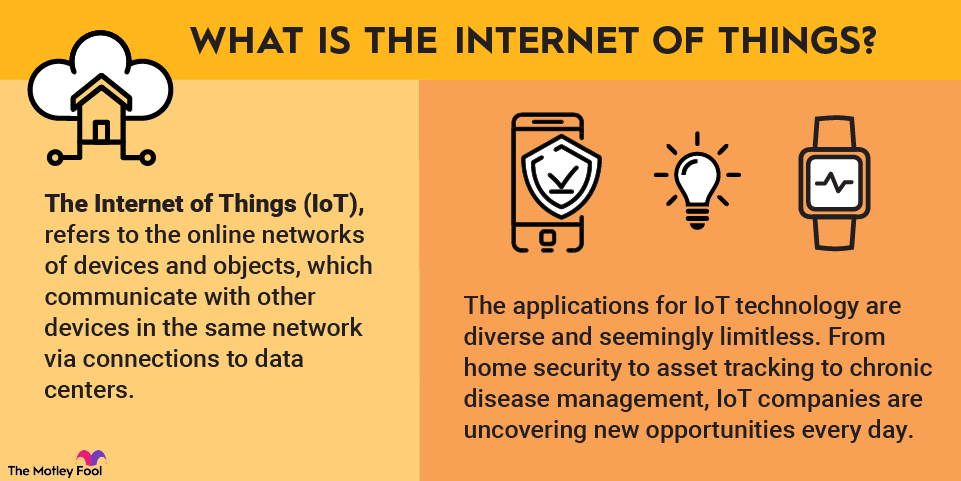
Our industrial IoT portfolio also reported its strongest quarter ever in Q3 and has now grown in double digits for 8 consecutive quarters. We expect this demand to continue with the onshoring of manufacturing to the United States and as agentic and physical AI are expected to drive massive increases in network traffic. Now shifting to security. In Q3, our core security portfolio, excluding Splunk, saw double-digit order growth across new and refreshed products with strong double-digit order growth year-over-year in firewalls. Additionally, over 1,000 new customers purchased our new products, including Secure Access, XDR, Hypershield and AI Defense in Q3, bringing the total of net new customers to approximately 5,000 since launch.
The decline in our prior generation portfolio continues to offset the growth in our new and refreshed portfolio, but to a lesser extent than in the first half of the year. Turning to Splunk. As expected, we continue to see an acceleration in the shift to cloud subscriptions and away from on-premise deals, creating a near-term drag on revenue growth as we previously outlined. We expect the mix of cloud business to continue to grow in Q4, while we are on track to exceed our target of 1,000 new customer logos for Splunk in fiscal year '26.
AI is accelerating the pace of innovation for security defenders and adversaries, and we are innovating with speed and scale to help create an asymmetrical advantage for defenders. In March, we announced a major expansion of our Secure AI factory with NVIDIA, giving customers a framework for deploying AI across their entire infrastructure from data centers to local sites, eliminating the need to stitch together disconnected systems and embedding security from the start. We have also introduced several new security innovations designed to protect the entire AI life cycle. DefenseClaw is an open source solution that helps customers safely deploy agents using common frameworks such as OpenClaw by enforcing guardrails and protecting against malicious behavior and attacks.
To deliver an integrated Zero Trust solution for the agentic workforce, we introduced Zero Trust Access for AI agents and recently announced our intent to acquire Galileo and Astrix to expand our security and observability platform to include agentic identity, access management and behavior monitoring. We also announced new capabilities for the agentic SOC and observability for AI to help detect and respond to new emerging threats at machine speed and scale. We are working collaboratively across the industry to help defend against AI-enabled threats and shape next-generation security capabilities. Cisco is a founding member of Project Glasswing and is participating in private testing of Anthropic's Claude Mythos preview model, specifically designed for proactive cybersecurity defense testing.
We are also part of OpenAI's Trusted Access for Cyber program. Building on these initiatives, we announced earlier this week that Cisco is open sourcing the Foundry Security Spec, a production-grade blueprint for building scalable agentic security evaluation systems using both available and new AI models. We are providing this blueprint to customers to accelerate their ability to take advantage of agentic AI and stay ahead of adversaries. Turning to our innovation and other areas. Cisco IQ, our unified AI-powered delivery engine for Cisco services, is now generally available with more than 250 customers already onboarded.
Cisco IQ provides customers with a real-time benchmark view of Cisco assets and configurations in their environment, helping to future-proof it against emerging architectural threats. We also continue to accelerate AI advancements internally for our teams. Circuit, our proprietary AI assistant, is now fully embedded in how Cisco operates with near universal adoption across our employee base and over 8 million total quarterly interactions. Circuit leverages a network of advanced third-party AI models, automatically choosing the best engine for every task or letting users make that choice. As a founding design partner with OpenAI on Codex, our engineers have been using it from the beginning.
And as of this week, we have made Codex available to our entire product organization to enable them to build tools and reimagine new products at unprecedented speed. Finally, we are also proud of our incredible progress in quantum networking. We recently introduced a working research prototype of the Cisco Universal Quantum Switch designed to route and preserve quantum information between systems at room temperature and over standard telecom fiber. By building this infrastructure now, we are helping to accelerate the entire quantum ecosystem that will power the data centers of the future.
To ensure we are capturing the significant opportunities in silicon, optics, security and AI, we announced a restructuring plan today to reallocate resources and allow us to invest in these key growth areas. These actions are building from a position of strength and focusing on the technologies that will accelerate our growth, deliver unmatched innovation to customers and partners and define our future. To summarize, our innovation pipeline is accelerating and our latest offerings across the portfolio are seeing some of the fastest adoption in our history. This is translating to broad-based record high demand for our technology, which has never been more relevant to customers than it is in the AI era.
This combination as well as the outstanding execution by our teams is driving record results and delivering value to our shareholders. Now I'll turn it over to Mark for more detail on the quarter and our outlook.
Mark Patterson: Thanks, Chuck. I'm pleased to report we delivered another strong quarter in Q3, with both revenue and earnings per share coming in above the high end of our guidance. Total revenue for the quarter was a record at $15.8 billion, up 12% year-over-year. Non-GAAP net income was $4.2 billion and non-GAAP earnings per share was $1.06, both up 10%. Looking at our Q3 revenue in more detail. Total product revenue was $12.1 billion, up 17% and services revenue was $3.7 billion, down 1% year-over-year, mainly driven by the timing of service contract start dates. Product revenue growth was led by networking with growth accelerating to 25% year-over-year, driven by AI infrastructure and campus refresh.
We saw growth across the portfolio, led by double-digit growth in campus switching, data center switching, wireless and service provider routing. Security was flat, reflecting similar dynamics discussed in the last few quarters with growth in new and refreshed products continuing to be offset by declines in prior generation products and the transition in our Splunk business from on-premise deals to cloud subscriptions. Collaboration was down 1% with declines in Webex, partially offset by growth in devices. Looking at our recurring metrics. Total RPO was $43.5 billion, up 4%. Product RPO grew 6%. Total ARR ended the quarter at $31.2 billion, an increase of 2%, with product ARR growth of 4%.
Total subscription revenue was $7.8 billion and represented 49% of Cisco's total revenue. Total software revenue was $5.7 billion, up 1%. Q3 product orders were up 35% year-over-year, and the strength was broad-based. All geographic segments saw double-digit and accelerating product order growth, with Americas up 35%, EMEA up 39% and APJC up 25%. In terms of customer markets, the growth was led by triple-digit growth in Service Provider and Cloud. We also saw strength in public sector and enterprise, which were up 27% and 18%, respectively. Total non-GAAP gross margin came in at 66%, down 260 basis points year-over-year.
Non-GAAP product gross margin was 64.3%, down 330 basis points, primarily driven by negative impacts from mix and higher memory costs, partially offset by productivity improvements. Non-GAAP services gross margin was 71.6%, up 30 basis points. We continue our focus on enhancing profitability and driving financial discipline with non-GAAP operating margin at 34.2%, reflecting strong execution and operational efficiency. Our non-GAAP tax rate was 19% for the quarter. Shifting to the balance sheet. We ended Q3 with total cash, cash equivalents and investments of $16.6 billion. Operating cash flow was $3.8 billion, down 7% due to continued investments to meet growing demand, especially from AI infrastructure.
From a capital allocation perspective, we returned $2.9 billion to our shareholders during the quarter, comprised of $1.7 billion for our quarterly cash dividend and $1.3 billion of share repurchases bringing the year-to-date total to over $9 billion. There is $9.6 billion remaining under our share repurchase program. To summarize, we had another quarter of strong top and bottom line growth exceeding our expectations, driven by strong order growth and robust operating margin and demonstrating the power of our innovation engine. We remain focused on making strategic investments in innovation to capitalize on the significant growth opportunities that we see ahead. These investments will continue to be underpinned by our commitment to disciplined spend management.
It is this powerful combination that continues to fuel strong cash flow and our ability to return significant value to our shareholders. Further, as Chuck mentioned, we are realigning our resources to better capture the opportunities around silicon, optics, security and AI. As part of our announced restructuring plan, we expect to recognize up to $1 billion of pretax charges with $450 million to be recognized in the Q4 FY '26 and the remainder during FY '27. Turning to guidance. Please note, our Q4 and fiscal year FY '26 guide assumes current tariffs and exemptions remain in place through the end of our fiscal 2026.
Looking ahead, you can expect us to continue our focus on durable growth with financial discipline driving operating leverage and continued capital returns. For fiscal Q4, our guidance is as follows: we expect revenue to be in the range of $16.7 billion to $16.9 billion. We anticipate non-GAAP gross margin to be in the range of 65.5% to 66.5%. Non-GAAP operating margin is expected to be in the range of 34% to 35%. Non-GAAP earnings per share is expected to be in the range from $1.16 to $1.18. We are assuming a non-GAAP effective tax rate of approximately 19%.
Cisco is positioned for its strongest year ever as indicated in our guidance for fiscal year '26, which is as follows: we expect revenue to be in the range of $62.8 billion to $63 billion. Non-GAAP earnings per share is expected to range from $4.27 to $4.29. Sami, let's now move into the Q&A.
Ahmed Sami Badri: Thank you, Mark. Before we start the Q&A portion of the call, I'd like to remind analysts to ask one question and a single follow-up question at the time. Operator, can we move to the first analyst in the queue?
Operator: Amit Daryanani with Evercore ISI.
Amit Daryanani: Congrats on a nice set of numbers here. I guess, Chuck, maybe just to start with the first question was, if I think about the back half guide, specifically the July quarter guide, it really implies that revenue growth is accelerating into the low teens, which is a nice bump up from the longer-term framework you guys have historically had. Can you just talk about the durability of this double-digit growth? Are you starting to see enterprises starting to upgrade their networking architecture and that's really what's helping it? Or is this a pull forward? I'd love to just understand the durability of what you see in the back half. And maybe I'll ask my follow-up as well.
It's really on Silicon One. I think you folks -- you mentioned about a P200 design win to scale across. That's the first one you folks have talked about. Can you just spend some time on when customers choose Silicon One versus other offerings or merchant offerings that are out there, what is the value proposition that Cisco is providing that's so attractive to them? And how big and how far can it scale from a market perspective for you folks?
Charles Robbins: Thank you, Amit. I'm going to let Mark start on the durability of the growth question, and I'll comment and then I'll take the Silicon One P200 question.
Mark Patterson: Yes, sure. So thanks, Amit. So I think that, obviously, we're seeing a lot of tailwinds and very pleased with the growth that we're seeing. Q4, as you mentioned, 14.5% top line growth and even higher than that on the bottom line. So really good signs. I think as you look to next year, we'll look to talk in more details and specifics as we close out FY '26, and we'll give you a more firm guide. But in terms of the durability, I think there's a couple of things to be thinking about that might help you as you look at FY '27.
I think the first thing is just it's probably -- so just kind of separating the AI hyperscale business from the sort of rest of the portfolio, if you will. I think on the AI hyperscale side, it's probably reasonable to expect that we would recognize at least $6 billion of revenue in FY '27. Again, we'll have a more formal guide for you in 90 days. The rest of the portfolio, I think it's reasonable to assume it grows in line with our long-term model. And remember, the long-term model that we gave you initially, that included all the AI hyperscale opportunity as well.
And so I think the balance of the portfolio could grow and it's reasonable to assume it will grow in line with that guide.
Charles Robbins: Thanks, Mark. Hang on, I need to answer the second question. So on the Silicon One, the P200 wins in particular, so let me just clarify a little bit about this. So during Q3, we were awarded by two different hyperscalers P200 design wins, which is our product -- our silicon that goes into our product that is used for scale across applications. So these were our first scale across wins. Just in addition to that, in the first week or two of this quarter, we won a third hyperscaler's P200 design win for scale across as well. So we're really excited about the uptake there and really pleased with the work the teams are doing on the silicon front.
I'd say if you look at the Silicon One, the reason we're winning is because of Silicon One. I've said repeatedly on these calls over the last couple of years that as we move to the future, that if you don't have silicon, you're going to struggle to be relevant to the hyperscalers. And I think that's what we're seeing. And so when you look at the number we put up and the percentage of that, roughly half is systems, which is Silicon One, it's a massive differentiator for us.
It also -- we'll talk about further on in the Q&A session, I'm sure, but it also gives us a lot more control over the supply chain and allows us to be a little more confident in our ability to deliver to our customers. So we're really pleased with where we are.
Operator: Tal Liani with Bank of America.
Tal Liani: Welcome back to 1999. It's great to see the stock going up and orders 35% up. That's great. But I do have a question about orders, and I'm looking at it the other way. Non-AI orders grew 19%. That's excluding hyperscalers. Now the non-AI, the environment is not that better this quarter versus last quarter. And I'm wondering what drives it? And are you concerned that enterprises -- non-AI customers are buying ahead of time because of supply constraints, because of difficulties to get products on time. Just a question about the sustainability of this kind of growth.
Charles Robbins: Thanks, Tal. So what do we see happening right now that we think is contributing to the acceleration? So first and foremost, we see continued expansion of a focus on AI in the enterprise. We see customers now preparing for inferencing and agentic applications. And in those cases, the network is incredibly important and moving the bits around with low latency is super important and customers are realizing that they have to modernize. That's why we saw our enterprise data center switching business up over 40% in orders for the quarter. And that's just pure enterprise build-out. So we see that accelerating.
Second is leading through this is the modernization, but also we believe customers are preparing for increased levels of cybersecurity threats. We'll talk a little bit about Mythos in a bit. But I think there are some customers that are starting to think through the implications and what it is they need to do to be prepared for that. And obviously, we continue to see the design wins in the hyperscale space and continued adoption of our both silicon-based products as well as our optics. So that's sort of how we see things happening. And Mark is going to talk a little bit about some of the numbers.
I also don't think you'll see that our lead times on the traditional networking side, Mark, keep me honest, but they're not extreme right now. So do you want to talk a little bit about the numbers, Mark?
Mark Patterson: Yes. Thanks, Tal. So I think that what we've gotten a lot of questions on and certainly the write-ups leading into earnings were around pull ahead or pull forwards. And first off, let me just say that I think that it's reasonable to assume that there is some level of pull ahead into Q3. I do think it's very difficult to speculate exactly how much, but we believe it was a very modest amount that was in Q3. And I'll give you 3 data points as to why we think that. First of all, and you cited this, in terms of the underlying ex webscale growth rate, our Q2 order growth rate was at 10%.
And then our Q3 order growth rate, again, for ex webscale was at 19%. So you saw about 9 points of acceleration. And if we do the math just on the price increases actually that we put into place, that actually accounts for about half of that acceleration, about 4 to 5 points worth of additional growth that you'd see, same units, but at higher prices. The second data point I'd give you is just we always look at pipeline pull forwards, so of future quarters. And of course, we always do some of that.
If you look at the Q4 pipeline that we pulled forward into Q3 and closed, we actually did not notice really any difference or any incremental pipeline that was pulled forward from Q3 -- sorry, from Q4 into Q3 than if you looked at the same time period a year ago. And the third data point I'd just give you is really around the Q4 pipeline itself. So the pipeline is very healthy, very good year-over-year growth. And what happened was if you look at week 1 through week 13 of Q3, so we're talking about the Q4 pipeline, though, we saw no degradation to that Q4 pipeline from the beginning of Q3 all the way to the end.
And in fact, it actually grew as we went through the quarter. So all told, again, I think it's hard to speculate exactly how much. It's reasonable to assume there's some, but we think it's a modest amount.
Operator: Ben Reitzes with Melius Research.
Benjamin Reitzes: I kind of make it a rule to only congratulate management teams when they're making people money, and it's worthy of congratulations here. So thanks for the question. I wanted to talk about the comment Mark made around the non-AI portion growing in line with the model next year, 2% to 5%, I believe, is what you said at your Analyst Day. Maybe I got the wrong number, maybe I'm too low. But I would think that on the non-AI portion, the price increases would -- even though you have a tough comp by the 3Q, the price increases would pretty much get you above that.
And so I just wanted you guys to dissect that a little bit more if the non-AI when you talk about the long-term model is indeed 2% to 5% and don't the price increases get you above that given everything we're seeing and these strong trends.
Mark Patterson: Ben, it's Mark. So I think that in terms of the long-term model, it was actually 4% to 6% in totality. So the 2% to 5%, I think, was on the networking side alone. We had a much higher growth rate actually on security and observability, for instance. And so what we're really just saying is, first off, we'll give you a much more detailed and specific guide as we get through FY '26. So in 90 days, we'll really talk more specifically about it. But I was just saying that, that 4% to 6%, that absent AI hyperscale opportunity that you could expect for us to grow in line with that.
And again, as you mentioned, we will have some tougher comps as we go into next year. The price increases should help us as well, and we'll talk more in a quarter from now.
Operator: Aaron Rakers with Wells Fargo.
Aaron Rakers: I'll ask them both at the same time. I guess the first question is going back on the supply chain. One of your competitors recently alluded to just things getting even tighter and even threw out the comment of possible decommits. So I'm curious if you could give an overview of like your assessment of what's going on in the overall supply chain, maybe beyond just memory as far as what you're doing to get allocation of wafers for Silicon One or anything that you can share on that front? And then I guess my quick follow-up is that you've got a very significant increase implied in your AI order intake into fiscal 4Q, up from $1.9 billion.
I guess if my math is right, close to $3.7 billion. Just curious, what's driving that? Is that the scale across wins? Are you starting to maybe see scale up build in your pipeline? I'm just curious if you can unpack that pretty notable jump into this next quarter.
Charles Robbins: Yes, I'll make a quick comment, and then Mark, you can talk about supply chain stuff that we've done. So I just want to remind you, this is one of the big advantages of Silicon One. It's one of the big advantages. We control so much more of our supply chain, and we don't have the number of dependencies that others may have. But Mark, do you want to go through some of the -- I think you should talk a little bit about some of the actions we've taken too and then how we're feeling and the fact that we haven't really seen any decommits at all. Do you want to go through that...
Mark Patterson: That's right. Happy to, Chuck. So yes, I think that, as Chuck was saying, I think the fact that we design our own silicon really gives us greater control end to end. I mean the fact that we're directly managing wafers, substrates, assembly and test really gives us much more control over the supply chain, if you will. In terms of silicon, we've secured our supply through the calendar year '26 for the next 8 months anyway. And then normal negotiations are active and underway on calendar '27. I think if you look at memory, there's been a number of initiatives.
There's 20-plus programs that we put into place that are active to reduce the memory utilization across the portfolio, an example of which is in the wireless space, you'll see products that will become orderable in Q4 that will actually require 50% less memory. And so that's a big positive. I think that the other thing is we're investing in new capacity. You've probably seen the announcement that we made on our strategic investment in -- in a 3-year supply agreement with them as well. That's going to really help us.
The fact that we are also moving a number of different -- in a number of different places from DDR4 to DDR5 and those conversion projects that are underway also a really good thing. Overall, inventory and advanced purchase commitments, we're really able to lean in there given our financial strength. So those in totality, $6.7 billion increase just in the last 90 days, so up 48%. When you look at it year-over-year, again, inventory and advanced purchase commitments are up $11.6 billion year-over-year. So I think overall, whether it's across silicon, substrates, memory, photonics, PCBs, power, we're securing long-term agreements where it's possible. We're working with our sub-tier suppliers, and we're building strategic inventory. So a big differentiator there.
And I just want to reiterate what Chuck said, we did not see any decommits in the quarter.
Charles Robbins: Yes. And then on your second question about what's driving the AI orders -- the significant AI orders. I mean most of what we'll see in Q4. First of all, I just want to remind you, we've said that this business is nonlinear. And if you look at the chart that we put in with the prepared remarks, it really does indicate that Q3 was 1.9, a little lower than Q2, but then Q4 accelerates. So there's a lot of timing dependencies here that suggest remember that this is nonlinear as we go to the future. I mean these are Silicon One wins. Half of the wins were in optics. Our optics business really accelerated.
The Acacia business is on fire. We had -- it's a lot of scale out, primarily scale out. We just got the word on the scale across. So there's actually no scale across in the numbers yet. We would expect of those 5 design wins that we talked about, we'll begin to see some early orders in Q4 and -- but not at scale until we move into fiscal year '27. So I think it's a byproduct of just a lot of great relationship work that the teams have been doing over the years. They love our silicon. They love the supply, and they love our optics. And it's -- that's really it.
So we just intend on continuing to work really hard and deliver what they need.
Operator: Meta Marshall with Morgan Stanley.
Meta Marshall: Maybe building on that last question. Just between what you're laying out for fiscal '26 and fiscal '27 AI revenue, the AI orders certainly don't have the longest duration, but just wanted to get a sense of what kind of duration increase you're seeing in those orders, just given concerns around supply chain that may not be as applicable to you, but kind of definitely apply along the chain. And then just on a second question, just any way to kind of split the gross margin headwind on product just between memory and product mix?
Charles Robbins: Do you want to take those, Mark?
Mark Patterson: Yes. Thanks, Meta. So I think just first, just to hit it right up front. I think in terms of duration, we're not really seeing anything. We've always said these orders are nonlinear and they plan well in advance and really nothing new there. On the gross margin side, I think the teams have done a fantastic job there. We saw gross margins in Q3 at 66%, which is right where we expected, right where we planned for and right at the midpoint of our guide. And we do believe that gross margins have stabilized. So if you look at that, it's reflected in our Q4 guide as well with the midpoint, again, right at 66%.
As I mentioned, a few things in terms of the 20-plus programs that we have going on around memory utilization. The teams are doing a great job there. The DDR4 to DDR5 conversion. Also, there's a number of things that we talked about last quarter that we've also put into place, raising prices, obviously, that you mentioned, but also the adjusting terms and conditions and then really leaning in and leveraging our financial strength on the advanced purchase commitments. And you saw those go up about $6 billion in just the last 90 days. I might just also just mention that beyond gross margin, we're focused on driving operating leverage. And we're growing bottom line faster than the top line.
You see that in the Q4 guide. You also see it in the full year for FY '26 and what we guided as well. And a key path for operating leverage is a keen focus on the operating margins themselves. We saw record operating margin dollars in Q3. We're focused on delivering 34% operating -- or op inc as a percentage of revenue. And again, you've seen that every quarter in FY '26. You see it for the full year as well. And we're able to make some trade-offs. So longer term, if we do see some pressure on gross margin, I think that there's a number of things that we can do.
I'll just give you an example that we saw in Q3, while we had gross margins declining 2.6%, if you look at OpEx actually, it also declined more than 2% as a percentage of revenue. A year ago, it was 34.1%, and it was 31.9% this quarter. So I think there's going to be businesses we get into that have different scale. And so there's a lot we can do to protect that 34% op inc.
Operator: David Vogt with UBS.
David Vogt: I'll give my 2 at the same time. So Chuck, you talked briefly about the security and the software portfolio. I know it's been kind of a thorn in the side of the company. But can you speak to kind of how you're thinking about that business as it kind of improves going forward relative to sort of the old portfolio versus the new? And sort of how do we think about the impact of the Splunk model transition as we go into fiscal '27 as customers continuously move from license to subscription?
I know you've given sort of a range in terms of where you think that portfolio could end up from an ARR growth rate perspective next year, but I just would love an update on that point. And then I'll give you my second question around margins. So I think I heard you guys say margins are kind of stable, which makes a lot of sense. How much of that margin dynamic is largely driven by the mix to hardware?
I know you didn't give specifics -- but obviously, if we expect $6 billion of AI revenue next year, up from $4 billion, like what are the offsets that you're thinking about to help mitigate sort of that product mix versus effectively software security mix, if that's going to grow 50% next year from a baseline of $4 billion this year?
Charles Robbins: Thanks, David. So on the security front, so we actually saw some pretty good improvement during the quarter. So the new and refreshed stuff continued to grow in double digits. We saw, obviously, the legacy stuff is still a drag, but it wasn't nearly the drag as it was in the first half of the year. And -- but what we really have seen in the last few quarters, in particular, is strength in our firewall business. And last quarter, we saw very strong double-digit order growth in firewalls. So I think last call, I said we would exit this fiscal year approaching double-digit revenue growth on the traditional -- on the organic Cisco security portfolio.
And I think we're heading in that direction, and I feel good about us actually making that happen. I think we'll continue to just quarter after quarter, we're going to see slow, steady improvement there. And so I'm actually -- the firewall results are really giving me a lot of optimism right now. We got a several quarter run of big win rates, and we're feeling good about that. So -- and then on Splunk FY '27, I think it's going to be highly contingent upon what happens with this cloud versus on-prem mix? Does it continue to -- do we see a continued shift?
I think we saw another 2 or 3 points during the quarter, in Q3, from where it was in Q2. And if it stabilizes, then we'll lap the compares, obviously. And then next year, it shouldn't be quite the drag. But we'll just have to see how that mix evolves. Mark, any comments on that? And if not, you can take the margin question.
Mark Patterson: Yes. No, I think you hit it on the Splunk transition. In terms of gross margins, the 2 biggest factors there, David, are certainly mix and memory. The bigger factor actually is mix, certainly. As you look at the growth of the business, you've got hardware really accelerating, which we're very pleased with, approximately 30% growth where you've got software at 1%. So it tells you that our hardware margins are actually really good. And it also tells you that the supply chain team that we have is world-class. I think that the productivity improvements that they continue to show are substantial. I've gone through a few of those already on this call.
But also as you get more scale and revenue continues to grow at a sizable pace, there's some benefit that goes to the gross margin line as well. And that's been a key factor in us being able to really stabilize gross margins.
Operator: Samik Chatterjee with JPMorgan.
Samik Chatterjee: Congrats on the results. Chuck, maybe to start off, earlier in the call, you did mention sort of being part of Project Glasswing and sort of wanted to get your thoughts around what you're seeing in terms of implications on your business from Mythos? And how do we think about sort of implications to your security business overall in the long run? When do we start to see maybe certain sort of drivers to your security business from that front? And then, Mark, for you, with the restructuring that you're announcing today, should we think about the operating leverage in the business to be marginally better next year compared to what we saw this year?
How should we think about sort of how much of those savings get reinvested in the business and how to think about operating leverage next year?
Charles Robbins: Thanks, Samik, and I appreciate the kind words. On Glasswing, yes, I think the implications -- so first and foremost, we're using it meaningfully to test our own code. And I think you're just going to see us accelerate patches and things of that nature out to our customers. So that's all positive. From a business implication perspective, which I think is the crux of your question, I think there will clearly be security implications for us, and I think it could -- there could be opportunities for us for sure.
I think the -- as we talk to customers today, and I've talked to so many of them over the last few weeks since this has become public, there's a lot of concern, obviously, about unpatched technology in their infrastructure, not just ours. And there's a particular focus on last day of support equipment or equipment that's past the last day of support and that technology that can't be patched. So I actually think while there will be a security opportunity, there's going to most likely be a lot of focus from our customers on modernizing their infrastructure so that they don't have this risk from technology that just can't be patched because it's well past last day of support.
So that's how I'd think about it. And I would tell you that in Q3, I would effectively say there's really no Mythos-driven orders. There may have been 1 or 2 from a customer who decided to do it, and they were already planning on it, Mythos pushed them over the edge, but I don't think we had any meaningful orders in Q3 as a result of Mythos, but that could change in the future as we continue to work with customers.
Mark Patterson: Yes. Thanks, Samik. And just with regard to the restructuring, this was really not a savings-driven restructure. It's really -- things are moving incredibly fast right now. And this is more realigning from an already strong base as you're seeing in our financials, but really realigning resources around silicon, optics, security and AI. And so being able to move fast, we don't always have the exact resources that we need going forward in the right places. And so that's really what this is about versus savings.
Operator: Karl Ackerman with BNP Paribas.
Samuel Feldman: This is Sam Feldman on for Karl Ackerman. First question, can you comment on why the fiscal '26 AI orders were so conservative? I know you mentioned nonlinearity in customer orders, but is there also a function of market being larger than you anticipated? Any color would be greatly appreciated.
Charles Robbins: Yes. Thanks, Sam. I would say that I think we've had just probably more design wins and more success than we expected at the beginning of the year is one thing. But the other thing is that sometimes these customers they make decisions. And when they decide to go, sometimes you don't know about it 3 months ahead. You find out about it and they're like, we're ready to move. And so the more they use our products, the more comfortable they become with them, the more comfortable they are with our road map. So I think it's just led them to have more confidence in continuing to invest with us. I don't think it's anything more than that.
But it's really that -- in some cases, these massive opportunities will arise and you won't know about them and then all of a sudden, you have a big number in the pipeline 30 days later. So hopefully, it continues, but that's sort of what I would attribute it to.
Operator: Ben Bollin with Cleveland Research.
Benjamin Bollin: Chuck, I was hoping you could elaborate a little bit about this internal inference effort you guys have with Circuit. Could you talk a little bit about what that's solving for top line, OpEx efficiency? Just what you're seeing from that? And then also, I'm curious where you think big enterprises with their own efforts around other activities in the category.
Charles Robbins: Yes. A lot of companies have done exactly what we're doing by creating Circuit as a front end to these models. It allows us to put Cisco-based guardrails in place for what -- how we want these models to be used in addition to the guardrails that they provide. And then it allows us to combine both public model information with proprietary Cisco information and give our teams the ability to leverage AI on both public Internet data as well as our own proprietary data. So it's -- as an example, a sales rep can go in and leverage it and have the Circuit actually build a sales presentation on our products based on internal information about our products.
And -- so that's a simple example of how it could work in addition to having APIs out to the different models. And the individual can choose the model they want to use or they can -- or we will default to what we believe to be the best model. But we're also working on delivering independent agents for every employee in the company so that they can have agents that are working on their behalf. There's a lot of work that our teams are doing. I'm really pleased with where we are. And was there a second -- there was a second, was it?
Mark Patterson: Just how other companies...
Charles Robbins: Yes. And I think other companies are doing the same. I would say on the inferencing front, I think you see customers actually doing exactly that. They're trying to build up their own infrastructure to support a combination of inferencing applications leading to agentic applications that they're using a combination of APIs into public models as well as information in their proprietary data sources using different protocols that are available today. So MCP connectivity, et cetera. So I think it's -- and I think that's part of what's driving the increase in our private data center business is customers just preparing for this.
Operator: Michael Ng with Goldman Sachs.
Michael Ng: Mine, just on pricing. In response to an earlier question, I think you said there was 4 to 5 percentage points of benefit on ex web scale order acceleration from pricing. I was just wondering if you could talk a little bit about the pricing strategy this year across what products that you guys implemented? And anything that you guys are doing around changing your approach to leaving offers open? Like are you repricing POs? Just anything that you're seeing around price elasticity as well, that would be helpful.
Mark Patterson: Yes, sure. Michael, so yes, a couple of things. I think -- in terms of -- I'll just hit the last piece first, actually. In terms of the terms and conditions that we really shored up, we had about 30 days that we would give notice. We would announce a price increase, but then it didn't take effect for 30 days. And then you had between 30 and sometimes 45 days to still honor quotes that were at the previous price. And so you ended up having a couple of months plus there of exposure. And as you know, the market is moving much faster than that. And we're just in unprecedented times relative to memory pricing.
So really, what we did was we just tightened that up, and we said, we'll give you 15 days notice. and then another 15 days on the back end of that to honor quotes. So basically cut the time in half or maybe even a little bit better. And that's really helped us. You're right on the amount of price increase impact that we had in the quarter for Q3. So if you look at that non-web scale business, again, it grew at a 19% clip in Q3, a 10% clip in the prior quarter.
If we just -- what we did was we just ran basically those SKUs in Q3 and essentially 5 -- about 4 to 5 points worth of acceleration was just purely based on price, not incremental units, but just price. And so that's spot on there. And then how we've dealt with the price increase, I think we haven't put anything really on software at all. So it only applies to the hardware side of the business. And then we've tried to be very thoughtful on the hardware side to just say, where are we most competitive? Where is the memory utilization the highest and try to really apply it with some strong logic there.
Operator: George Notter with Wolfe Research.
George Notter: I was just curious about the pricing impact. You mentioned 4 to 5 points in this past quarter. As you look forward, is it fair that in the July quarter, you'll get a more significant impact from pricing being fully baked into the full quarter? Is that a dynamic here that is part of your guidance?
Mark Patterson: Yes. George, so I think that as you look forward, there's a little bit of a difference between orders and revenue. So on the order side, I think that, that is a fair assumption that you would see a higher impact from price increases as the price increases are now sort of fully absorbed, if you will, as we get into Q4. On the revenue side, you really didn't see any impact in Q3 per se that was due to the price increases just based on timing of when you take the order and when it goes into the build plan, et cetera.
You'll start to see some of that benefit in Q4, which is good because that's really -- those are the actions that are helping us stabilize gross margins. So the impact of higher memory prices is actually much more acute in Q4, but you also have the price increases helping us in terms of what we'll ship out in Q4, and that's really been a big part of what's helped us stabilize gross margins.
Ahmed Sami Badri: I'm going to hand it over to Chuck for some closing remarks.
Charles Robbins: First of all, thanks to all of you for joining our call today, and I want to thank our teams. I'm very proud of what we've been able to achieve, the great results, really driven by the relevance of our technology and our role as what we believe to be a critical infrastructure player for this AI era. We've made incredible progress with hyperscalers based on Silicon One and Optics positioning us so well. We continue to be incredibly relevant in the enterprise and see this AI build-out and modernization continuing.
And as AI continues to highlight the importance of security posture, I think it underscores the criticality of fusing security into the fabric of the network, and we're uniquely positioned to do that. So I'm very confident about what's ahead. Big thanks to our teams again, and thanks to everyone who joined us today. Sami, back to you.
Ahmed Sami Badri: Thank you, Chuck. As a reminder, Cisco will be welcoming thousands of Cisco customers and stakeholders to its annual user conference, Cisco Live in Las Vegas from May 31 through June 4. The keynotes and other content will be live streamed and be available on demand, and we look forward to connecting with some of you there. Cisco's next quarterly call outlining our fourth quarter FY '26 results will be on Wednesday, August 12, 2026, at 1:30 p.m. Pacific Time, 4:30 p.m. Eastern Time. This concludes today's call. If you have any further questions, please feel free to contact the Cisco Investor Relations department, and we thank you very much for joining the call today.
Operator: Thank you for participating on today's conference call. If you would like to listen to the call in its entirety, you may call 1 (800) 839-2232. For participants dialing from outside the U.S., please dial (203) 369-3662. This concludes today's call. You may disconnect your lines at this time. Thank you.