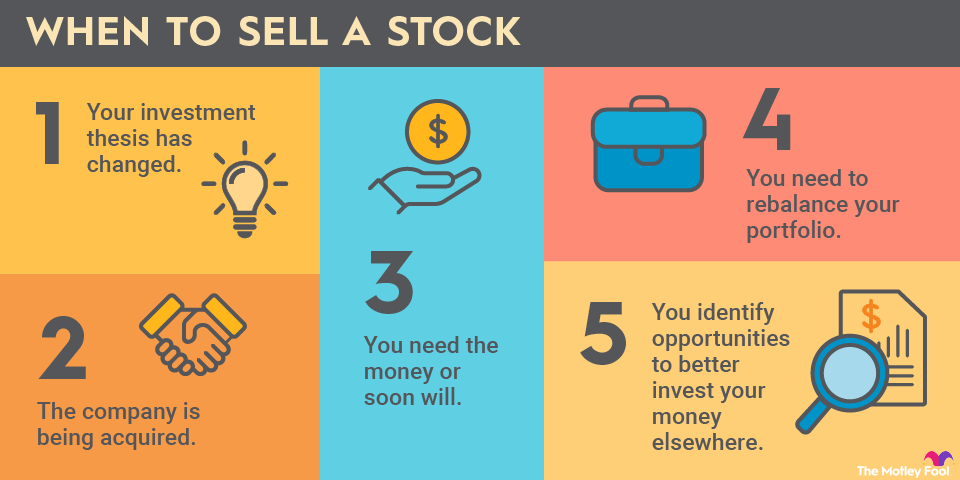
2. The company is being acquired
Another potentially good reason to sell is if a company announces it has agreed to be acquired.
After an acquisition is announced, the stock price of the company being acquired typically rises to a level close to the agreed-upon purchase price. Since further upside potential can be quite limited, it may be wise to lock in your gains shortly after the acquisition announcement.
Specifically, the way a company is acquired affects whether selling your stock is the right decision. A company can be acquired in cash, stock, or a combination of the two:
- For all-cash acquisitions, the stock price typically quickly gravitates toward the acquisition price. But if the deal falls through, the company's share price could come crashing back down. It's rarely worth holding on to your shares long after an all-cash acquisition is announced.
- For stock or cash-and-stock deals, you should base your decision to hold or sell on whether you have any desire to be a shareholder in the acquiring company. For example, real estate brokerage Redfin (NASDAQ:RDFN) agreed in March 2025 to be acquired by mortgage giant Rocket Companies (RKT -4.72%) in an all-stock deal. Redfin shareholders who didn't want to become Rocket investors would have had a good reason to sell.
3. You need the money, or soon will
It's generally best practice not to invest in the stock market with any money you expect to need within the next few years. But if you need the money, that's certainly a valid reason to sell.
Perhaps you want to purchase a house and sell some stock to cover the down payment. Or you may have children who plan to attend college in a few years, and you want to convert your stock holdings into more secure investments, such as certificates of deposit (CDs).
4. You need to rebalance your portfolio
Your investment portfolio can become unbalanced in one or more ways. That is why periodically rebalancing your portfolio -- which may involve selling some stock -- is necessary for most investors. These are two of the most common circumstances preceding a stock sale:
- Owning a high-performing stock: If you own shares that have significantly increased in price, your position in the company may represent a large portion of the value of your portfolio. While this is a good problem to have, you may not be comfortable with having so much of your money invested in a single company and choose to sell part of your stock.
- Seeking to reduce your stock exposure: As you get closer to retirement, it's smart to gradually reduce your portfolio's stock holdings in favor of safer investments such as bonds. One popular rule of thumb (known as the Rule of 110) is to subtract your age from 110 to determine the percentage of your portfolio that should be invested in stocks. If your portfolio seems too stock-heavy, selling some of your stock to reallocate resources can be a good decision.
5. You identify opportunities to better invest your money elsewhere
In a perfect world, you'd always have spare cash to invest every time you identify an attractive investment opportunity. Since that's probably not the case, you may decide to sell stock to invest the cash differently.
Let's say you notice an incredible buying opportunity for one of your favorite stocks and decide you want to allocate 10% of your portfolio to this investment. If you don't happen to have 10% of your portfolio sitting in cash, you may decide to sell some shares of other stocks or exchange-traded funds (ETFs) you own to free up some capital.
Even if there's nothing wrong with that stock or ETF, recognizing an excellent long-term opportunity elsewhere can be a valid reason to sell.
Just be aware that there's a fine line between selling to take advantage of an opportunity and overtrading.
When to sell stocks for profit
Any of the above are good reasons to sell a stock for a profit. Having earned a profit from an investment can further justify selling the stock to pay for a major purchase, your living expenses in retirement, or as part of your portfolio allocation strategy.
But don't sell a stock for profit just because the share price has increased. Doing that would be falling into the trap of believing that it's a good idea to "take some money off the table" if a stock gains value.
To be clear, selling just because a stock went up is a terrible reason.
When to sell stocks at a loss
Similarly, it's usually a bad idea to sell a stock just because its price went down, unless one of the reasons listed above applies.
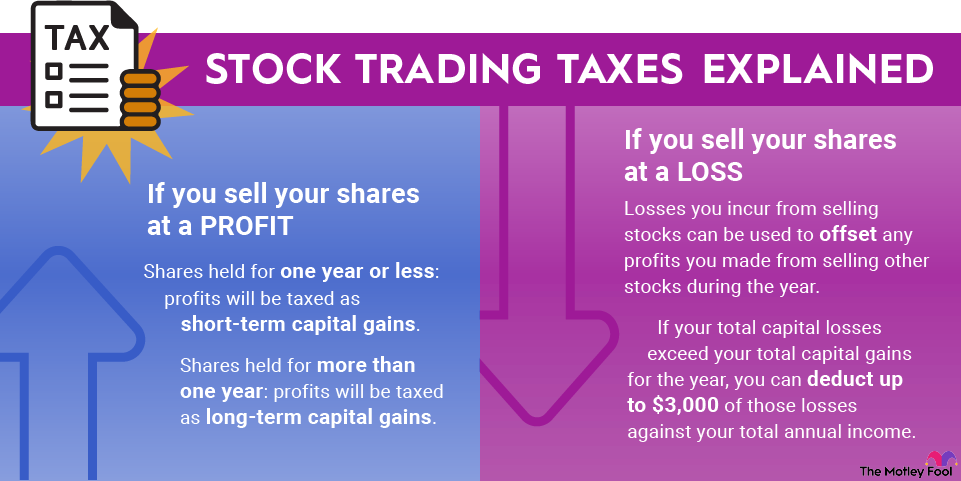
Having said that, selling losing investments (especially if you see better opportunities elsewhere) can help you save money on your taxes. Investment losses can be used to offset capital gains.
As legendary investor Warren Buffett says, "The most important thing to do if you find yourself in a hole is to stop digging." If your original reason for buying a stock no longer applies, or if you were just plain wrong about the company, then selling at a loss rather than continuing to hold may be your best option.